Andalucia, Blog, Granada, Seville, Spain
Embark on a captivating journey through Seville’s past as you explore Ishbiliya, a city that flourished during the era of Al-Andalus. From the grandeur of the Alcázar to the rich history preserved in the Archive of the Indies, every step reveals the profound impact of this bygone era. Follow our suggested itinerary to immerse yourself in the architectural marvels, cultural gems, and enchanting ambiance that make Seville an unforgettable destination for history enthusiasts and curious travelers alike.
The Alcazar of Ishbiliya
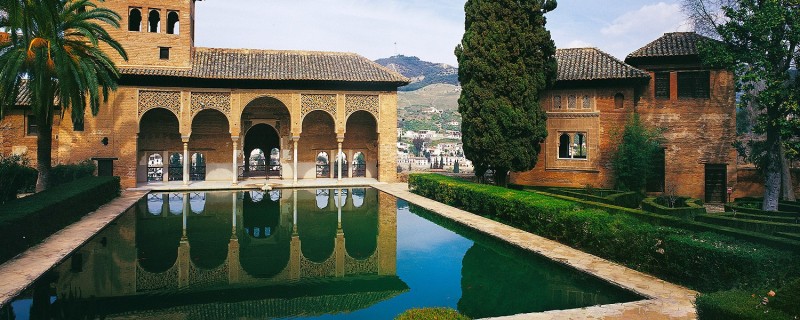
Begin your journey by stepping into the breathtaking Alcázar of Ishbiliya, an architectural masterpiece that reflects the fusion of Moorish and Christian influences. This UNESCO World Heritage site boasts intricate geometric patterns, lavish gardens, and exquisite courtyards, transporting you back to the days of Al-Andalus.
The Giralda Tower
Next, marvel at the iconic Giralda Tower, a symbol of Seville’s history. Originally built as a minaret during Al-Andalus, it later became the bell tower of the Seville Cathedral. Ascend its ramped walkway to enjoy panoramic views of the city, while appreciating the artistry of its Islamic architecture.
Seville Cathedral
As the largest Gothic cathedral in the world, it showcases stunning architectural elements and houses the final resting place of Christopher Columbus. Explore its awe-inspiring interiors, adorned with intricate carvings and captivating stained glass windows.
Barrio de Santa Cruz
Wander through the charming streets of Barrio de Santa Cruz, a former Jewish quarter, where you can immerse yourself in the narrow alleys, picturesque plazas, and vibrant patios. The neighborhood’s rich history, dating back to Al-Andalus, provides a delightful blend of culture, cuisine, and local charm.
House of Pilatos
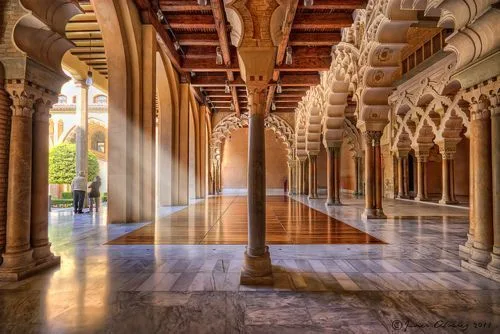
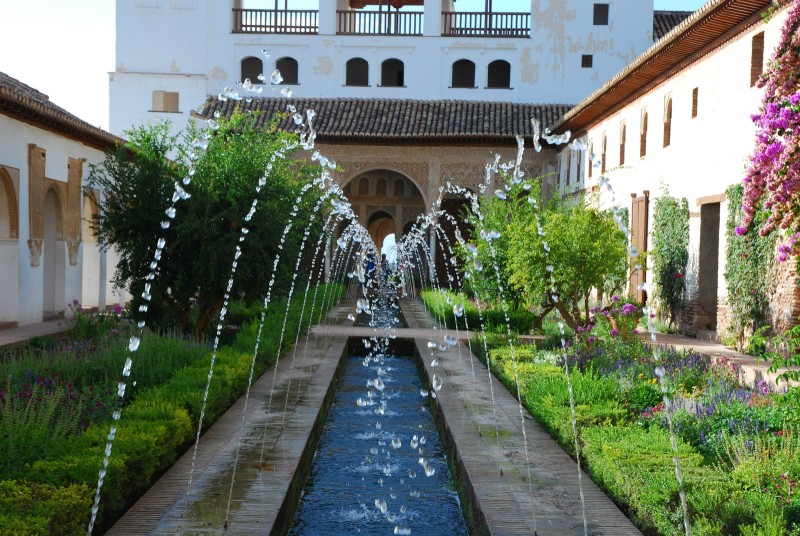
Continue your journey to Casa de Pilatos, a magnificent palace showcasing Mudejar architecture. Inspired by the Alhambra in Granada, this residence encapsulates the elegance of Al-Andalus. Stroll through its lavish gardens, adorned with fountains and lush greenery, and explore the meticulously adorned rooms that reflect the splendor of the past.
Archive of the Indies
End your day by delving into the historical treasures of the Archive of the Indies. Housed within a stunning Renaissance building, it safeguards an extensive collection of documents that chronicle Spain’s exploration and colonization of the New World. Uncover the invaluable records that connect Seville to its role in shaping global history. Step into the captivating realm of Al-Andalus as you explore Seville, or as it was called in ancient times, Ishbiliya. This legendary city, steeped in history and adorned with awe-inspiring landmarks, awaits your discovery. Delve into the grandeur of Al-Andalus through a suggested itinerary for a day visit, where you’ll witness the architectural marvels and cultural gems that shaped this remarkable era.
Seville capital of Al-Andalus in the Almohad Era
Discover the remarkable Almohad era in Seville, when it served as the capital of the Almohad Caliphate. Explore the architectural wonders, cultural achievements, and lasting legacy of this influential Islamic dynasty. Immerse yourself in the rich history of Almohad Seville through captivating landmarks and captivating stories.
Journey back in time to the splendid era of the Almohad Caliphate in Seville. Serving as the capital of this influential Islamic dynasty, Seville flourished under Almohad rule, leaving an indelible mark on its architecture, culture, and legacy. Embark on a fascinating exploration of Seville’s Almohad capital, as we delve into the city’s iconic landmarks and the remarkable achievements of this significant era.
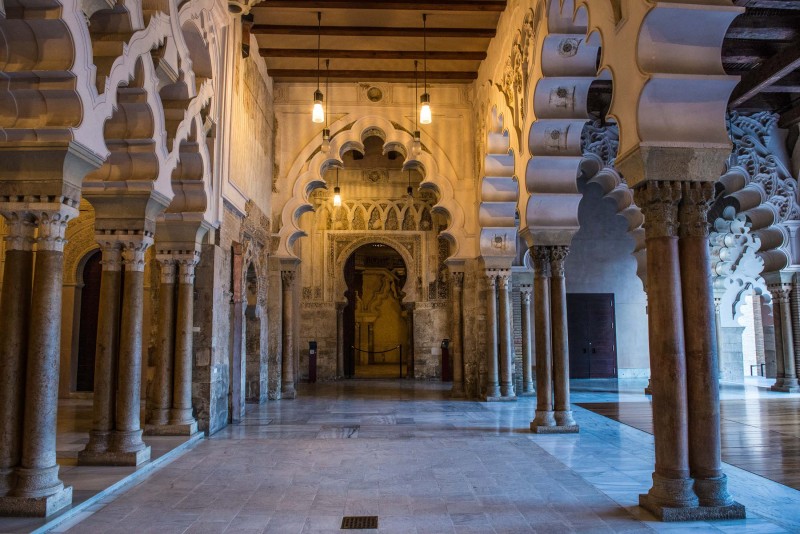
Beyond specific landmarks, the Almohads made significant contributions to Islamic architecture that can be observed throughout Seville. Their innovative use of arches, geometric patterns, and decorative elements influenced subsequent architectural styles in the region. Look for traces of Almohad influence in various religious and secular structures, exemplifying the enduring legacy of their distinctive architectural style.
A good example is one of the most iconic symbols of Seville’s Almohad past is the Giralda Tower, which originally served as the minaret of the Great Mosque during the Almohad era. Standing tall and elegant, this architectural masterpiece showcases the Almohad’s distinctive style with its intricate geometric patterns and ornate design. Climb the tower to enjoy panoramic views of the city and relish in the craftsmanship of this historic gem.
You will marvel at the remnants of Seville’s Almohad fortifications, including sections of the ancient city walls and gates. These defensive structures once enclosed the city, providing protection and showcasing the architectural prowess of the Almohads. Stand in awe as you witness the Almohad craftsmanship in the gateways, such as the Puerta de la Macarena and the Puerta de Jerez, testaments to their strategic and artistic genius.
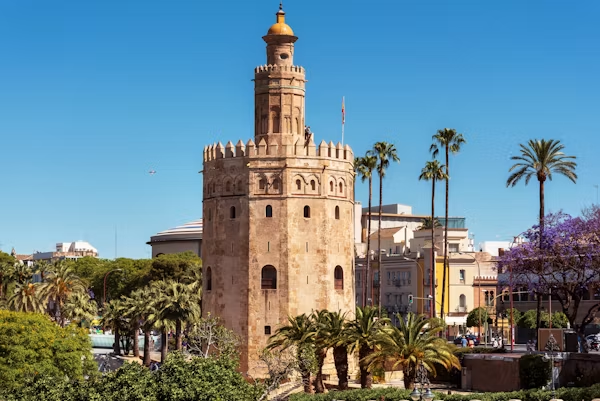
The Golden Tower, a fortified tower built by the Almohads along the banks of the Guadalquivir River is another city’s landmarks. While its exact purpose during their reign remains uncertain, this iconic structure stands as a symbol of Seville’s rich history. Take a stroll along the riverbank and marvel at this imposing tower, glistening in the sunlight, as it continues to evoke the splendor of Almohad Seville.
Seville stands as a testament to the grandeur and influence of this remarkable Islamic dynasty. The city’s landmarks reveal the architectural brilliance and cultural achievements of the Almohads. Immerse yourself in the rich history of Almohad Seville, as you explore its architectural gems.
Blog, Granada
The rise of Al-Andalus in the Iberian Peninsula (Hispania)
In the year 711 Muslim forces, following the orders of the governor of Africa, Musa ibn Nusayr, and under the command of Tariq ibn Ziyad, crossed the straits of Gibraltar and defeated the army of the Visigothic king Roderic somewhere inland from Tarifa. In the following year, Musa himself led an army across the straits and took over command of the conquest.
The rapid advance of the Muslims throughout the Iberian Peninsula (modern Spain & Portugal) was impressive. By 720 almost all the territory was under their control, with the exception of a thin strip along the north coast, roughly equivalent to Asturias and Cantabria.
Whether the Muslims intended to stay is not clear, but undoubtedly the large fertile areas they saw were a significant factor in their decision to remain. In addition, the invasion was a useful means of channeling the energies of the recently conquered and converted Berbers of the Maghreb (Northwest Africa) with the promise of booty, slaves and lands.
Run by governors acting for the Umayyad Caliph in Damascus (Syria), the peninsula’s fortunes were initially tied to the interests of the Middle East. . After the conquest of the peninsula, governors followed thick and fast, the first being Musa’s son, Abd al-Aziz, soon decapitated in Seville accused of trying to usurp power and declare himself ruler.
The Arabs brought with them tribal quarrels inherited from the Middle East while the Berbers felt treated as second-class citizens by the Arabs. The Berber grievances were not without cause. When land was confiscated from those who had opposed the invading armies, the Arabs amassed the best property, e.g. along the Guadalquivir, Guadiana and Ebro river valleys, and the fertile coastal areas. The Berbers had to make do with the rest, mainly mountainous areas around Granada, the hostile Duero valley and damp Galicia in the north west, and the Pyrenees in the north east.
A Berber rebellion in 740 resulted in a civil war.
At this moment, the history of Al-Andalus or Muslim Spain witnessed an important event, the arrival of Abd al-Rahman
by 750, a rival dynasty, the Abbasids (who claimed descent from the Prophet via his daughter Fátima and his murdered son-in-law Ali), succeeded in overthrowing the Umayyads and shortly after removed the caliphate to Baghdad. The whole process was a bloody affair and the Umayyad royal family decimated in the purge. Only one member, 20-year old Abd al-Rahman, escaped. He made his way across North Africa, eventually arriving in Spain in 756.
Quickly he gathered support from among the pro-Umayyad factions there, and within a few months had deposed the governor of al-Andalus, entrenched himself in Córdoba and declared himself emir. The Umayyads may have lost everything in the Middle East, but under Abd al-Rahman, a new Umayyad dynasty was born in Spain that would largely set its own political independence of the Caliphate of Baghdad.
Abd al-Rahman I: Emir of Al-Andalus 756-788
Abd al-Rahman ruled for 32 years, spending much of the time putting down revolts within his realm and consolidating his power. When he arrived in 756, Muslim control had already contracted from the heady days of the invasion, especially in the northwest, thanks to Christian resistance.
Abd al-Rahman’s determination to impose his rule was constantly challenged by these local rulers, and also by Abbasid support from Baghdad. However, he gradually put down revolts one by one, and when the occasion merited it was not above coming to terms with Christian opposition. By the early 770s, Abd al-Rahman controlled all but the Ebro valley.
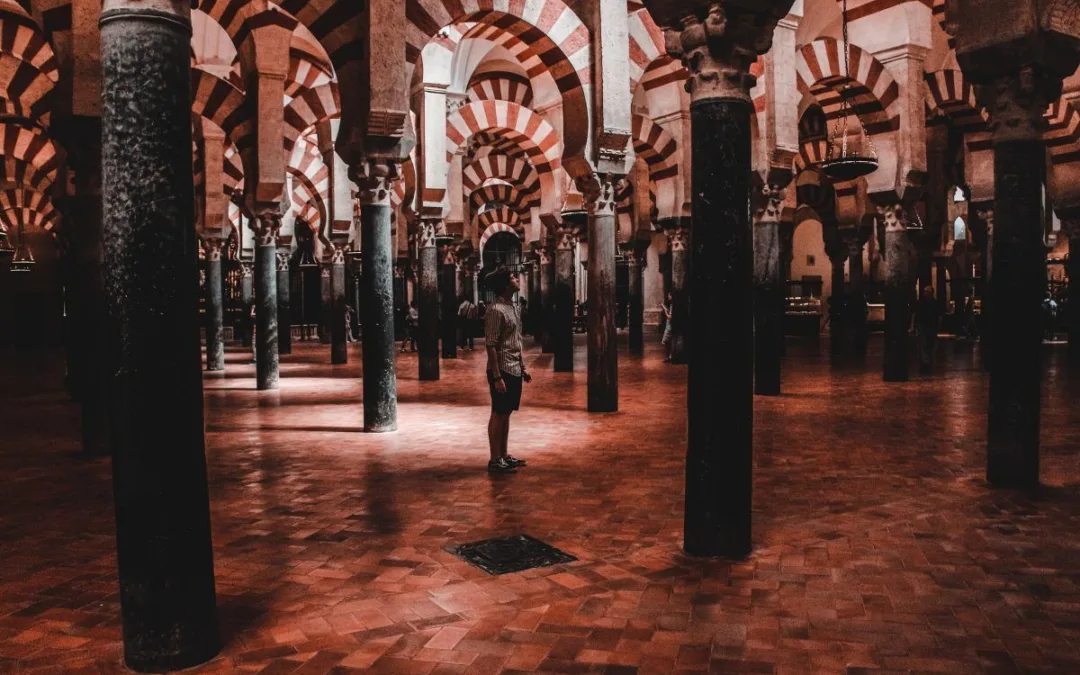
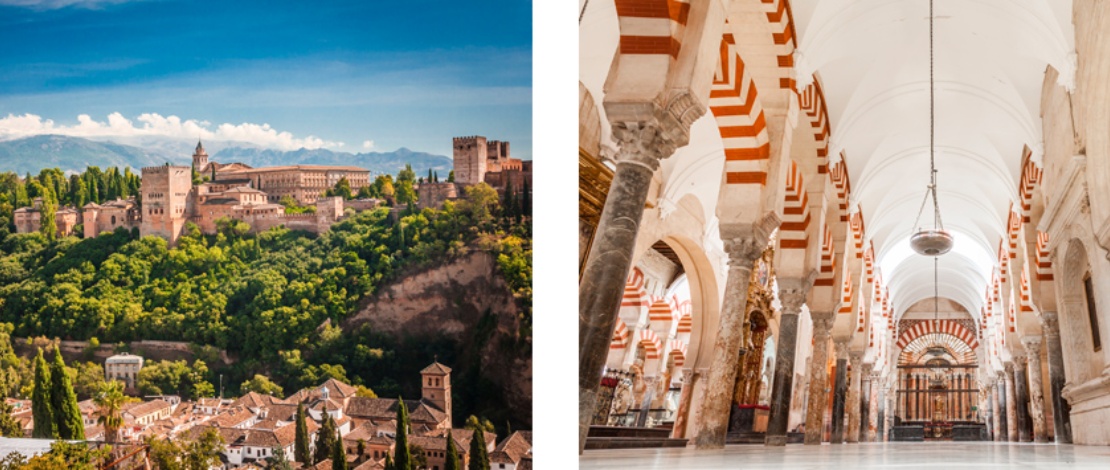
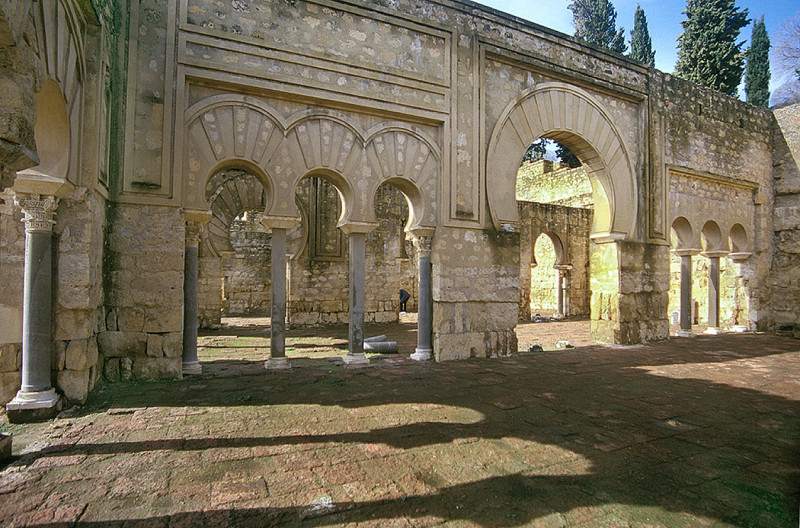
In 785 Abd al-Rahman build a great Masjid in Cordoba. It was a large and striking house of worship befitting both his illustrious heritage and his authority in al-Andalus.
The great Cordoba Mosque was a powerful statement to the still considerable Christian community -called the Mozarabs-, that Islam was there to stay. As a tribute to his lost home in Siria, Abd al-Rahman ordered to orientate the qibla wall -that always directs the faithful towards Mecca when praying- facing Damascus. This way when praying, he would symbolically be paying homage to his Umayyad heritage.
Another building was a more personal and nostalgic reminder of Abd al-Rahman’s Syrian past. It was the beautiful palace of Rusafa, built on the hillside overlooking the city (where today stands the Parador of Arruzafa).
T the palace was surrounded by a beautiful garden. Here Abd al-Rahman spent most of his last years tending his plants and especially his palm trees, planted so it is believed by the emir himself. A short poem, written by Abd al-Rahman is a poignant summary of his nostalgia:
A palm tree stands in the middle of Rusafa,/ Born in the West, far from the land of palms./ I said to it: How like me you are, far away and in exile,/ In long separation from family and friends./ You have sprung from the soil in which you are a stranger;/ And I, like you, am far from home.
Abd al-Rahman died in Cordoba in 788, passing the reins of power to his designated heir, a younger son, Hisham.