Madrid is a city so full of life and culture that it’s hard to do justice to it in a few paragraphs. Artistically the city holds its own against any in Europe, with the of the best art museums on the continent where renaissance masterworks and seminal 20th-century pieces are waiting to captivate you.
Take in all the historic sights and get the background on the Spanish Empire that spanned the globe in the 16th and 17th-centuries. There are also countless little things that make Madrid memorable, whether that’s a café con leche in a stately square, drinks at a rooftop bar or a wander through the Retiro or Casa de Campo on a sunny day.
Puerta del Sol
Eduardo Ortín Madrid, Puerta del Sol
This grand square next to the Casa de Correos (Post Office Building) is a popular meeting place, suffused with meaning for both city and country. Nearly every Spanish person will recognize the clock at the top of the Casa de Correos, as this marks the televised countdown on New Year’s Eve. There’s a tricky ritual involved too: With every chime, you’re supposed to eat a grape for good luck (12 in total). Also in the square is El Oso y El Madroño statue, a symbol for Madrid since the Middle Ages.
If you’d like to get a sense of the city, a walk along the Gran Vía is a superb place to start. It’s Madrid’s entertainment, shopping, and cultural nerve center, a buzzing avenue often full of life until dawn. By day it throngs with shoppers stopping by the many malls, high-street stores like H&M and Zara and luxury boutiques. In the evenings there are couples arm-in-arm, stepping out to the cinema or a musical. And after dark the street pulses with many of Madrid’s top nightclubs. Sights to spot as you stroll include the vast Telefónica Building, dated in 1928 and an early example of a skyscraper.
Another of Madrid’s “musts”, Plaza Mayor is a handsome renaissance square, laid out in the early-1600s and completely sequestered by historic three-story-high residential buildings. There are nine entrances to the square and within the porticoes at the bottom of the buildings are several cafes. Order a coffee (overpriced but necessary because of the location) at an outdoor table and watch Madrid in action for a few minutes. After that you could wander up to the 400-year-old bronze statue of King Philip III, who was in power at the height of the Spanish empire.
Perfect in winter, Spanish hot chocolate is one of the most luxurious things you’ll ever taste. It can be so rich and thick you sometimes need a spoon to drink it. And the perfect pairing is a sugary churro, which if you don’t know, is piped dough, deep-fried. Just off the Puerta del Sol, visit the Chocolatería San Ginés, which has been serving churros and hot chocolate since the 19th century and does it as well as any joint in the city. If you can’t make it to San Ginés there are loads of stalls on the streets in the cooler months of the year.
Visit the 18th-century Royal Palace
Paulo Valdivieso Palacio Real de Madrid View from the Plaza de Almería
Built-in the mid 18th century for King Philip V the Royal Palace is on the site of Madrid’s Moorish Alcázar fortress-palace, which burned down in 1734. It’s the largest royal palace in western Europe and has a blend of baroque and neoclassical styles. You have to go inside for the full experience because the royal collections and frescoes are sublime. Here are works by Goya, Caravaggio and Velázquez, as well as stunning displays of watches, tapestries, porcelain and silverware.You can see the only string quartet of Stradivarius instruments in the world, and the Royal Armoury that includes the personal weapons used by Charles V in the 16th Century.
Have a drink at Santiago Bernabeu Stadium Café
Gilbert Sopakuwa Santiago Bernabeu Stadium, Madrid
Whether you’re a supporter of the club or not, the truth remains that Real Madrid C.F. is Europe’s most successful football team with record-breaking 11 European Cups to their name. So any fan of the game should consider a pilgrimage to their gargantuan 85,000-seater stadium, where history has been made many times down the seasons. A tour will grant you panoramic views of the stadium, you’ll step inside the dressing room, visit the dugouts and see all sorts of interesting bits including the trophy collection, press room and presidential box.
Relax at “El Retiro” Park
Madrid’s green heart and full of elegant gardens, the Retiro is just a few steps east from the Prado and was a royal property up to the end of the 19th century when it was opened to the public. If you’re visiting with little ones, paddling on the Grand Pond next to the monument of Alfonso XII is a fun option on a sunny afternoon. The iron and glass pavilion built to house the Philippine Exhibition in 1887 is magnificent and growing in the pond in front of it are bald cypresses, strange swamp trees that turn a lovely golden brown in summer. The oldest tree in the city is close by: It’s a Montezuma Cypress planted in 1633 and ringed by an iron fence.
Absolutely essential, the Prado is one of the best and most popular art museums in the world. There’s an overwhelming collection of masterpieces by renaissance and baroque masters. Spain is represented by Velázquez and El Greco, the low countries by Rembrandt, Brueghel, van Dyck and Rubens, while Titian, Caravaggio, Botticelli and Tintoretto form the Italian contingent. Of the many must-see works are Bosch’s Garden of Earthly Delights and David with Head of Goliath by Caravaggio. The artist with most works hanging at the Prado is the Spanish Romantic Goya, whose 14 Black Paintings are a Spanish cultural reference point.
Explore the Archaeological Museum
Carole Raddato National Archaeological Museum of Spain, Madrid
With invaluable pieces gathered from across Spain, this museum is a trip through Spain’s rich history. What may surprise you is the wealth of magnificent items that predate the Roman period. The best of these Iberian treasures and sculptures look almost new, despite being at least 2,500 years old. The Lady of Elche is a bust of a woman with an incredibly detailed headdress and coils over her ears. Much later but no less impressive is the Treasure of Guarrazar a Visigothic set of crosses and votive crowns dating to the 600s.
An easy walk from Plaza Mayor is this gorgeous art nouveau marketplace that dates to 1916. It’s less of a fresh produce market (although there are grocery stalls) and more of a gastronomic destination to purchase the best that Spain has to offer, like cava, Paprika spice and saffron. There’s a host of tapas bars here serving all the favorites like patatas bravas, gambas al ajillo and boquerones… To do your food shopping like a real Madrileño head to the vast Mercado de Maravillas in Cuatro Caminos. It’s Europe’s largest municipal market with 200 stalls.
On Sundays, it will seem like the entire city has descended on Ribera de Coritodores and Plaza de Cascorro. This is when some 3,500 stalls are open, hawking pretty much anything you can think of, whether used or new. It’s the largest flea market in Madrid and gets pretty hectic, so it’s always a good idea to show up early. Even though it’s a Sunday the antique shops on the streets branching off Ribera de Cortidores will be open, and there are also cafes if you’re in need of a pick-me-up after wading through the crowds.
If you still have an appetite for art after the Prado, amble over to this museum, which is also part of Madrid’s Golden Triangle of Art. You shouldn’t get bogged down, because the attractions in the Triangle are complementary, each covering schools and periods that the others do not. Here you can see works from the English and German schools by artists like Hans Holbein, Hans Baldung Grien and Albrecht Dürer. These are accompanied by pieces from other renaissance masters like Tintoretto, Veronese, Rembrandt, van Dyck and many more. There’s also a big collection of American abstract expressionism, and a host of impressionist and post-expressionist pieces by the likes of Monet, Renoir and Degas.
Round off your journey through Madrid’s art collections with the third museum on the Golden Triangle. This museum focuses mainly on Spanish art and is more modern in scope than the others. The best reason to come is to the many works by the 20th-century artists Picasso and Dalí. Just to show that isn’t overkilled: Picasso’s epoch-making Guernica is on display, so it’s an opportunity you really shouldn’t miss. Among the other Spanish greats represented at Reina Sofía are Joan Miró, Juan Gris and the important abstract sculptor Eduardo Chillida.
Flamenco is a dance that originated in Andalusia, Murcia and Extremadura, and even if it’s not strictly native to Madrid the city has some of the most famous tablaos in the country. These are special halls that cropped up in the 1960s, and here you see a show over a candlelit meal with sangria. It’s a fine way of killing two birds with one stone: Tucking into Spanish specialties while seeing one of the country’s most famous art-forms expressed by some of the best dancers in the flamenco world.
Madrid might not have the status of Rome or Paris in terms of sights, but the Spanish capital is a pleasure to explore. From historical gems and world-class art, to an incredible food scene and picturesque parks, we take a look at the top attractions in Madrid to visit.
Plaza Mayor
Madrid’s main square holds centuries of history in its cobbles and has been the scene of everything from coronations to bullfights and beheadings. These days it’s a nice place to stroll and sample one of the city’s famed foods: a calamari sandwich (bocadillo de calamares) from one of the bars surrounding the square.
Royal Palace
The official residence of Spain’s royal family is these days used for official ceremonies only (King Felipe and Queen Letizia live in the more modest Zarzuela Palace just outside Madrid). Members of the public can visit the palace and check out centuries worth of paintings, furniture and armor.
Retiro Park
Madrid’s most beautiful park is the ideal place to spend a lazy afternoon enjoying a picnic and messing about in a rowing boat on the lake.
Templo de Debod
Madrid’s very own Egyptian temple was bestowed on the country by Egypt and moved, piece by piece, in the early 1970s. It is one of the best places to watch the sun set in Madrid.
KIO Towers
The seemingly gravity-defying KIO towers in Madrid’s financial district lean at a 15-degree angle and were the first leaning skyscrapers in the world.
Gran Vía
Madrid’s most iconic street has a cinematic scope that has seen it star in Abre Los Ojos (the original Spanish language movie of the 2001 Tom Cruise remake Vanilla Sky). Head to the top of the Corte Inglés Gourmet Experience for a great view of the street’s famous Schweppes sign.
Rooftop bars
Head to one of Madrid’s rooftop bars for an unforgettable view over the city’s rooftops. We recommend Circulo de Bellas Artes for one of the best panoramas of the capital.
Puerta del Sol
All roads in Spain lead to the Puerta del Sol, known as kilometer zero and the very center of the country. It is also home to the famous statue of the bear and the strawberry tree, the official symbol of Madrid.
The Golden Triangle of art galleries
Madrid is home to some of the world’s best art galleries, and the three most famous are handily located close to each other in a triangle. The Prado (classical paintings), The Reina Sofia (modern art) and the Thyssen-Bornemisza (a little bit of everything) are full of artistic riches well worth exploring.
Palacio de Cibeles
This grand building was, amazingly, the headquarters of Madrid’s post office until 2011. Today it is the home of Madrid’s City Council and a visitor attraction because of the incredible views from its observation deck.
Calle de Cava Baja
The ideal spot for a tapas crawl, Cava Baja is Madrid’s famous ‘tapas street’ and on an evening is teeming with people enjoying a drink and a bite. Some of our favorite spots are La Perejila, Txakolina and El Tempranillo.
Sobrino de Botín
Madrid is home to what is officially the oldest restaurant in the world – it has the Guinness World Record certificate in the window to prove it. Sobrino de Botín was founded in 1725 and has been going strong ever since. Its specialty is roast suckling pig and it appears in Ernest Hemingway’s The Sun Also Rises.
Cine Doré
This old cinema shows classic Hollywood and modern films from around the world for a bargain €2.50. Its tumultuous history saw it bombed during the Spanish Civil War but today it is home to the Filmoteca Española, which restores and preserves old films as part of Spain’s Ministry of Culture. It appears in Pedro Almodóvar’s Hable con Ella (Talk to Her).
Plaza Dos de Mayo
This square is in the heart of the hip neighborhood of Malasaña and is surrounded by a host of excellent bars, restaurants and shops. One of Madrid’s best nightlife spots.
Find more places to eat & drink in Madrid
The Rastro
Madrid’s famous flea market is held every Sunday morning when the streets come to life with stalls, bars open out onto the streets and locals and tourists alike enjoy the fiesta atmosphere around the area of Lavapiés.
Almudena Cathedral
Madrid’s cathedral was consecrated by Pope John Paul on its opening in 1993. Its Baroque exterior matches the older Royal Palace next door, and it was where King Felipe and Queen Letizia married.
Literary Quarter
Barrio de Las Letras is one of Madrid’s most beautiful and coolest neighborhoods. It was the home of Spanish literary giant and Don Quixote author, Miguel de Cervantes and these days are full of quirky bars and restaurants. Make sure to look down once in a while; the streets are peppered with famous literary quotes.
Atocha train station
Madrid’s main train has a very unusual feature – it’s very own indoor rainforest, home to dozens of turtles.
Matadero
This former slaughterhouse (‘matadero‘ in Spanish) situated along the River Manzanares was converted into an arts center in the early 2000s. It has its own cinema and exhibition spaces and holds regular performances and food markets.
San Ginés for churros
You cannot possibly leave Madrid without trying churros con chocolate (sugar-drenched deep-fried dough sticks with hot chocolate) from San Ginés, which has been serving since 1894. It is open all night long, so it is a great pitstop on the way home from a night on the town.
Spain is one of the world’s most popular holiday destinations and is home to incredible architecture, history and beaches, as well as some distinctly unique souvenirs. From handmade fans and flamenco guitars to Esencia de Ibiza, we guide you through 15 things you can only buy in Spain.
A bota
A bota, or wineskin, is a traditional Spanish drinking vessel, usually used for wine, but it can hold any liquid. The method of drinking from a bota usually involves angling the wineskin so that the liquid can shoot out into the drinker’s mouth, without the mouth having to touch the bota. This way, people can easily share wine without all putting their mouths on the same part of the wineskin.
Follow in the footsteps of Bob Dylan, Cat Stevens and Leonard Cohen, as well as flamenco legends including Paco de Lucía, by purchasing a guitar from Felipe Conde – the Conde family are master guitar makers who have been handcrafting their instruments for over 100 years. They’re not cheap – starting at €2,500 (£2,186) and reaching over €11,000 (£9,620) – but for a lifetime investment and a piece of rock history, they’re well worth the price tag.
Espadrilles
You might be able to pick up versions of this popular summer shoe abroad, but the genuine article can only be purchased in Spain. Casa Hernanz in Madrid has been making espadrilles, a rope-soled shoe, since 1840 and is one of the longest-running espadrille manufacturers in Spain. Originally the shoe of the poor and working-class, the espadrille came to worldwide attention when Lauren Bacall sported a pair in the 1948 film Key Largo. They have been a summer fashion staple ever since.
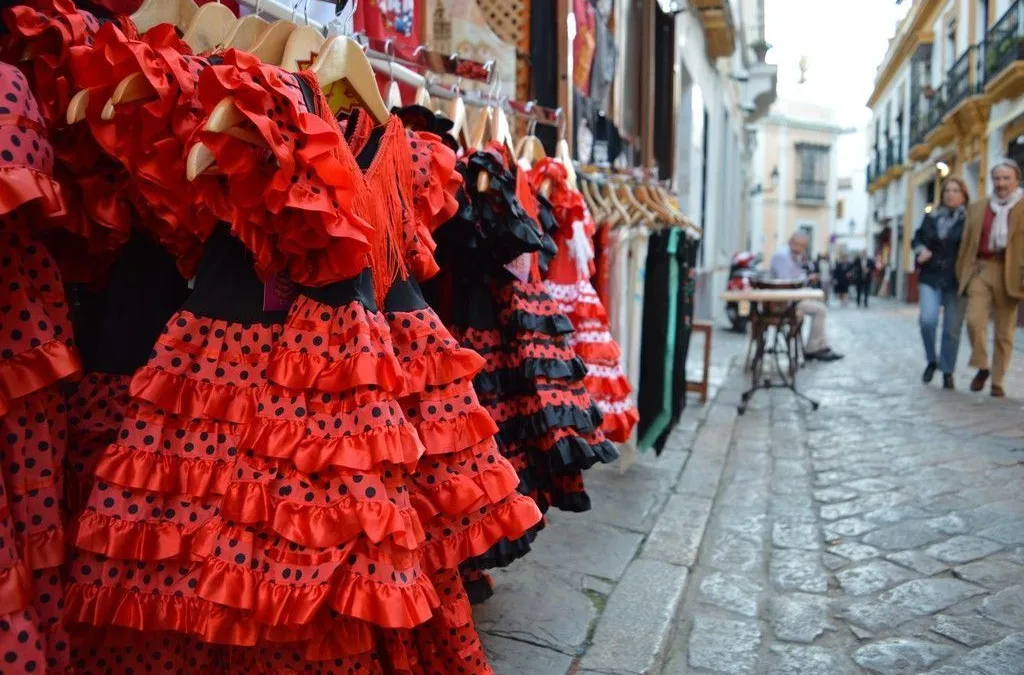
Spain is home to the dramatic and passionate music and dance style of flamenco, making it the perfect place to buy a flamenco dress, shawl or shoes. If you want something a little smaller, pick up some castanets, wooden concave shells that flamenco dancers clack together as a percussion instrument.
If you want to take a part of Spain’s party island home with you after your holiday, why not buy a can of Aire de Ibiza, ‘Ibiza Air’, a bottled sample of the island’s most abundant commodity? A couple of friends on the island began selling the product from an ice-cream parlor in summer 2016, and the product has been a hit with tourists ever since.
Firewater from northern Spain
Orujo (nicknamed ‘firewater’ by locals) is a spirit with over 50% alcohol content from northern Spain. It is particularly popular in Cantabria, Asturias and Galicia, where some local families have been making the drink for generations.
Paella pan
Buy an authentic Spanish paella pan (and some saffron, the key ingredient of paella) and you can perfect the Spanish classic in your own home. There is a booming trade in paella pans in Valencia, home of paella, but you should be able to buy them throughout the country at markets and cookware shops.
This nougat-like sweet is sold around Spain in the run up to Christmas time and is a popular gift and souvenir. It is made from almonds, honey, sugar and egg whites and is served in a rectangular slab. Casa Mira, founded in 1842 in Madrid, was the capital’s first turrón shop and today is still extremely popular with locals.
Gazpacho at McDonald’s
The Spanish classic cold tomato soup appears on many restaurant menus, but you might be surprised to see it also features on the menu at the popular fast food chain. So make sure to sample some gazpacho alongside your Big Mac and you can even enjoy a beer too – Spanish McDonald’s sells cerveza, unlike chains in many other countries.
Spanish fans
They might seem like a bit of a stereotype, but a handmade Spanish fan, or abanico, is a beautiful gift to take home and a useful cooling down method during Spain’s stifling summers. It is a common sight in the country’s big cities to see women of all ages carrying a fan as it’s one of the cheapest, quickest and easiest ways to cool down.
A Catalan Christmas tradition like no other, the caganer, or ‘Christmas pooper’, is a longstanding staple of every nativity scene in the northeastern region of Catalonia. Originally the figure, who has his trousers down and is defecating, is a little boy dressed in traditional clothes. Today, however, there is a booming industry in making poopers who look like famous people. You can pick up everyone from Donald Trump and the Pope to Cristiano Ronaldo and Lady Gaga. The figure is meant to symbolize good fortune for the year ahead.
Original post was written on https://theculturetrip.com/authors/jessica-jones/
Halal food in Spain may not be hard to find as you think! The cultural impact of Al-Andalus is still evident today in Spain as Muslim tourists will find a warm and friendly welcome wherever they go with an acceptance for their culture. This article focuses on some of the best, must-try Halal restaurants in Spain.
Granada
1. Restaurante Arrayanes
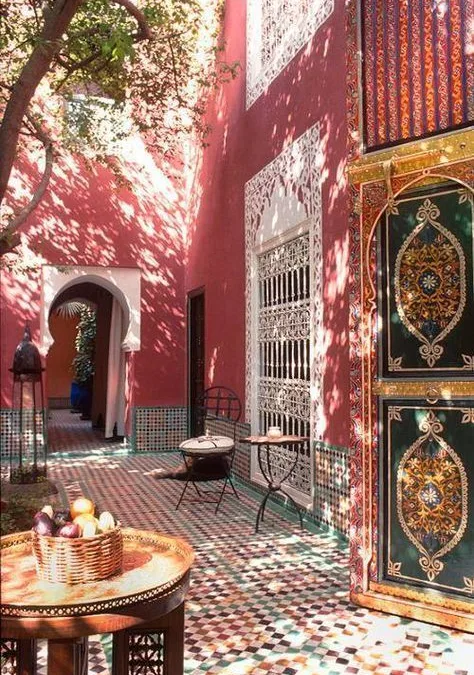
Granada is famous for its multitudes of quality Halal restaurants. If you’re looking Moroccan cuisine, this is the place. Situated at the foot of the Albayzin Hills, the restaurant is beautifully decorated with rugs and Islamic decor. The word on the street is that their Shawarma is to die for.
In the mood for kebab in Sevilla? Aladdin Halal is definitely the place for quality kebab. Situated just across the Catedral De Sevilla, the restaurant is owned by a friendly Syrian family that maintains a strictly halal menu. Prices are reasonable and the ambience is lovely. You can always relax and smoke Hookah with your friends after your meal.
Run by Pakistani business owners, Laorkebab is said to serve some of the best Shawarma in Cordoba. They offer a full halal menu with Biriyani, Kebabs, Shawarmas and Rotti. They do serve alcohol but only if requested by non-Muslim visitors.
Situated right in the heart of Barcelona, Lal Qila is the Best place for Durum Kebab in the city. They offer great value for your money with high-quality meat and delicious sauces. They staff is great and the atmosphere is lovely.
If you are looking for a delicious Lebanese meal, this is the place. Liban is one of the best halal family run restaurants in Barcelona. The food is freshly prepared and handled with delicacy. The prices are moderate and they serve large portions. The decor is relatively modern with soft Arabic music playing in the background giving it an overall cosy atmosphere.
Madrid
7. Taberna La Alhambra
Located in the heart of Madrid, La Alhambra is a great family restaurant that is affordable and easy to commute to from anywhere in Madrid. They serve Arabic, Mediterranean, Moroccan, Indian and European dishes. The majority of their cuisine is Halal, however, they serve fine wines to foreigners.
8. Bombay Palace
Situated across from central Madrid in Salamanca, Bombay Palace is famous for its delicious Indian cuisine among locals as well as foreigners. The menu is mostly Halal except for Chicken. Reservations are needed to dine here but the friendly staff will always find a way accommodate customers without reservations.
9. Alzahra Restaurant
The official restaurant of the Madrid Central Mosque. Alzahra is the ideal Islamic restaurant with designated prayer rooms, Shisha lounges and Islamic cuisine from many countries. Alcohol is strictly forbidden here and people are expected to wear traditional Islamic clothes. Prices are a bit expensive but the top notch service and the quality of food are excellent and worth the price.
Valencia
10. Balansiya Restaurant
Balansiya is one of the best restaurants in Valencia and the best Halal restaurant in the region. The decor is amazing with Moroccan style furniture, Arabic ornaments and Persian rugs all over the place with Moroccan music playing in the background. The food is delicious, delicate and affordable. Non-alcoholic mocktails are quite popular among regular visitors. Apart from the incredible authentic Morrocan dishes, Balansiya offers an extensive menu with Mediterranean and Arabic cuisines.
Spain is a destination that adapts to the tastes of Muslim tourists in services, accommodation and food
If you are looking for a country that takes your needs into account and makes you feel comfortable during your holidays, we recommend Spain.
Spain is a country that accommodates all religions and during your stay you’ll notice that a large number of hotels are able to adapt to meet the needs of Muslim clients.
With regard to food, you’ll be pleased to know that Spain is famous for its healthy Mediterranean diet, with loads of recipes based around vegetables and fish, and many based on Arab cuisine.
In Spain, certain products and services have the Halal Certification awarded by the Halal Institute, which guarantees that they meet the requirements demanded under Islamic law.
This certification is particularly associated with food products but is increasingly being awarded to hotels, restaurants, cosmetic companies, Arab baths, etc. You will find more information on the Halal Institute Certificate.
Halal restaurants and hotels
The list of restaurants with halal options in Spain is extensive and you will always find vegetarian options or dishes with the ingredients you want: gazpacho, paella, ajoblanco, pil pil cod and many other ideas that are sure to suit your tastes.
There are already restaurants with Halal Certification, such as El Faro (in Marbella) and Los Almendros (in Cordoba); and in certain establishments, if you request them in advance they can prepare dishes using ingredients governed by Sharia or Islamic law. What is more, there are an increasing number of high quality, successful initiatives such as the restaurant Noor, from chef Paco Morales, in Cordoba, the first to specialise in halal haute cuisine. In any case, if you have any doubts, we recommend consulting the establishment where you would like to eat. You can also use the most popular online restaurant search engines (yelp.com, thefork.com, etc.) to search for halal establishments in Spanish destinations.
As regards accommodation, you’ll find a wide variety of high quality, family-friendly establishments with a pleasant atmosphere. The Alanda Hotel Marbella has become the first to obtain the certificate from the Halal Institute, offering services aimed at the Islamic market, such as very strict dishes, special areas for prayer, etc. Also, in cities such as Madrid, you will find hotel chains that indicate the direction of Mecca in their guest rooms, or which have prayer rooms.
In the Adolfo Suárez Madrid-Barajas airport, there are two mosques situated in the public area of the exits to terminals T2 and T4. Halal meals are also served in the Aena VIP lounges.
In the Málaga-Costa del Sol airport there is a multi-faith prayer room which welcomes all religions including Islam, located in the arrivals hall of terminal T3. This room has no images and one of the walls is decorated with different material and special lighting, facing Mecca, for prayer.
In the Barcelona-El Prat airport there is also a multi-faith prayer room situated in terminal T1, with no type of decoration at all.
The same is the case in the airports of Gran Canaria and Tenerife Sur. Each one is equipped with a multi-faith prayer room with no images or religious symbols.
In Melilla Airport, in the public facilities in the check-in area, there is a wash basin adapted for ablution prior to ‘salat’.
250 Official Masjid in Spain
In Spain there are more than 250 official mosques and Islamic religious centres. In fact the official Spanish Ministry of Justice web page offers a places of worship search engine where you will find a a list of such places.
On our web page, you will see that we provide you with the addresses of the large mosques in the main tourist destinations. Simply go to the destination you are interested in: Madrid, Valencia, Alicante, Granada, Málaga or Marbella or check the next link to find the contact details and their location on the map.
Many Muslims choose cities like Cordoba and Granada to spend Ramadan because of the number of hours of sunlight. During Ramadan, some institutions such as the Casa Arabe, Cordoba City Council and the Halal Institute organise activities such as the Noches de Ramadán in Cordoba, a special programme of activities that includes films, workshops, talks, exhibitions, concerts, etc.