Unveiling the Past of Ishbiliya: Exploring Seville’s Landmarks during Al-Andalus

Unveiling the Past of Ishbiliya: Exploring Seville’s Landmarks during Al-Andalus

Embark on a captivating journey through Seville's past as you explore Ishbiliya, a city that flourished during the era of Al-Andalus. From the grandeur of the Alcázar to the rich history preserved in the Archive of the Indies, every step reveals the profound impact of this bygone era. Follow our suggested itinerary to immerse yourself in the architectural marvels, cultural gems, and enchanting ambiance that make Seville an unforgettable destination for history enthusiasts and curious travelers alike.

The Alcazar of Ishbiliya

Begin your journey by stepping into the breathtaking Alcázar of Ishbiliya, an architectural masterpiece that reflects the fusion of Moorish and Christian influences. This UNESCO World Heritage site boasts intricate geometric patterns, lavish gardens, and exquisite courtyards, transporting you back to the days of Al-Andalus.

The Giralda Tower

Next, marvel at the iconic Giralda Tower, a symbol of Seville's history. Originally built as a minaret during Al-Andalus, it later became the bell tower of the Seville Cathedral. Ascend its ramped walkway to enjoy panoramic views of the city, while appreciating the artistry of its Islamic architecture.

Seville Cathedral

As the largest Gothic cathedral in the world, it showcases stunning architectural elements and houses the final resting place of Christopher Columbus. Explore its awe-inspiring interiors, adorned with intricate carvings and captivating stained glass windows.

Barrio de Santa Cruz

Wander through the charming streets of Barrio de Santa Cruz, a former Jewish quarter, where you can immerse yourself in the narrow alleys, picturesque plazas, and vibrant patios. The neighborhood's rich history, dating back to Al-Andalus, provides a delightful blend of culture, cuisine, and local charm.

House of Pilatos

Continue your journey to Casa de Pilatos, a magnificent palace showcasing Mudejar architecture. Inspired by the Alhambra in Granada, this residence encapsulates the elegance of Al-Andalus. Stroll through its lavish gardens, adorned with fountains and lush greenery, and explore the meticulously adorned rooms that reflect the splendor of the past.

Archive of the Indies

End your day by delving into the historical treasures of the Archive of the Indies. Housed within a stunning Renaissance building, it safeguards an extensive collection of documents that chronicle Spain's exploration and colonization of the New World. Uncover the invaluable records that connect Seville to its role in shaping global history. Step into the captivating realm of Al-Andalus as you explore Seville, or as it was called in ancient times, Ishbiliya. This legendary city, steeped in history and adorned with awe-inspiring landmarks, awaits your discovery. Delve into the grandeur of Al-Andalus through a suggested itinerary for a day visit, where you'll witness the architectural marvels and cultural gems that shaped this remarkable era.

Seville capital of Al-Andalus in the Almohad Era

Discover the remarkable Almohad era in Seville, when it served as the capital of the Almohad Caliphate. Explore the architectural wonders, cultural achievements, and lasting legacy of this influential Islamic dynasty. Immerse yourself in the rich history of Almohad Seville through captivating landmarks and captivating stories.
Journey back in time to the splendid era of the Almohad Caliphate in Seville. Serving as the capital of this influential Islamic dynasty, Seville flourished under Almohad rule, leaving an indelible mark on its architecture, culture, and legacy. Embark on a fascinating exploration of Seville's Almohad capital, as we delve into the city's iconic landmarks and the remarkable achievements of this significant era.

Beyond specific landmarks, the Almohads made significant contributions to Islamic architecture that can be observed throughout Seville. Their innovative use of arches, geometric patterns, and decorative elements influenced subsequent architectural styles in the region. Look for traces of Almohad influence in various religious and secular structures, exemplifying the enduring legacy of their distinctive architectural style.

A good example is one of the most iconic symbols of Seville's Almohad past is the Giralda Tower, which originally served as the minaret of the Great Mosque during the Almohad era. Standing tall and elegant, this architectural masterpiece showcases the Almohad's distinctive style with its intricate geometric patterns and ornate design. Climb the tower to enjoy panoramic views of the city and relish in the craftsmanship of this historic gem.

You will marvel at the remnants of Seville's Almohad fortifications, including sections of the ancient city walls and gates. These defensive structures once enclosed the city, providing protection and showcasing the architectural prowess of the Almohads. Stand in awe as you witness the Almohad craftsmanship in the gateways, such as the Puerta de la Macarena and the Puerta de Jerez, testaments to their strategic and artistic genius.

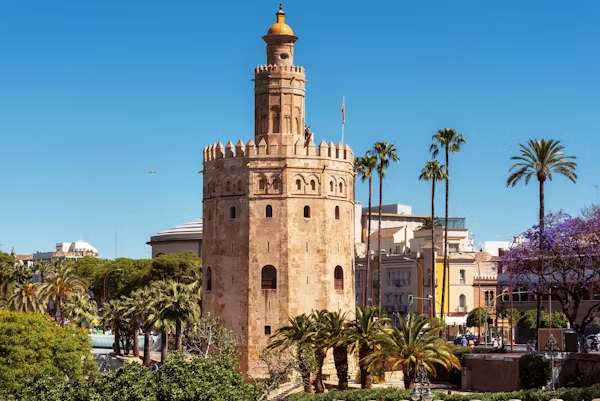
The Golden Tower, a fortified tower built by the Almohads along the banks of the Guadalquivir River is another city's landmarks. While its exact purpose during their reign remains uncertain, this iconic structure stands as a symbol of Seville's rich history. Take a stroll along the riverbank and marvel at this imposing tower, glistening in the sunlight, as it continues to evoke the splendor of Almohad Seville.

Seville stands as a testament to the grandeur and influence of this remarkable Islamic dynasty. The city's landmarks reveal the architectural brilliance and cultural achievements of the Almohads. Immerse yourself in the rich history of Almohad Seville, as you explore its architectural gems.

Buildings you have to see in Madrid

Buildings you have to see in Madrid

Madrid is an incredible city, packed with things to do and places to discover. And it’s also a perfect place for losing yourself in if you’re a lover of architecture. This is because of the huge number of architectural styles that make up the city’s urban landscape, buildings and monuments from different eras that coexist in harmony that you’ll be able to discover simply by taking a walk around Madrid. We are going to tell you about some of the most famous, those that really mustn’t be missed.

The Metropolis Building

One of the best known and most often photographed buildings in the city, it stands at the corner of two of Madrid’s most important thoroughfares, Calle Alcalá and Gran Vía. Built in French architectural style, at a height of 45 metres it was for many years one of the tallest buildings in Madrid. Doubtless the first thing that will grab your attention is the roof, a beautiful slate dome lavishly decorated with around 30,000 sheets of gold leaf, topped with a statue of Winged Victory. An incredibly beautiful piece of architecture that you’ll find at Calle Alcalá 42.

Las Cuatro Torres

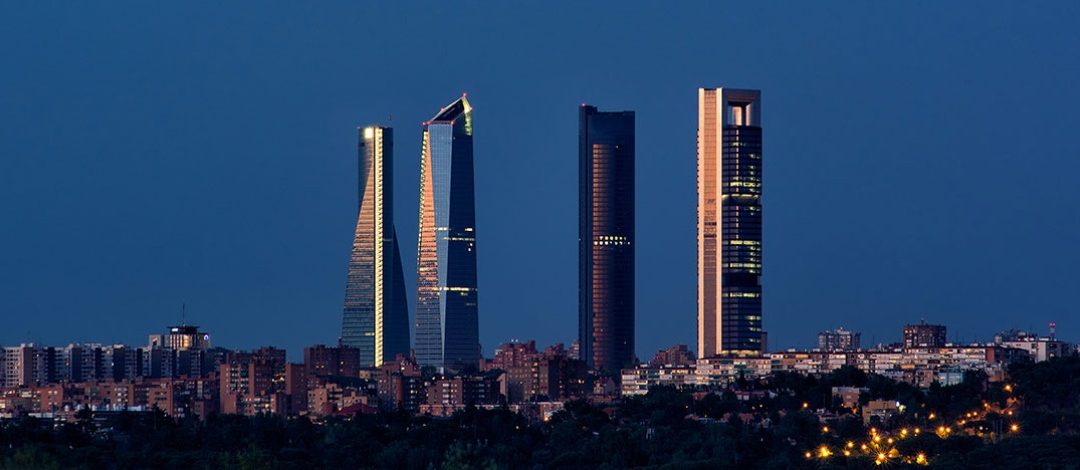
In the La Paz neighbourhood, right next to the Paseo de la Castellana, you’ll find an enterprise zone that forms a key part of the city’s skyline, and is known as the Cuatro Torres Business Area. The Cuatro Torres (four towers) are the Torre de Cristal, the Torre Cepsa, the Torre Espacio and the Torre PwC, and two of them are among the highest buildings in Spain. The first of these, the Torre de Cristal, is more than 249 metres high and has 52 floors, and the second is the Torre Cepsa, which is 248 metres in height, and has 45 floors.


Las Torres Blancas

Between Calle Corazón de María number 2, and Avenida América 37, you’ll see one of the greatest icons of organic architecture in Spain, and a building that was one of the most innovative concrete structures of its time. The building was designed to resemble a tree and rises to a height of 80 metres, creating a cluster of circular shapes that are sure to grab your attention. It was the winner of the first COAM prize, awarded by Madrid’s Colegio Oficial de Arquitectos, and also won the European Excellence Award.

La Tabacalera

You’ll find this one at number 51, Calle Embajadores, right in the heart of the Lavapiés district. It’s a former tobacco factory, and the building is a prime example of 18th century industrial architecture. Today it’s a Property of Cultural Interest, and at the same time a cultural centre for the promotion of the arts, a self-managed space that hosts temporary exhibitions of photography and different types of art.

This is a cosmopolitan city with examples of many different architectural styles for you to enjoy as you wander through its streets. Immerse yourself in Madrid and discover some unmissable buildings.

European Muslim-Friendly Cities where to spend your next holidays

European Muslim-Friendly Cities where to spend your next holidays

European Muslim-Friendly Cities where to spend your next holidays

Most Muslims worldwide would think twice about travelling to Europe as they feel it'll be hard to find halal food. But thanks to the presence of the Turks, the Moroccans, and the Algerians in the cities, you'll easily be able to find halal food all around these cities! Not only that but there are also mosques in certain areas, making it convenient for every Muslim traveller venturing into the city.

1. Berlin

From visiting the largest department store in Europe (KaDeWe) to taking a stroll in the Grunewald forest, Berlin has everything that'll entertain your wandering heart!

This city pleases everyone from the shopping enthusiasts to the nature lovers, and whatever your personality is, you'll find this city magnificent nonetheless?  Not to mention that it's the place where the iconic Berlin Wall is located!

Berlin is also the home of around 300,000 Muslims, which covers 10% of the whole population in the city! You'll easily find mosques around the city, such as the Berlin Central Mosque, Omar Ibn Al-Khattab Moschee, Wilmersdorfer Moschee, İbrahim Al-Khalil Moschee and Büyük Camii?

Berlin Central Mosque

Credit: @2funyaman on Instagram

Berlin also offers more than 60 halal restaurants! If you're on a tight budget during your trip, you can head down to Rayan Chicken for yummy Turkish food or Maroush for delicate Lebanese food?

2. Hamburg

Just like its sister city, Berlin, Hamburg also offers various tourist attractions ranging from historical places to countless museums and incredible architecture. And hey, it's a major port city in Northern Germany, and it's no surprise if you find some cool fish markets and water activities too?

Elbe Filarmoni Salonu, Hamburg

Turkish people are the largest migrant community in the city, and their population is around 93,000. The number of Muslims in the city takes up 200,000 people, and it's more than 10 per cent of the city's population. There are more than 20 mosques in the city; some of the popular ones include Islamisches Zentrum and Centrum Moschee, just to name a few!

Islamisches Zentrum

Credit: @zicoalbaiquni on Instagram

For affordable Turkish food, enjoy Turkish barbecue at Restaurant Pamukkale Koz, taste Lebanese delicacies at Békaa Libanesisches Restaurant and Restaurant L'Orient or experience Persian cuisine at Restaurant Teheran! If Middle Eastern cuisine is not to your taste, Jawa Restaurant is also a good choice as it offers authentic Indonesian food?

3. Frankfurt

Say hello to the home of museums, fine arts and breathtaking architectural buildings?  Beautifully located on the River Main, this old imperial city will bring romance back and have a classic sensation when you're in it! As its city’s skyline is highly influenced by North American culture, it also earns the nicknames Manhattan and Chicago of the Main. If you visit this city, don’t forget to enjoy the Römerberg (Frankfurt's Old Town Center) to witness the city's historical buildings. Goethe House and Museum is a good place for those in fine arts, while Senckenberg Natural History Museum offers a wonderful sensation for those who love museums with modern touches!

Römerberg

Credit: Scott Jungling on Flickr

The city comprises around 11.8% of Muslims and is one of the most Muslim-friendly cities in Germany. There are four main mosques in the city and they are: Pak Muhammadi Moschee, Bait-us-Sabuh, İslamische Gemeinde Mevlana and Islamische Gemeinde Rodgau.

Bayram Kebap Haus

Credit: @thecherrycross on Instagram

Although dominated by Turkish cuisines like Bayram Kebap Haus, Doy Doy Restaurant and Ramo’s Grill & Kebap Haus, you can also taste some Persian delicacies at Kish restaurant. You can just as well satisfy your Asian appetite by visiting Thai Fun to enjoy some of the finest Thai delicacies around 😋

4. Munich

Munich is a city that offers you endless tourist attractions such as the landmark Frauenkirche and historical buildings with marvellous architecture in the Altstadt old town. The Tierpark Hellabrunn is the world's biggest zoo; you definitely don’t want to miss this when you visit this beloved city. If you're a fan of nature, you'll definitely be interested in visiting Englischer Garten, a gigantic natural park with iconic swimming holes!

Frauenkirche

Credit: Sven Wusch on Flickr

Have a taste of Afghan cuisines at Kababji Grill Haus! And if you're into food fusion, El Sham Restaurant offers you a great treat as they are a combination between Arabian food and German food 😍

If you're looking for a space to fulfil your prayers, drop by one of the most iconic mosques, Mosque Penzberg, and marvel at the traditional Islamic architecture and simple modern designs of this mosque 🤩

Mosque Penzberg

Credit: Islamic Art and Architecture on Facebook

P.S. Why not explore beyond these popular cities of Germany and check out Tubingen, a city that's almost entirely vegan! Check it out here to find out more!

5. London

This city is a must-visit, and we're pretty sure most of you would find it an experience of a lifetime. From iconic Big Ben, spectacular London Eye, majestic Buckingham Palace, Tower of London and historic Westminster Abbey, this city offers you unstoppable beauty that's to die for!

London is also home to more than one million Muslims 😱 Some mosques you'll have to visit are The London Central Mosque, East London Mosque, Fazal Mosque and Leyton Mosque. There are also some Islamic centres in the city, such as Deptford Islamic Centre, East London Mosque & London Muslim Centre and The Islamic Cultural Centre. As the city has more than one million Muslim residents, halal food is not an issue. Turkish food, Pakistani food, Indian food or Middle Eastern food, you name it, and London has it!

Credit: Bang-Lish on Facebook

P.S. If you need a guide for your trip to London, we've got you covered here!

6. Manchester

This city is the centre of arts, media, and higher education! Castlefield, Museum of Science and İndustry, National Football Museum, Manchester Art Gallery and Manchester Town Hall all show that Manchester is a crowd-pleaser as it suits all types of travel personalities?

Manchester Townhall

Credit: Stephen on Flickr 

Ning Restaurant

Credit: @thepastimebliss on Instagram

Manchester is one of the most Muslim-friendly cities in England! The diversity in Manchester also showcases the variety of halal food this city has to offer. Ranging from Ethiopian delicacy (Habesha), Mediterranean beauty (Petra, Beirut and Jaffa Restaurant), and takeaways (Caspers UK and Kobeda Place), to even a street filled with many other halal food options (Wilmslow Road), you won't go hungry! Also, did you know that there are more than 5 mosques in Manchester? 😱

7. Vienna

Vienna is Austria's capital and the largest city, and it's absolutely rich with beautiful sights 🥰 The attractions vary from great palaces such as Schloss Schönbrunn, the uniquely enchanting Riesenrad Ferris Wheel, and the mindblowing Hofburg İmperial Palace!

Riesenrad

Credit: @binarymeow on Instagram

Some famous halal restaurants that you can check out are Quicky’s (halal burgers), Asala Halal (Mediterranean food), Der Wiener Deewan (Pakistani food) and Sen Grill (Turkish barbeque) 😍

Quicky's Burger

Credit: @ramicup on Instagram

So, has the presence of these halal eateries enticed you to visit Vienna yet 🤤

8. Barcelona

There are two main reasons to visit Barcelona: You're either a big fan of its famous football team or want to feel the city's romance! Either way, you will enjoy immersing yourself in this fascinating city. Barcelona is a pedestrian-friendly city, so it's great for you to discover the city on foot. A bonus point is that you can stay away from the bustling tourist bus?

Nou Camp Stadium

The main mosque in Barcelona is Mezquita Tariq bin Ziyad, and the two Islamic centres in the city include Centre İslàmic de Barcelona and Minhaj Islamic Center! Bismillah Raval Kebabish (Turkish food), Sabor Persa (İranian cuisine), Lal Qila (Halal Indian food) and Zeeshan Kebabish (Pakistani food) are some of the restaurants you need to check. Restaurant Malaysia offers comforting Asian staples and if you are up for a good steak, El Asador de Aranda is a must-visit.

Sabor Persa

Credit: Sabor Persa on Facebook 

9. Paris

Well, this is one of the most romantic cities people have on their bucket lists. And news flash, it's also Muslim friendly too. The city is packed with iconic attractions such as Eiffel Tower, Notre Dame de Paris, the Louvre and Arc the Triomphe. And if you are a fashionista, this city is a dream come true. You can visit some free attractions such as the most haunting spot in Paris, Cimitière du Père Lachaise, or the beautiful waterfront, Canal St-Martin.

Eiffel Tower

Credit: @see.capture.remember on Instagram

For your hunt for halal food in Paris, you can taste some Middle Eastern and Mediterranean delicacies at Le Helem and Chez le Libanais (Lebanese), Les Quatre Frères (Arabian) or Pacha Kebab (Turkish). If you're up for some fancy dinners, you can check out one of the best French fine dining restaurants at Alcazar 😍

P.S. Check out our 7 Must-Try Muslim-Friendly Restaurants In Paris article here!

10. Brussels

Brussels is the capital city of Belgium and also the capital of the European Union. Most people would think about waffles when they hear about this city, and yes, they DO have some of the most delicious waffles in the world!

Credit: @travellensdiary on Instagram

The city is home to beautiful attractions like Grand Place (Grote Markt), Belgian Comic Strip Center, Place Royale (Koningsplein), Belgian Royal Museum of Fine Arts and Atomium. Known for its beautiful historical buildings, this city will give you unending pleasures, and you would wish that you would be here again soon☺️

Atomium

Halal food and mosques are things you should not worry about while travelling in Brussels! The city is packed with so many cultures, and you can easily find Arabian halal food (Bab El Hara) and Moroccan delicacy (Le Livre Jaune) and even Ethiopian halal cuisine (Kokob) in the city!

11. Copenhagen

With so many tourist attractions and most of them within walking distance of each other, Copenhagen is a place where you can enjoy the beauty of all sorts of sights! Nyhavn is a must-visit place where you can feel the city's romance, and marvel at beautiful buildings such as the Christiansborg Palace, Kronborg Castle and Amalienborg Palace!

Once you're done with that, get ready to bargain at Strøget, as it's Copenhagen's largest shopping area 🤩

Strøget, Copenhagen

Credit: Lucky Girl Kris on Flickr

Don't go hungry on your trip! Halal food can also be found at Al-Diwan, Kebabistan (Turkish cuisine) or Kabab-Ji Grill (Mediterranean Cuisine)!

12. Amsterdam

Whether hopping on your bike or taking a canal cruise, Amsterdam will give you the most memorable journey of your life. You'll want to visit over and over again as the beautiful city is home to fine arts, museums and beautiful parks?  Not forgetting the countless cafes along the pretty cobbled streets! Don't miss out on The Rijksmuseum, The Anne Frank Museum, or The Van Gogh Museum in Amsterdam!

14% of Amsterdam’s population consists of Muslims, showing a high growth level compared to the presence of Muslims in the 1990s! Moskee El-Tawheed Amsterdam, Westermoskee Aya Sofya, and Masjid Al-Karam are some of the most notable mosques in the city. Crystal (Steakhouse and Pizza), Restaurant Riaz (İndonesian food), MOZO (Moroccan cuisine), Daarbaand (Persian delicacy) and Istanbul Plaza Doner Kebab (Turkish food) are some of the highlights of halal cuisines in the city. So now you know you won't go hungry on your vacation 😉

El Tawheed Mosque

Credit: @hussin_momentomda on Instagram

There you have it! We've provided you with 12 Muslim-Friendly European cities in this article, and now, there's nothing that prevents you from enjoying the beauty of this world. What are you waiting for? Book your tickets and show the world that it's not hard being a Muslim.

Written by Have Halal Will Travel

[/et_pb_text][/et_pb_column][/et_pb_row][/et_pb_section]

Discover why Spanish nature reserves are considered one of the best in Europe

Discover why Spanish nature reserves are considered one of the best in Europe

5 Natural wonders hidden within its borders

Get ready to discover why Spanish nature reserves, are considered among the best destinations in Europe. With 52 UNESCO designated Biosphere Reserves, there is a multitude of diverse ecosystems and rich natural landscapes to enjoy.

1. Irati Forest (Navarre)

The Irati forest is one of Europe’s largest beech and fir woodlands. Crossed by the rivers Zatoya and Andueña, Irati is an immense expanse of green, consisting of 17,000 hectares of almost pristine land. You can see herds of deer. Go hiking. And discover the fabulous legends connected with its valleys: Aezkoa and Salazar.

2. Doñana National Park

Doñana is home to more than 230 species of birds and you might be lucky enough to see breathtaking scenes such as the "pink carpet" that the flamingo colonies create when they feed. In fact, the marshlands are a staging, breeding and wintering site for thousands of European and African birds.
Among the varied landscapes, you'll be amazed at natural phenomena like the mobile dunes (some over 30 meters high) which move from the beach and bury all the pine groves in their path.

3. Somiedo Natural Park (Asturias)

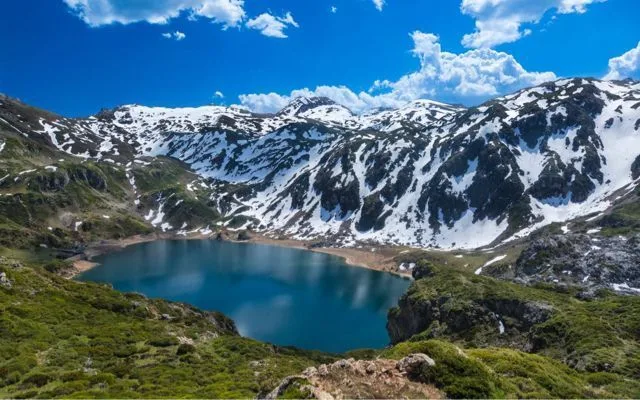
Somiedo Natural Park is a route through lakes. A biosphere reserve where there are bears, five valleys, and sights to marvel such as the Brañas, vast summer pastures of grassland and water. Explore its 200 kilometres of unspoiled natural scenery at your leisure.

4. Bardenas Reales Natural Park(Navarre)

An ideal destination for film lovers, the desert-like landscape of Bardenas has featured in iconic series like Game of Thrones. Take off on foot or by bike, and unwind among the sands, plateaus and ravines of another galaxy.

5.  As Catedrais beach (Galicia)

It's only when the tide is out that you can wander among the impressive arches and caves on the seashore. The clear waters of the sea are divided by strands of white sand. You'll never forget this imposing natural monument.

The Top 6 Reasons to Visit Spain

The Top 6 Reasons to Visit Spain

The Top 6 Reasons to Visit Spain

By Halal Trip | 23, Dec, 2016

Among all the hot travel destinations in the world, Spain manages to come off right at the top because it is packed with splendid answers to ‘Why travel to Spain’. There are so many must-visit places in Spain and enjoyable things to do that once you arrive in the country you will feel you want to extend your holiday, just to experience more. For those of you who are still unsure whether visiting Spain is the best holiday option for you, here are some top reasons to visit Spain listed by HalalTrip.

1) Warm Weather – Great for Travel!

When you are thinking of why travel to Spain, you should consider whether the weather would be at its best for you to have the best vacation experience. The beauty of this country is that no matter what season it is, you would find that it is the best time to travel to Spain. In general the seasons of spring and fall are not very hot and would allow you to travel to most of the top attractions in Spainwith ease. Summer tends to get slightly warm but is great for those who love the sun.

2) A Winter Wonderland

Travelling during winter would be great if you want to avoid large crowds. Also it is good to note that the South of the country is found to have less extreme cold weather during winter.You would also be able to get great off-season travel deals since most tourists do not travel during this time of the year. You can even engage in fun activities like skiing in the mountain ranges which is one of the bestthings to do in Spain, and of course enjoy the beauty of Christmas décor that adorn the streets.

3) Architectural Masterpieces

If you try to find why is Spain a popular travel destinationthe architectural wonders located all over the country come off at the top of the list. From awe inspiring cathedrals featuring the works of famed artists such as Gaudithese sites will give you enough of reasons to visit Spain. Try to include visits to the La SagradaFamilia and the Cathedral of Santiago de Compostela to your itinerary.

4) Great Mosques – Witness their Magnificent Splendor

Among all of the mosques in Spain, The Great Mosque of Cordoba should be a must-visit location for every traveler. Having a history dating back over thousands of years, this mosque has even been designated as a UNESCO World Heritage Site. Other mosques which thrive on rich history and unmatched architectural splendor are the Mosque of Cristo de la Luz, Almonaster Mosque and the mosque within the fortress of Alcazar of Jerez de la Frontera.

5) Spanish Cuisine – The Most Coveted in the World

The Muslim traveler would be much pleased by the great options of Halal food in Spain. Owing to the significantly higher number of Muslims in Spainyou will find many stylish eateries producing great Halal dishes for you to enjoy. Also there are ample choices of vegetarian dishes which are equally exquisite in taste.

6) Unmatched Natural Beauty

Travelers from around the world find many reasons as to why go to Spain on holiday. Among these is the natural beauty of the island. With mesmerizing sites such as mountain ranges, LagoMartianezWater Park, beautiful Atlantic beaches and hidden beaches like Calas, your vacation in Spain will make you feel like you are in paradise.

If you are planning to travel to Spain, HalalTrip offers useful information for Muslim travelers on where to find facilities such as mosques and Halal food. 

The Ummayad Emirate

Ummayad conquest of Hispania

The Byzantine Empire, weakened by its wars with Persia and the alienation of its Coptic Christian and Jewish populations, lost Syria and Egypt between 636 and 640 to the nascent Ummayad Caliphate, which then invaded Libya. The Byzantines managed to hold Carthage until almost the end of the 7th century, but the establishment of the Muslim military headquarters at Kairouan in 670 marked the beginning of the Islamic conquest of the Maghreb.

From there Sidi Uqbah led an expedition to Morocco in 680-682. Uqbah was killed on the return journey, and it was not until 705 that the caliph al-Walid appointed a new governor, Mūsā ibn Nuṣayr. Mūsā annexed the entirety of North Africa as far as Tangier, leaving his general Ṭāriq ibn Ziyād to administer and Islamize the Berbers. Only Ceuta remained in Christian hands, being supplied from the Iberian Peninsula by the visig0th king Witiza.

On the death of Witiza, his dispossessed family appealed to the Muslims, ceded Ceuta, and enabled Ṭāriq to land in Spain with a Berber army. On hearing the news, Roderick, who had succeeded Witiza as king of the Visigoths, hastened southward, and Ṭāriq called on Mūsā for reinforcements. Roderick was killed in battle near Arcos de la Frontera (Cadiz) on July 23, 711. Ṭāriq at once marched on Ṭulayṭulah(Toledo) and occupied it, probably while the family of Witiza was still negotiating with Mūsā and the caliph. Mūsā himself brought another army, reduced Merida, the last stronghold of the followers of Roderick, entered Toledo and Saraqusṭah (Zaragoza), and perhaps crossed the northern Meseta, forcing the Visigoths to submit or flee.

When the caliph summoned Mūsā to return to the Umayyad capital at Damascus, Mūsā left his son Abd al-Aziz to govern Al-Andalus from Ishbīliyah (Sevilla). Both Mūsā and Ṭāriq were accused of misappropriation and died in obscurity in the East. Abd al-Aziz was murdered, and the caliphs appointed a succession of governors. The capital was moved to Cordoba, and the three sons of Witiza were restored to the “royal estates” but not to royal power. Pelayo, a follower of Roderick, established himself in a strong position in the Asturias (718–737). After an unsuccessful attempt to subdue him, in which Pelayo won a small but significant battle at Covadonga, he was left alone.

The Muslim governors carried their advance into gothic Gaul, settling Berbers in the Pyrenees, and penetrated deep into France. A Muslim army was defeated by Charles Martel at the Battle of Tours (732), but significant raids into Frankish territory would continue for the next decade. Muslim expansion north of the Pyrenees would come to a halt largely because of the great rebellion of the Berbers which erupted throughout North Africa in 739. This uprising spread to Spain, and the governor of Al-Andalus requested assistance from Damascus. The caliph dispatched an army from Syria under Balj ibn Bishr, which suppressed the Berbers in North Africa before embarking from Ceuta to Spain. Balj put down the rebellion in Spain, seized power in Córdoba (742), and executed the governor, only to be killed in combat shortly thereafter. These troubles enabled Alfonso I of the Asturias to briefly assert himself in Galicia and the Meseta, but he lacked the resources to occupy them permanently.

A new governor temporarily pacified Al-Andalus, but the Umayyad caliphate was on the verge of collapse. Caliph Hishām ibn Abd al-Malik had kept the factional tensions between northern (Qays) and southern (Kalb) Arab tribes in check, but those simmering feuds turned into open conflicts after his death in 743. Meanwhile, many non-Arab Muslims (mawali) had gravitated toward Hahimiyyah, an explicitly anti-Umayyad sect, and in 747 Abu Muslim launched a major uprising against the Umayyad caliph Marwān II.

Abu Muslim’s armies propelled the Abbasids to power in 749, and the defeat of Marwān II at the Battle of the Great Zāb River in 750 marked the end of the Umayyad caliphate. During this time, Spain was governed by Yusuf al-Fihrī, an experienced general who had established himself at Narbonne, and al-Sumail, Yusuf’s Syrian lieutenant, who held Zaragoza and the northeast frontier. While the Abbasids worked to exterminate the remnants of the Umayyad line, the grandson of Hishām ibn Abd al-Malik, Abd al-Rahman I, fled to North Africa.

After making his way to Spain in 755, Abd al-Rahman surveyed the political landscape, and he expertly played the rival factions of Al-Andalus against each other. Backed by a mercenary army, he eventually gathered enough strength to challenge Yusuf for supremacy. In May 756 ʿAbd al-Raḥmān defeated Yusuf’s forces outside Córdoba, and ʿAbd al-Raḥmān chose that city as the capital of the Spanish Umayyad emirate (caliphate from 929).