COVID-19 Spain: Measures to stop the spread of Coronavirus

COVID-19 Spain: Measures to stop the spread of Coronavirus

Tour Guides Guidelines on Health & Higiene Risk Prevention respect to Covid-19


Measures to be taken

  • Gain information and training on health and hygiene risk prevention guidelines in the activity.
  • Avoid greeting other tour guides, providers and visitors with physical contact, including shaking hands. Safe distances must be respected whenever possible.
  • If the tour guide experiences any symptoms of the disease, even if they are mild, they should refrain from providing the service.
  • Wear a mask (or protective shield) whenever the safe distance cannot be guaranteed and encourage clients to wear them in these cases too. Where a mask is used, dispose of it according to the manufacturer’s instructions and its life span. Where a protective screen or reusable mask is used, it must be properly disinfected after each use.
  • Immediately throw away any personal hygiene waste -especially tissues-, including PPE in authorised waste bins or containers.
  • Wash hands frequently with soap and water or, when this is not possible, with hand sanitiser. This is especially important after coughing or sneezing, and after touching potentially contaminated surfaces (knobs, railings, lifts, etc.)
  • Disinfect personal items (glasses, mobile phones, microphones, etc.) frequently with soap and water and, if this is not possible, with a disinfectant solution. Use specific products applied with a cloth, or special disinfectant wipes, to disinfect electronic equipment.
  • Avoid share work equipment or devices with other tour guides as much as possible. If certain equipment or devices are shared (walkies, radio guides, telephones, umbrellas, etc.), the tour guide must establish cleaning and disinfection guidelines and, failing this, use PPE to reduce the risk of contagion.COVID-19 Spain Measures to stop the spread of Coronavirus


Information to client

The tour guide must inform clients about applicable prevention and hygiene measures restrictions, limitations or modifications to the service to prevent contagion; and the preventive measures taken by the tour guide during the tour and which must be adopted by the clients. The latter must be notified to clients before contracting the services.

The tour guide must:

  • Send the client a document along with the quote explaining the preventive measures that will be taken in terms of health and safety during the service, preferably in the client’s mother tongue or, failing that, in English. This document should be as graphic and illustrated as possible.
  • Have access to information on the location and contact details of medical and emergency care centres where a client with COVID-19 compatible symptoms can be referred.


Design of activities

  • The tour guide must follow these preventive measures when designing activities. Determine how the visit will be conducted and where the tour will go based on the risk assessment and the regulations and/or possible restrictions applied by the various service providers (museums, monuments, natural areas, etc.). For example, prepare one-way routes to avoid groups crossing whenever possible (small towns, historical centres), coordinating in any case with other tour guides; avoid areas likely to be crowded; and avoid small spaces with limited capacity
  • Wherever feasible, a single point should be established for getting on and off the vehicle in cities with more tourism in order to facilitate information, application of health and hygiene regulations and control application. This point should be agreed with the competent administration.
  • Walking tours and stops for explaining monuments must be done in open and/or wide spaces, respecting the safe distance.
  • A maximum number of people to whom the service can be offered safely should be established. If tour guides use their own vehicle to transport tourists (always with the required licence), they must follow the guidelines set by health authorities.
  • The tour guide should ask providers used to contract a service (e.g. accommodation, restaurants, coaches, museums, monuments, visitor centres, etc.) for the applicable protocol for the prevention of health and hygiene risks with respect to COVID-19.
  • If this is not possible, they should request and be aware of at least the protocols of the service providers they work with most.


COVID-19 Spain Measures to stop the spread of Coronavirus


Before, during and after the tours


Before starting the tour/visit

  • The tour guide should recall the preventive measures in place and urge compliance with them for the good and safety of others (no touching surfaces, keeping a safe distance, wearing a mask, washing hands frequently, etc.);
  • The tour guide must inform the group of how the visit will be carried out, the route and the rules and/or possible restrictions applied by the various providers (museums, monuments, natural areas, etc.).
  • Forms of greeting and/or saying goodbye that involve physical contact with the client should be avoided.
    One disposable cover per person should be used for microphones that may be used consecutively by several tour guides.

During the tour

  • The tour guide must always appear calm and confident in applying this protocol. Clients must be reminded of complying with this protocol of measures during the tour.
  • The Tour Guide authorisation, which must always be worn visibly during the service, must be correctly sanitised.
  • The tour guide who chooses to wear gloves must put them on in front of visitors and use them correctly, although hand washing before and after the visit and whenever equipment is shared is recommended.
  • Properly disinfected or single-use headsets/whispers/radio guides should be used. If they are not single-use, the client will disinfect their hands before and after use. The client will return these devices, placing them all in a bag which will be sealed. Other alternatives can be considered, such as applications on the tourist’s mobile.
  • Printed material such as maps, brochures, etc. should be avoided. If this is not possible, they should be plasticised, and be easy to clean and disinfect, or be disposable.
  • The planned schedule should be respected as much as possible to avoid incidents. Improvisations affecting the development and itinerary of the visit should be avoided.
  • The work of other colleagues and coordination with them must be respected, especially in places with narrow streets, access to monuments, etc.
  • The safe distance between the tour guide and clients, and between clients themselves, should be maintained throughout the tour. If this is not possible, a mask should be used and clients should be encouraged to use on too. Clients must be informed of this and whether they must bring a mask.
  • Transparent screens are recommended to facilitate communication with hearing impaired clients.

After the tour 

  • Avoid the use of cash and prioritise the use of cards or other electronic means, preferably contactless, when charging and paying for services and/or providers (e.g. pre-payment online). If cash is handled, hands should be washed or disinfected as soon as possible.
  • Protective materials used (masks, gloves, etc.) must be disposed properly.


Cleaning Requirements

  • The tour guide should consider the following aspects in terms of cleaning and disinfection.
  • Using authorised disinfectant cleaning products safely and according to product safety data sheets.
  • Increasing cleaning frequencies, especially in areas of greatest contact.
  • As a general rule, all materials used during the service must be disinfected at the end of the service.
  • Client voice reception systems (headphones, whispers, etc.) that are not single-use must always be disinfected at the end of the service and, in any case, before being used by another person.
  • If contact is required, the POS must be disinfected after each use.
  •  If the tour guide uses their own vehicle to transport tourists, it must be fully disinfected at the end of the service, and daily four multi-day services.
10 Best Islamic monuments to learn about Muslim Spain

10 Best Islamic monuments to learn about Muslim Spain

The Islamic civilization left in Spain a huge artistic and architectonic heritage. For eight centuries, a significant part of Spain was under Muslim rule.  That period not only introduced in Spain important scientific, agricultural, cultural advances (as it also did in Europe), but also left impressive examples of architecture, which nowadays still decorate the Spanish cities. This heritage reminds us the shared history and the cultural proximity that we have with that Islamic civilization.

The Muslim rule left in Spain a huge architectonic and monumental heritage, which in plenty of occasions preserves the splendor of a civilization that reached an extraordinary level of development and artistic sophistication. Palaces, mosques and fortresses continue to be proud witnesses of an essential era of our history, and are still today some of the European most visited monuments.


The Alhambra Nasrid Palaces
monumentos_España_1

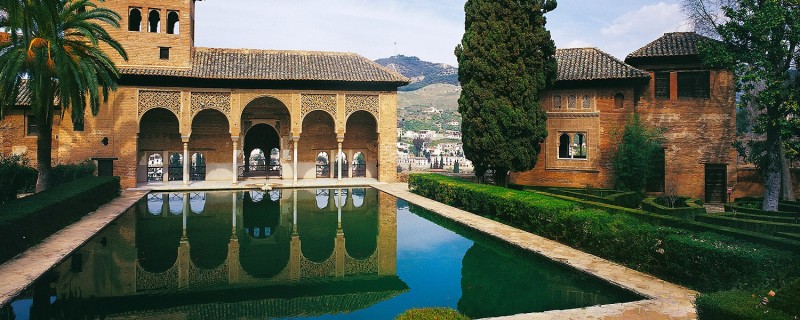
Granada’s Alhambra complex is without doubts the architectonic and artistic Muslim landmark in Spain. It is the best Arab palace in the world and one of the world’s most spectacular monuments that exudes beauty in each of its halls and yards. The residence of the Nasrid Kingdom created a space for the pleasure of the senses, in which harmony and the refinement of the design and the decoration of Muslim civilization reached almost unparalleled levels of perfection.

The Generalife Palace
monumentos_España_2

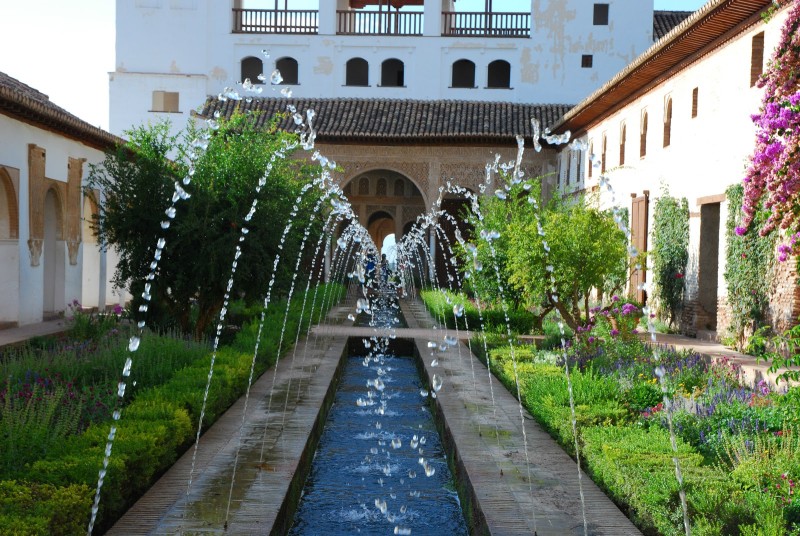
Placed next to the Alhambra, the Generalife is the villa that the Muslim kings used as a place for rest and leisure. As in the Alhambra, the systems of water canalization that were used, stand out. However, the sublime beauty of the enclosure lies in the harmony and fineness of the space distribution and the design and care of gardens, yards and water tanks.

Cordoba old Mosque

monumentos_España_3

If the Alhambra and the Generalife are two examples of civil architecture in Spain, Córdoba’s Mosque-Cathedral is its equivalent in the religious field. Initially it was a Visigothic basilica, but the Arabs built over it a worship area, whose startling column forest, is its most characteristic sign of identity. But the temple, which today also houses the Cathedral of Our Lady of the Assumption, also exudes beauty in its doors and mainly in its scrumptious Mihrab.

Medina Azahara archeological site
monumentos_España_4

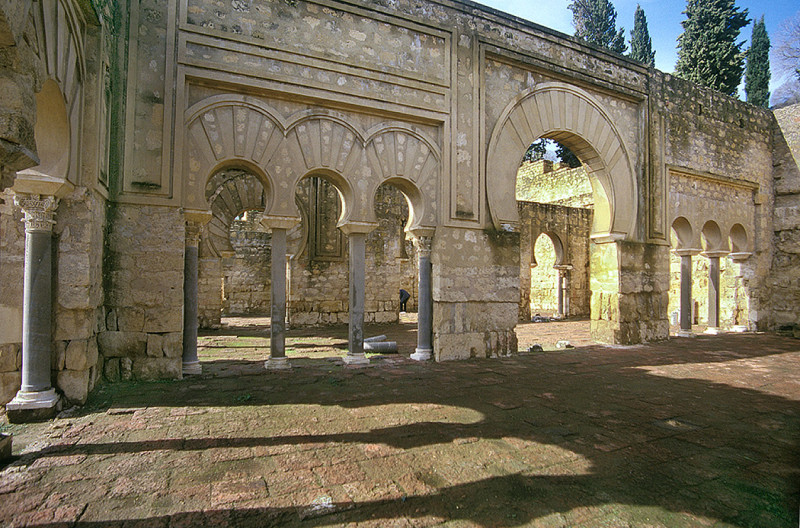
Unfortunately, the Arab complex of Medina Azahara in Córdoba, has not been able to be preserved to the present day in all its splendor. Conceived as a palace and city of Cordoba’s Caliph Abderrahman III, we can still admire its ancient strength in the remains of the Palace of Zahra and its two big halls. Its marble pavements and its geometrical and flowery decoration still stand out.


The Aljafería Palace
monumentos_España_5

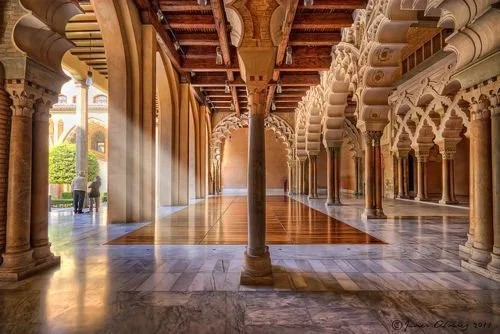
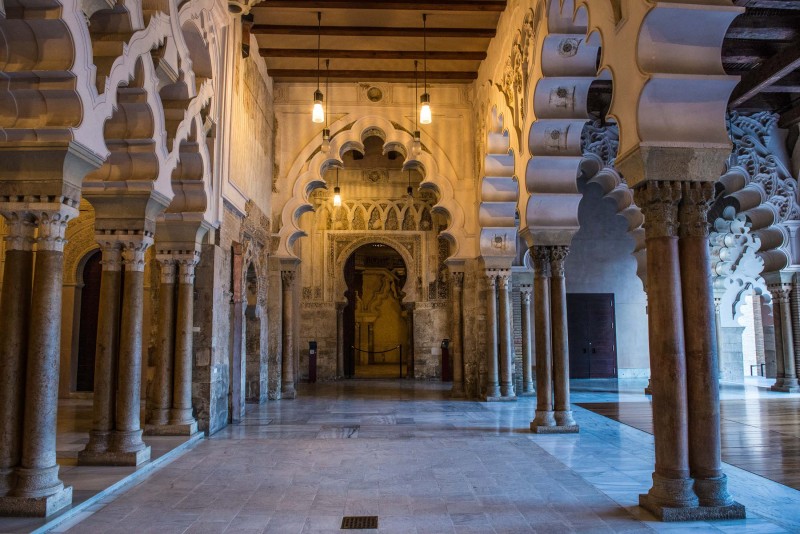
Aljafería’s Palace is the proof that the legacy of the Muslim civilization is not reduced only to the south of the Iberian Peninsula. This fortress, which has suffered various modifications through its history and that today’s appears like a Cristian castle, houses in its interior, the design and the ornamentation of the ancient Muslim alcazar fortress. It was the symbol of the power of the Taifa Kingdoms, represented in the the lobed arches, the mosque and the courtyard. Today it houses the Parliament of Aragon.

The Giralda Tower

Giralda Tower Seville Muslim Tour Ilimtour Spain Muslim Tours

The Giralda Tower Islamic Architecture of Al-Andalus (Muslim spain)

The Giralda, which is Seville’s symbol, stands nowadays as the imposing bell tower of the cathedral. Nevertheless, in its origins it was the mosque’s minaret. The two inferior thirds of the current tower are exactly thoseof the Muslim edification. They are recognizable due to their Arab ornamentation.  A spiral ramp allows to reach to the top.


Torre del Oro

Torre del Oro Seville Islamic Architecture Al Andalus

Torre del Oro a defensive tower dated from the 13th

This tower, of Arabs origins, has been rebuild in several occasions. In its origins it had a defensive role because it was part of the walls with which the Alcazar protected the city. After Seville was reconquered, it housed a chapel and became even a prison. It is called Torre del Oro due to the reflection of his color over the Guadalquivir river, next to which it is built.


Alcazaba of Malaga

Gibralfaro Castle Malaga Muslim Friendly tour spain

Gibralfaro Castle and the Alcazaba of Malaga from the Muslim period

This stronghold and palace which was designed like an enclosure of concentric walls, is another of the great examples of the Arabic architecture in Spain. Attached to the feet of the Mount Gibralfaro, the Alcazaba doesn’t preserve even half of its extension, but the importance of the place can be deduced from the currently visible elements. The areas of its urban design can still been seen, with doors, arches and the ancient neighborhood of houses.


Mosque of Cristo de la Luz
monumentos_España_9

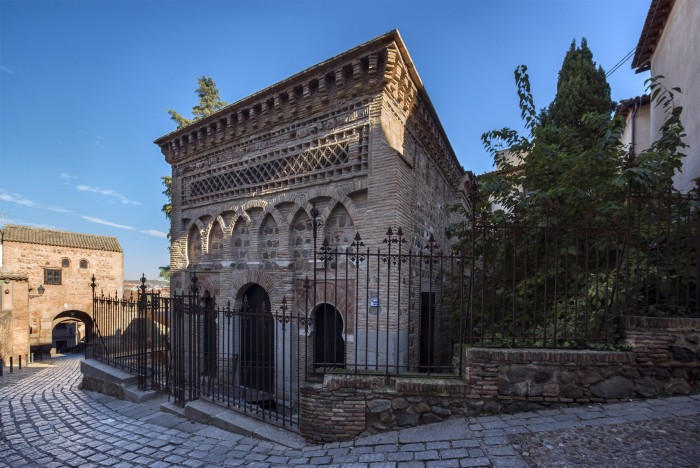
The hermitage of Cristo de la Luz, which was previously Bab al-Mardum Mosque or the Mosque of Cristo de la Luz, is the best Muslim temple preserved in Toledo and an example of Córdoba’s Caliphate splendor. Later on, when the small area converted into Christianity, a new carcass of Mudejar art, which gives shape to the hermitage’s apse, would be added.


Gormaz Castle
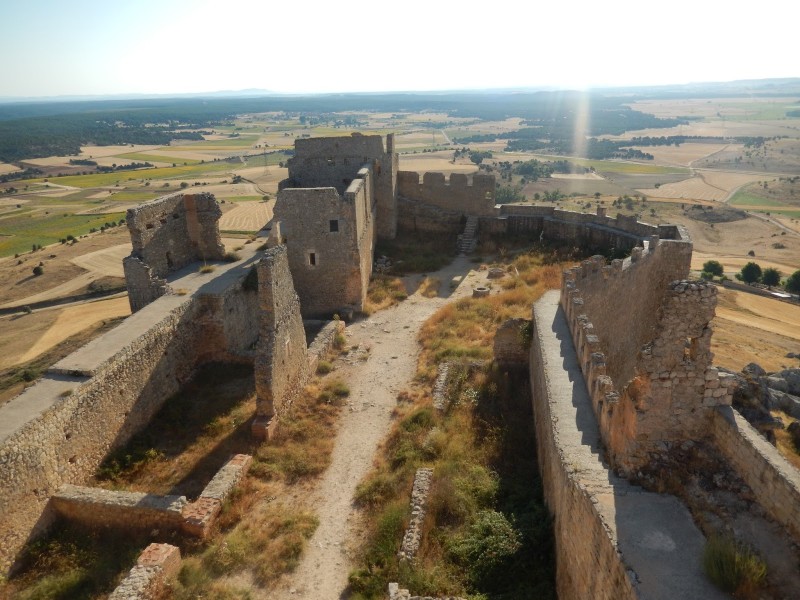
monumentos_España_10

Another example of the Muslim architecture in the north of the peninsula is the Gormaz fortress, located in Soria, close to Burgo de Osma. Its imposing wall raises at a promontory in the Castilian field. A part of its importance as military site, this construction was Europe’s biggest medieval fortress. Its caliphal door carries the stamp of Muslim art.

Fuentes: La Opinión de Tenerife y
Some of the best shopping malls in Madrid

Some of the best shopping malls in Madrid

Madrid is home to some great outdoor shopping areas like the Gran Vía, but sometimes, especially when the weather is bad, a shopping mall is a much nicer shopping prospect. Read on to discover some of the city’s best shopping centres.

Centro Comercial La Gavia

If you need some furniture or just have an urge to stock up on cheap candles, then La Gavia is for you: it is home to one of Madrid’s two IKEAs (top tip: try to go on a weekday to avoid the crowds). As well as Scandi furniture, the shopping centre, located on the end of Line 1 on the metro, has a huge range of shops, from women’s and men’s fashion, to toy shops and tech stores, as well as a cinema. There are a good number of food options too: popular burger chain Five Guys is one of the latest fast food options to open here.

Opening times:

Shops: Monday–Sunday 10am–10pm

Restaurants: Sunday–Thursday 10am–1am; Fridays, Saturdays and public holidays 10am–3am

IKEA: Monday–Sunday 10am–10pm

Centro Comercial La Gavia, Calle Adolfo Bioy Casares, 2, 28051 Madrid, Spain, +34 914 25 54 01


Principe Pio

The Centro Comercial Príncipe Pío is a good option if you don’t want to stray too far from the city centre; it is located in the former Estación Norte train station just to the west – and within easy walking distance – of the centre. There is a good range of high street brands, from Spanish favourites like Zara and Mango to international names like H&M and Levi’s. There is a Cinesa cinema and a food court packed full of different dining options.

Opening times:

Shops: Monday–Saturday 10am–10pm; Sunday 11am–10pm

Restaurants: Sunday–Thursday until 1am, Fridays and Saturdays until 2am

Principe Pio, Paseo de la Florida, 2, 28008 Madrid, Spain, +34 917 58 00 40

14652305301_d45d09feaf_k

Príncipe Pío shopping centre | © Sharon Mollerus/Flickr

ABC Serrano

Set in the historic former headquarters of Spanish newspaper ABC, this shopping centre is located right in the heart of Madrid’s most exclusive neighbourhood: Salamanca. It holds regular events, from art exhibitions to tie ins with Madrid fashion week. Don’t miss exploring the nearby Golden Mile of designer stores, even if you’re just window shopping!

Opening times:

Monday–Saturday, 10am–9pm

ABC Serrano, Calle de Serrano, 61, 28006 Madrid, Spain, +34 915 77 50 31

Centro Comercial Madrid Xanadú

Madrid Xanadú, to the south-west of Madrid, is much more than just a shopping centre. As well as a good range of shops and restaurants, it is home to the biggest indoor ski slope in Spain, Madrid Snowzone. There is also a cinema, bowling alley, and mini golf – so it’ll have you covered for activities for all the family.

Opening times:

Shops: Monday–Sunday 10am–10pm

Restaurants: Sunday–Thursday 10am–1am; Fridays and Saturdays 12pm–3am

Centro Comercial Madrid Xanadú, Autovía A-5, Km. 23,5, 28939 Arroyomolinos, Madrid, Spain, +34 902 26 30 26

ski-932188_1920

Go skiing indoors in Madrid | © tookapic/Pixabay

Parquesur

Located in Leganés, seven kilometres south of Madrid but easily accessible on the cercanías commuter train, Parquesur is one of the biggest shopping malls in Spain. It has 153 shops and 47 restaurants, as well as an IMAX cinema and bowling alley.

Opening times:

Monday–Saturday 10am–10pm; Sundays 11am–9pm

Parquesur, Av. de Gran Bretaña, 28916 Leganés, Madrid, Spain, +34 916 87 36 00

Plaza Norte 2

This shopping centre is located in San Sebastián de los Reyes, to the north-east of Madrid. It is the location of the second IKEA in Madrid so a useful option if you’re looking for some new furniture or homeware. As well as all the usual Spanish and international high street stores, there is also a cinema.

Opening times:

Shops: Monday–Saturday 10am–10pm; Sunday 11am–9pm

Restaurants: Sunday–Thursday 10am–1am; Friday and Saturday 10am–3am

Plaza Norte 2, Plaza del Comercio, 11-12, 28703 San Sebastián de los Reyes, Madrid, Spain, +34 916 59 39 67

4270206560_7bbe02cb25_b

Plaza Norte 2 | © M.Peinado/Flickr

Las Rozas Village

In the town of Las Rozas on the outskirts of Madrid is Las Rozas Village, a designer fashion outlet with lots of top brands at bargain prices. There is a direct bus line from Plaza de España, right in the centre of Madrid. Non-EU residents can also claim back the tax on purchases by asking for a tax-free receipt and showing it to customs when leaving Spain.

Opening times:

Sunday–Friday 10am–9pm; Saturday 10am–10pm

Las Rozas Village, Calle Juan Ramón Jiménez, 3, 28232 Las Rozas, Madrid, Spain, +34 916 40 49 00

6926664573_3c071045ae_b

Las Rozas Village | © jacinta lluch valero/Flickr

Original post from The Culture Trip 

Tourism Measures during the Covid 19 pandemic in Spain

Tourism Measures during the Covid 19 pandemic in Spain

Measures to reduce the spread of the virus SARS-CoV-2

Guidelines and recommendations to be applied by the tour guides in order to minimise the risk of SARS-CoV-2 virus infection in their activity. 


COVID-19 is a disease caused by the SARS-CoV-2 coronavirus; a virus first detected in December 2019. The most common symptoms caused by this disease are fever, coughing and shortness of breath. Other symptoms may include fatigue, aches, runny nose, sore throat, headache, diarrhoea, or vomiting. Some people lose their sense of smell or taste.


RISK MANAGEMENT REQUIREMENTS


Material resources

Tour guides must establish the actions needed to acquire the resources provided in the contingency plan, as well as those recommended by health authorities (e.g. hand sanitiser, masks, gloves), considering any possible restrictions on the provision of material resources and service limitations stemming from such restrictions, assessing possibilities other than those initially proposed if necessary and recording them with competent authorities.


Measures to be taken

The measures to be adopted in the contingency plan must consider the following:


  • Gain information and training on health and hygiene risk prevention guidelines in the activity.
  • Avoid greeting other tour guides, providers and visitors with physical contact, including shaking hands. Safe distances must be respected whenever possible.
  •  If the tour guide experiences any symptoms of the disease, even if they are mild, they should refrain from providing the service.
  • Wear a mask (or protective shield) whenever the safe distance cannot be guaranteed and encourage clients to wear them in these cases too. Where a mask is used, dispose of it according to the manufacturer’s instructions and its life span. Where a protective screen or reusable mask is used, it must be properly disinfected after each use.
  • Immediately throw away any personal hygiene waste -especially tissues-, including PPE in authorised waste bins or containers.
  • Wash hands frequently with soap and water or, when this is not possible, with hand sanitiser.This is especially important after coughing or sneezing, and after touching potentially contaminated surfaces (knobs, railings, lifts, etc.
  • Disinfect personal items (glasses, mobile phones, microphones, etc.) frequently with soap and water and, if this is not possible, with a disinfectant solution. Use specific products applied with a cloth, or special disinfectant wipes, to disinfect electronic equipment.
  • Avoid share work equipment or devices with other tour guides as much as possible. If certain equipment or devices are shared (walkies, radio guides, telephones, umbrellas, etc.), the tour guide must establish cleaning and disinfection guidelines and, failing this, use PPE to reduce the risk of contagion.


Informative measures

The tour guide must inform clients about applicable prevention and hygiene measures, and also:

  • Restrictions, limitations or modifications to the service to prevent contagion.
  • The preventive measures taken by the tour guide during the tour and which must be adopted by the clients. The latter must be notified to clients before contracting the services.
  • The tour guide should urge clients to comply with the measures stemming from the contingency plan.


SERVICE REQUIREMENTS

Design of activities

The tour guide must follow these preventive measures when designing activities:

  • Determine how the visit will be conducted and where the tour will go based on the risk assessment and the regulations and/or possible restrictions applied by the various service providers (museums, monuments, natural areas, etc.).

For example:

  • Prepare one-way routes to avoid groups crossing whenever possible (small towns, historical centres), coordinating in any case with other tour guides.
  • Avoid areas likely to be crowded.
  • Avoid small spaces with limited capacity.
  • Wherever feasible, a single point should be established for getting on and off the vehicle in cities with more tourism in order to facilitate information, application of health and hygiene regulations and control application. This point should be agreed with the competent administration.
  • Walking tours and stops for explaining monuments must be done in open and/or wide spaces, respecting the safe distance.
  • A maximum number of people to whom the service can be offered safely should be established. If tour guides use their own vehicle to transport tourists (always with the required licence), they must follow the guidelines set by health authorities.
  • The tour guide should ask providers used to contract a service (e.g. accommodation, restaurants, coaches, museums, monuments, visitor centres, etc.) for the applicable protocol for the prevention of health and hygiene risks with respect to COVID-19. If this is not possible, they should request and be aware of at least the protocols of the service providers they work with most.


Coordination with tourist service providers

The tour guide should coordinate with suppliers in order to avoid crowding when groups arrive.

For example:

  • Sending the list of client documentation in advance.
  •  Handing out room keys inside the vehicle.
  • Staggered entrance to the hotel/museum/monument.
  • Setting up an appointment.
    With regard to client coach transport, the document “Measures to reduce the spread of SARS-CoV-2 in tourist road transport” (ICTE, 2020) sets out guidelines and recommendations for the carrier. Passenger transport must follow the instructions given by health authorities at any time (spaces between passengers, safe distance from the driver, etc.). In particular, each passenger must sit in the same seat every time they get on the vehicle.


Pre-activity information and communication

The tour guide must:

  • Send the client a document along with the quote explaining the preventive measures that will be taken in terms of health and safety during the service, preferably in the client’s mother tongue or, failing that, in English. This document should be as graphic and illustrated as possible.
  • Have access to information on the location and contact details of medical and emergency care centres where a client with COVID-19 compatible symptoms can be referred.
  • Welcome and development of activities


The following preventive measures must be enforced:


Before starting the tour/visit

  • The tour guide should recall the preventive measures in place and urge compliance with them for the good and safety of others (no touching surfaces, keeping a safe distance, wearing a mask, washing hands frequently, etc.);
  • The tour guide must inform the group of how the visit will be carried out, the route and the rules and/or possible restrictions applied by the various providers (museums, monuments, natural areas, etc.).
  • Forms of greeting and/or saying goodbye that involve physical contact with the client should be avoided.
  • One disposable cover per person should be used for microphones that may be used consecutively by several tour guides.


During the tour/visit

  • The tour guide must always appear calm and confident in applying this protocol. Clients must be reminded of complying with this protocol of measures during the tour.
  •  The Tour Guide authorisation, which must always be worn visibly during the service, must be correctly sanitised.
  • The tour guide who chooses to wear gloves must put them on in front of visitors and use them correctly, although hand washing before and after the visit and whenever equipment is shared is recommended.
  • Properly disinfected or single-use headsets/whispers/radio guides should be used. If they are not single-use, the client will disinfect their hands before and after use. The client will return these devices, placing them all in a bag which will be sealed. Other alternatives can be considered, such as applications on the tourist’s mobile.
  • Printed material such as maps, brochures, etc. should be avoided. If this is not possible, they should be plasticised, and be easy to clean and disinfect, or be disposable.
  • The planned schedule should be respected as much as possible to avoid incidents. Improvisations affecting the development and itinerary of the visit should be avoided.
  • The work of other colleagues and coordination with them must be respected, especially in places with narrow streets, access to monuments, etc.
    The safe distance between the tour guide and clients, and between clients themselves, should be maintained throughout the tour. If this is not possible, a mask should be used and clients should be encouraged to use on too. Clients must be informed of this and whether they must bring a mask.
  • Transparent screens are recommended to facilitate communication with hearing impaired clients.


After the tour and during the farewell

  • Avoid the use of cash and prioritise the use of cards or other electronic means, preferably contactless, when charging and paying for services and/or providers (e.g. pre-payment online). If cash is handled, hands should be washed or disinfected as soon as possible.
  • Protective materials used (masks, gloves, etc.) must be disposed of properly.


CLEANING REQUIREMENTS

The tour guide should consider the following aspects in terms of cleaning and disinfection:

  • Using authorised disinfectant cleaning products safely and according to product safety data sheets.
  • Increasing cleaning frequencies, especially in areas of greatest contact.
  • As a general rule, all materials used during the service must be disinfected at the end of the service.
    Client voice reception systems (headphones, whispers, etc.) that are not single-use must always be disinfected at the end of the service and, in any case, before being used by another
    person.
  • If contact is required, the POS must be disinfected after each use.
  • If the tour guide uses their own vehicle to transport tourists, it must be fully disinfected at the end of the service, and daily four multi-day services.
REGULATIONS ABOUT CHILD CAR SEATS IN SPAIN

REGULATIONS ABOUT CHILD CAR SEATS IN SPAIN

WHY IS IMPORTANT TO KNOW REGULATIONS ABOUT CHILD CAR SEATS?

Would you like to be aware of new regulations for child car seats issued by DGT (Spanish traffic authorities) in 2019?

In past years regulations about child car seats have gone through several changes up to the current legislation: R129 I-Size. The aim of all these changes is to have safer babies in the car.Car accidents are the first cause of death for those under 14 years old. Child car seats and similar systems have reduced the number of deaths in 75% and the number of injuries in 90%. So, it’s just common sense, legislation becomes stricter every year so those figures can be reduced even more. It is very important to follow all these rules and restrictions, not just to avoid fines but to save your children’s life.


TYPE OF REGULATIONS REGARDING CHILD CAR SEATS AND MAIN DIFFERENCES

  • In Spain there are currently two regulations regarding safety measures for child car seats: the R129 i-Size since 2013 and the ECE R44/04 established in 1982. These are the main differences:
  •  Regulation ECE R44/04 classifies child car seats in groups (0/0+I/II/III) based in child age and approximate weight, but i-Size do it based on child height and allows for every manufacturer to decide the minimum height accepted for every model of baby seat produced.


  • An additional difference is the use of child car seats in opposite direction to car movement, where i-Size allows for seats in this position only for children up to 71 cm (around 15 months old) while ECE R44/4 says it is compulsory up to 9 kg of weight (around 12 months old). In fact, experts recommend putting always children up to 4 years in this position if possible.


  • Crash tests under i-Size regulation are made with more advanced dummies and with more updated criteria than those under ECE R44/4

Only under I-Size regulation is compulsory the use of Isofix latches.


ALL YOU NEED TO KNOW ABOUT i-Size REGULATION

The most updated regulation regarding the safety of children on cars is the i-Size. Its implementation has taken place in three phases allowing for car and baby seat manufacturers to adapt in several steps.

By now both regulations will go on being valid for a few more years. It is thought the ECE R44/04 will stop being valid from 2021.
The three phases of implementation of the new regulation are:

  • ­ FIRST PHASE:

Includes all seats for babies since just born up to when they have 105 cm of height. These baby seats must be attached with Isofix, with the only exception of seats for children of 15 months old that can be strapped with the car seatbelt.

  • SECOND PHASE:

Includes all seats for children with a height over 100 cm, the boosters must have a rigid back to improve child protection in case of accident.

  • ­    THIRD PHASE:

Planned to update all child car seats from ECE R44/04 regulation without Isofix latch, so an obligation to put all baby seats on the opposite direction for children under 80 cm of height or under 15 months old, can be made mandatory.


REGULATION OF CHILD CAR SEATS FROM DGT IN 2019

We have been reviewing the regulation for baby seats/car manufacturers, but regarding drivers/parents, what is the legislation according to DGT?
DGT regulations enacted in 2015 says all child car seats, boosters, etc must be placed in back seats when the children’s height is equal or under 135 cm, but there are some exceptions:

  • When the car only has two seats
  • When all back seats are already occupied by other children
  • When there’s no possibility of placing the child car seats in the back seats.

If any of this exception applies the child could be seated in the front seats but always in a baby seat in accordance with his/her weight and size. If the seat is in the same direction as the movement of the car there must be an active airbag. In case the seat is on the opposite direction the airbag must be inactive. Lateral airbags may be kept active.


WHAT IS THE COST OF A CHILD CAR SEAT IN CAR HIRE?

If you’re traveling with children and plan to hire a car, you can not forget to ask for a child car seat adapted to your children’s needs.

All car hire companies offer the option of hiring a child car seat but you can find a broad offering regarding options and prices. You can find child car seats for a cost from 4,5€ to 16€ per day per seat.

If you want to avoid that extra cost you’ve got two options: you can bring your own from home or you can choose a car hire company with an all-inclusive car hire service: Espacar Rent a Car.

This is all the information you might need regarding regulations for child car seats according to DGT in 2019. We hope you find this post useful.

El Retiro Park, green oasis in the heart of Madrid

El Retiro Park, green oasis in the heart of Madrid

 El Retiro Park, a green oasis in the heart of Madrid

Covering over 125 hectares and comprising more than 15,000 trees, El Retiro Park is a green oasis in the heart of the city. In it you’ll find all kinds of interesting monuments and gardens, including the Jardín de Vivaces, the Jardines de Cecilio Rodríguez (Andalusian-inspired classicistic gardens), the Jardines del Arquitecto Herrero Palacios, the Rosaleda rose garden and the Parterre Francés, which holds a Mexican conifer that is nearly 400 years old and is believed to be Madrid’s oldest tree.

In addition to its role as one of the city’s green lungs, it is also a popular spot among Madrileños who likes to go there for a stroll, to do some sport, visit an exhibition or take the kids to a puppet show. The park is home to a large artificial lake, where you can rent a rowing boat, and to the Velázquez Palace and Glass Palace which are both currently used as exhibition halls by the Reina Sofía Museum. The latter is a beautiful glass pavilion built in 1887 to house exotic plants for an exhibition in the Philippines. It is one of the finest examples of cast-iron architecture in Spain.

El Retiro is also filled with interesting sculptures and fountains such as the magnificent Monument to Alfonso XII, which watches over the lake and in the spring of 2018 opened to the public an observation deck offering wonderful vistas. Near the Rose Garden, you’ll encounter the statue of the Fallen Angel, the only sculpture in the world dedicated to the devil which curiously enough sits 666m above sea level.

Other spots worth visiting are the Galápagos Fountain, built in honor of the then princess Isabella II, the Teatro de Títeres, the only theatre in Europe that stages puppet shows every weekend, and the large area known as Reservado de Fernando VII which King Ferdinand VII decided to keep for himself and his family when the rest of the park was opened to the public.

In this section of El Retiro, between Calle O’Donnell and Calle Menéndez Pelayo, you’ll find some of the king’s “whims”, small buildings or monuments designed as little retreats for the monarchs to rest and relax: Casa del Pescador, the Montaña Artificial and the Casa del Contrabandista which accommodates Florida Retiro, a modern venue with a restaurant that hosts all kinds of events.

A firm favorite with both locals and tourists, El Retiro is a great place to go rollerblading, for a long walk or a jog. Dotted with playgrounds of different sizes, it’s just as popular with the little ones.

The park is also home to La Chopera municipal sports center, the Eugenio Trias Public Library and the Casa de Vacas Cultural Centre, as well as to what is believed to be Madrid’s oldest tree. An exotic species that doesn’t lose its leaves every year, the Ahuehuete (or Montezuma cypress) has been there since around 1630. Used by Napoleon’s soldiers as a support for their cannons when they turned their park into the army’s headquarters, it was one of the few lucky trees to survive the Spanish War of Independence against France.

If you fancy pedaling around the park, you can rent a bicycle from one of the bike rentals in the area. In El Retiro you’ll also find a number of outdoor cafés and kiosks when you can get a drink or bite to eat.

Every year the Retiro plays host to popular events such as the Book Fair and the fireworks display held in honor of San Isidro, the city’s patron saint.