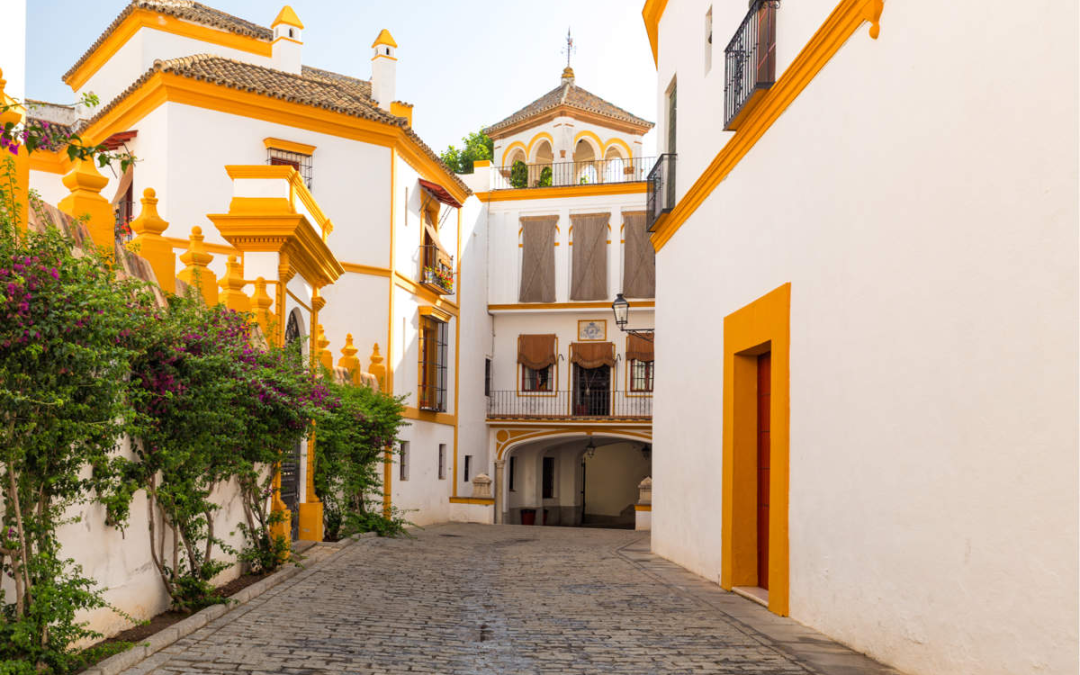
The Throne Hall of Yusuf I in the Alhambra of Granada

The Throne Hall of Yusuf I in the Alhambra of Granada

The Nasrid Court at Its Zenith

The Throne Hall of Yusuf I, better known today as the Hall of the Ambassadors, is the most imposing ceremonial space in the Alhambra. Located inside the Palacios Nazaríes, within the Palacio de Comares, it was conceived as the political and symbolic heart of Nasrid power in 14th-century Granada.

Built during the reign of Yusuf I (r. 1333–1354), the hall functioned as the royal audience chamber, where the sultan received ambassadors, signed treaties, and staged displays of dynastic authority. Academic research and publications by the Patronato de la Alhambra emphasize that this space was not merely architectural—it was ideological.

Yusuf I ruled during a period of political consolidation and artistic brilliance in the Nasrid Kingdom of Granada. Under his patronage, the Alhambra evolved into a refined palatine city combining administrative, residential, military and ceremonial functions.

The Throne Hall was strategically placed at the northern end of the Comares Palace, overlooking the city of Granada. This elevated position symbolized dominion over territory—an architectural metaphor for sovereignty.

As the primary audience chamber, the hall hosted:

  • Diplomatic receptions

  • Negotiations with Castilian envoys

  • Formal court rituals

The hall is a perfect square (approximately 11 meters per side), rising dramatically beneath one of the most extraordinary wooden domes in Islamic architecture.

The Wooden Dome: A Vision of the Heavens

The cedarwood ceiling forms a complex geometric composition based on interlaced stars. According to scholarly interpretations, this dome represents the seven heavens of Islamic cosmology, creating the illusion of a celestial vault above the ruler.

Light enters through nine high windows, producing a mystical atmosphere. The interplay between shadow and illumination reinforces the idea of the sultan as a divinely guided ruler, positioned symbolically between earth and heaven.

Epigraphy 

The walls are covered in intricate stucco decoration featuring:

  • Qur’anic verses

  • Poetic inscriptions

  • The Nasrid motto: “Wa lā ghāliba illā Allāh” (“There is no victor but God”)

These inscriptions, studied extensively in academic literature and Alhambra publications, articulate a clear political theology: power belongs to God, and the sultan rules by divine will.

This fusion of architecture, poetry and theology transforms the Throne Hall into a three-dimensional manifesto of legitimacy.


Visiting the Alhambra

The Throne Hall is included in the visit to the Nasrid Palaces within the Alhambra in Granada, Spain. Due to strict capacity limits, advance booking is essential.

Hall of Abencerrajes in Palace of the Lions

Hall of Abencerrajes in Palace of the Lions

This is the stunning centrepiece of the Alhambra, the most brilliant Islamic building in Europe, with perfectly proportioned rooms and courtyards, intricately moulded stucco walls, beautiful tiling, fine carved wooden ceilings and elaborate stalactite-like muqarnas vaulting, all worked in mesmerising, symbolic, geometrical patterns. Arabic inscriptions proliferate in the stucco work.

Admission to the palacios (included in the Alhambra ticket) is strictly controlled. When you buy your ticket, you'll be given a time to enter. Once inside, you can stay as long as you like.

The palace was originally divided into three main areas: the Mexuar, the administrative and public part of the complex; the Palacio Comares, the emir’s official residence; and the Palacio de los Leones, his private quarters.

Entrance is through the Mexuar, a 14th-century room used as a ministerial council chamber and antechamber for those awaiting audiences with the emir. The public would have gone no further.

From the Mexuar you pass into the Patio del Cuarto Dorado, a courtyard where the emirs gave audiences, with the Cuarto Dorado (Golden Room) on the left. Opposite the Cuarto Dorado is the entrance to the Palacio de Comares through a beautiful facade of glazed tiles, stucco and carved wood.

Built for Emir Yusuf I, the Palacio de Comares served as his official residence. It's set around the lovely Patio de los Arrayanes (Patio of the Myrtles) with its rectangular pool. The southern end of the patio is overshadowed by the walls of the Palacio de Carlos V. Inside the northern Torre de Comares (Comares Tower), the Sala de la Barca (Hall of the Blessing) leads into the Salón de los Embajadores (Chamber of the Ambassadors), where the emirs would have conducted negotiations with Christian emissaries. This room's marvellous domed marquetry ceiling contains more than 8000 cedar pieces in a pattern of stars representing the seven heavens of Islam.

The Patio de los Arrayanes leads into the Palacio de los Leones (Palace of the Lions), built in the second half of the 14th century under Muhammad V. The palace rooms surround the famous Patio de los Leones (Lion Courtyard), with its marble fountain channelling water through the mouths of 12 marble lions. The courtyard layout, using the proportions of the golden ratio, demonstrates the complexity of Islamic geometric design – the 124 slender columns that support the ornamented pavilions are placed in such a way that they are symmetrical on numerous axes.

Of the four halls around the patio, the southern Sala de los Abencerrajes is the most spectacular. Boasting a mesmerising octagonal stalactite ceiling, this is the legendary site of the murders of the noble Abencerraj family, whose leader, the story goes, dared to dally with Zoraya, Abu al-Hasan's favourite concubine. The rusty stains in the fountain are said to be the victims’ indelible blood. At the eastern end of the patio is the Sala de los Reyes (Hall of the Kings) with a leather-lined ceiling painted by 14th-century Christian artists. The name comes from the painting on the central alcove, thought to depict 10 Nasrid emirs. On the northern side of the patio is the richly decorated Sala de Dos Hermanas (Hall of Two Sisters), probably named after the slabs of white marble flanking its fountain. It features a fantastic muqarnas dome with a central star and 5000 tiny cells, reminiscent of the constellations. This may have been the room of the emir's favourite paramour. At its far end, the tile-trimmed Mirador de Daraxa (Daraxa lookout) was a lovely place for palace denizens to look onto the garden below.

From the Sala de Dos Hermanas a passage leads through the Estancias del Emperador (Emperor's Chambers), built for Carlos I in the 1520s, and later used by the American author Washington Irving. From here, descend to the Patio de la Reja (Patio of the Grille) and Patio de Lindaraja before emerging into the Jardines del Partal, an area of terraced gardens. Leave the Partal gardens by a gate facing the Palacio de Carlos V, or continue along a path to the Generalife.

The Palacios Nazaríes are also open for night visits.

Nasrid Palaces

This is the stunning centrepiece of the Alhambra, the most brilliant Islamic building in Europe, with perfectly proportioned rooms and courtyards, intricately moulded stucco walls, beautiful tiling, fine carved wooden ceilings and elaborate stalactite-like muqarnas vaulting, all worked in mesmerising, symbolic, geometrical patterns. Arabic inscriptions proliferate in the stucco work.

Admission to the palacios (included in the Alhambra ticket) is strictly controlled. When you buy your ticket, you'll be given a time to enter. Once inside, you can stay as long as you like.

The palace was originally divided into three main areas: the Mexuar, the administrative and public part of the complex; the Palacio Comares, the emir’s official residence; and the Palacio de los Leones, his private quarters.

Entrance is through the Mexuar, a 14th-century room used as a ministerial council chamber and antechamber for those awaiting audiences with the emir. The public would have gone no further.

From the Mexuar you pass into the Patio del Cuarto Dorado, a courtyard where the emirs gave audiences, with the Cuarto Dorado (Golden Room) on the left. Opposite the Cuarto Dorado is the entrance to the Palacio de Comares through a beautiful facade of glazed tiles, stucco and carved wood.

Built for Emir Yusuf I, the Palacio de Comares served as his official residence. It's set around the lovely Patio de los Arrayanes (Patio of the Myrtles) with its rectangular pool. The southern end of the patio is overshadowed by the walls of the Palacio de Carlos V. Inside the northern Torre de Comares (Comares Tower), the Sala de la Barca (Hall of the Blessing) leads into the Salón de los Embajadores (Chamber of the Ambassadors), where the emirs would have conducted negotiations with Christian emissaries. This room's marvellous domed marquetry ceiling contains more than 8000 cedar pieces in a pattern of stars representing the seven heavens of Islam.

The Patio de los Arrayanes leads into the Palacio de los Leones (Palace of the Lions), built in the second half of the 14th century under Muhammad V. The palace rooms surround the famous Patio de los Leones (Lion Courtyard), with its marble fountain channelling water through the mouths of 12 marble lions. The courtyard layout, using the proportions of the golden ratio, demonstrates the complexity of Islamic geometric design – the 124 slender columns that support the ornamented pavilions are placed in such a way that they are symmetrical on numerous axes.

Of the four halls around the patio, the southern Sala de los Abencerrajes is the most spectacular. Boasting a mesmerising octagonal stalactite ceiling, this is the legendary site of the murders of the noble Abencerraj family, whose leader, the story goes, dared to dally with Zoraya, Abu al-Hasan's favourite concubine. The rusty stains in the fountain are said to be the victims’ indelible blood. At the eastern end of the patio is the Sala de los Reyes (Hall of the Kings) with a leather-lined ceiling painted by 14th-century Christian artists. The name comes from the painting on the central alcove, thought to depict 10 Nasrid emirs. On the northern side of the patio is the richly decorated Sala de Dos Hermanas (Hall of Two Sisters), probably named after the slabs of white marble flanking its fountain. It features a fantastic muqarnas dome with a central star and 5000 tiny cells, reminiscent of the constellations. This may have been the room of the emir's favourite paramour. At its far end, the tile-trimmed Mirador de Daraxa (Daraxa lookout) was a lovely place for palace denizens to look onto the garden below.

From the Sala de Dos Hermanas a passage leads through the Estancias del Emperador (Emperor's Chambers), built for Carlos I in the 1520s, and later used by the American author Washington Irving. From here, descend to the Patio de la Reja (Patio of the Grille) and Patio de Lindaraja before emerging into the Jardines del Partal, an area of terraced gardens. Leave the Partal gardens by a gate facing the Palacio de Carlos V, or continue along a path to the Generalife.

The Palacios Nazaríes are also open for night visits.

Spain muslim-friendly tourism is on rise

Spain muslim-friendly tourism is on rise

Muslim-friendly tourism in Spain is on the rise. With more Muslims travelling to the Iberian peninsula to explore its rich Islamic history, a fledgling industry has sprung up to provide Halal food and services, as well as tailored tours.

Predictions estimate that in 2023, the number of international tourists who visit the country will reach 85 million – 16.4% more than in 2022 – and many of these tourists will be Muslim.

Spain's tourism industry greatly benefits from visitors coming from Muslim-majority countries. According to a recent report, Turkey, the UAE, and Saudi Arabia are among the top 25 countries whose residents visited Spain in 2022.

The Spanish Halal Institute has stated that many Muslims coming from Western countries are not accounted for in the statistics, which means that the actual percentage of Muslim visitors is even greater. The reason behind this trend is quite apparent: Spain and the heritage of Al-Andalus are a significant source of Muslim pride.

"Spain is gradually becoming more accommodating towards Muslim travellers. In addition to an increasing number of hotels and establishments catering to the specific needs of Muslim clients, government institutions are also working to make Spain a more Muslim-friendly destination"

Until recently, Muslim tourists visiting Spain had limited options for Muslim-friendly spaces and Islam-oriented tourist plans, which were primarily available in the region of Andalucía. However, the situation is evolving. Halal tourism is thriving in Spain, and it is no longer restricted to Andalucía.

Now, Muslim visitors can enjoy a comfortable stay and immerse themselves in the rich history of Muslim Spain across the country.

Islam requires adherence to certain lifestyle guidelines as a commitment to the religion. One of these guidelines is consuming Halal foods, which are prepared and handled in accordance with Islamic teachings. Additionally, it is important to pray five times a day, even when travelling.

Celia Rodríguez, a Spanish revert from the city of Barcelona, says when travelling across Spain she misses Halal options in hotels and restaurants, and where to find mosques or spaces to perform prayers.

“As a local, I know how to adapt to Spanish cuisine and how to order so that I can avoid non-Halal products. I also know how to find some things that might not be indicated. But for Muslim tourists coming from other countries, it will be difficult,” she says.

“Companies, restaurants and hotels want to address the Muslim public but do not know their needs, nor do they know how to communicate with them,” says Aicha Fernández, who shares the history of Muslim Spain across social media, and has recently launched a project called Halal Experience. She has started educating businesses on how to deal with Muslim clients and is already organising Halal Experience's first in-person seminar in Córdoba.

“Halal Experience wants to provide companies with help so that Muslim clients can have a better experience and find Spain more attractive as a Muslim-friendly destination,” Aicha tells The New Arab. “Now, only Andalucía is seen as a Muslim-friendly destination, but Spain as a country has a lot to offer.”

'Andalucía is Al-Andalus, but Al-Andalus is not Andalucía, it is much more'

Aicha's project aims to do more than just help companies accommodate Muslim needs; it also aims to promote Spain as a country where people can learn about the history of Islam and its heritage, beyond Andalucía.

Aicha organises walking tours to showcase the Muslim heritage of the city of Toledo, located an hour from Madrid. Meanwhile, Rafael Martínez, her colleague in the Spanish capital, leads an initiative that walks people through the Muslim and Arab origins of Madrid, which was named Mayrit by its founder, Emir Mohammed I.

“Andalucía is Al-Andalus, but Al-Andalus is not Andalucía, it is much more,” Aicha explains. “We think that Al-Andalus is what only remains in that region and there is little else. We forget about Soria, Zaragoza, Madrid, Toledo, Cacéres, Badajoz."

Aicha and Rafael are not alone in recognising the potential of diversifying the tourism options for Muslim travellers and people interested in Muslim Spain. Bárbara Ruiz-Bejarano, Director of Las Fuentes Foundation for the diffusion of Islamic heritage in Spain, also sees the opportunity.

"Muslim-friendly tourism is a chance to develop inland tourism. After all, Muslim tourists are not looking for sun and sand. They prefer a slow-paced, cultural and historical tourism experience, rather than one that involves excessive drinking and partying," she told The New Arab. "Unfortunately, we are not taking advantage of this opportunity, and it is one that should pique the interest of some companies."

Many companies are starting to show interest in the Muslim market due to its economic potential. According to Aicha Fernández, the profile of Muslim clients tends to be upper-middle class and they prefer group trips and longer stays. When coming from countries like the United States or Indonesia, they usually do not stay for just two days.

The Spanish Halal Institute is responsible for accrediting companies and services with official Halal stamps in Spain, parts of Europe, and Latin America. The institute has seen exponential growth in the interest for the market in Spain and beyond.

The institute claims that Spanish companies interested in certification have increased from 100 to over 500 since 2010. This interest may have been driven by the financial crisis and the need for Spanish companies to explore other markets to sell their products.

The Muslim population from Southeast Asia is growing day by day. They are a growing middle class that travels frequently and demands the services they need. According to the State of the Islamic Economy Report(2022), by 2023, more than 26% of the global population will be Muslims. This is why businesses in the tourism sector are now trying to cater to the specific needs of Muslim travellers.

The Costa del Sol Hotel in the city of Torremolinos is one such business that has invested in training its non-Muslim workers to have a minimum education in Muslim culture and traditions. This has helped them serve their large Muslim community of clients better.

The Mandarin Oriental Hotel in the city of Barcelona has been certified as a Halal hotel for years. They claim that beyond gastronomy, some small details make the difference when dealing with their Muslim clients.

The specific characteristics of the rooms and suites, along with a particular set of amenities for this market, as well as everything related to prayers, are some of the best practices they have adopted to make their Muslim guests feel more welcome.

Halal and Muslim-friendly tourism is on the rise globally. It all began with Turkey's mainstream efforts and the emergence of large Halal resorts. Nevertheless, this trend has spread to even non-Muslim countries such as South Korea or Japan, which have quickly established themselves as some of the most highly ranked destinations for Muslim-friendly vacations.

Spain is gradually becoming more accommodating towards Muslim travellers. In addition to an increasing number of hotels and establishments catering to the specific needs of Muslim clients, government institutions are also working to make Spain a more Muslim-friendly destination, releasing official guides for Muslim travellers.

The municipality of Málaga was the first to create a Halal tourism guide and was recognised for the best Halal tourism marketing campaign at the third Halal In Travel Global Summit in Singapore.

Rafael Martínez has created a guide about Madrid's Islamic past and current Muslim-friendly services and spaces through his website. He sees it as an effort to acknowledge and celebrate the history and contributions of the Muslim community in Spain.

Posted by New Arab

Exploring the Enchanting Al-Andalus Heritage of Frigiliana: A Journey Through Time

Frigiliana, a picturesque village in southern Spain, boasts a rich Islamic heritage that has left an indelible mark on its culture, architecture, and traditions. During the medieval Islamic period, it was known as "Ifriqiya" and was part of the Nasrid Kingdom of Granada.

Islamic influence is prominently seen in Frigiliana's charming labyrinthine streets, whitewashed buildings, and intricate tilework, reminiscent of Moorish design. The town's layout, with narrow winding streets and hidden courtyards, reflects the traditional Andalusian urban planning influenced by Islamic design principles.

One of the most notable remnants of Islamic heritage in Frigiliana is the old Moorish fortress, which stands as a testament to the town's historical significance during this era. Visitors can explore its ruins and enjoy panoramic views of the surrounding countryside.

The influence of Islamic culture extends to Frigiliana's cuisine, with dishes featuring ingredients and flavors reminiscent of Andalusian and Moorish culinary traditions. You can savor dishes like tagine, couscous, and various almond-based desserts, which have been passed down through generations.

Additionally, the town celebrates its Islamic heritage through cultural events and festivals, such as the Moros y Cristianos festival, which commemorates the historical coexistence of Muslims and Christians in the region.

In summary, Frigiliana's Islamic heritage is an integral part of its identity, visible in its architecture, urban layout, culinary traditions, and cultural celebrations, making it a captivating destination for those interested in exploring Spain's rich history and cultural diversity

Discover Granada’s Enchanting Streets: A Guide to Strolling the Historic Center

Discover Granada’s Enchanting Streets: A Guide to Strolling the Historic Center

Immerse yourself in the captivating beauty of Granada's historic center as we unveil the most picturesque streets for your leisurely exploration. From the romantic Carrera del Darro, offering views of the majestic Alhambra, to the bustling Calle Elvira with its Moorish charm, our guide will lead you through the heart of Granada's cultural heritage. Whether you seek history, architecture, or local ambiance, these streets offer an unforgettable experience.

Welcome to the enchanting city of Granada, where history, culture, and architecture intertwine in the heart of the historic center. There's no better way to uncover the essence of this Andalusian gem than by taking a leisurely stroll through its most beautiful streets. In this guide, we'll unveil the hidden treasures and iconic avenues that make Granada's historic center a must-visit destination. From the riverside romance of Carrera del Darro to the bustling vitality of Calle Elvira, join us on a virtual tour of Granada's most enchanting streets.

Here are some of the most beautiful streets to explore in the historic center of Granada:

  1. Carrera del Darro: This picturesque street runs along the Darro River and is famous for its charming cobblestone paths, historic bridges, and views of the Alhambra Palace. It's one of the most scenic streets in Granada.
  2. Paseo de los Tristes: Also located along the Darro River, this promenade is lined with cafes and offers stunning views of the Alhambra. It's a great place to relax and enjoy the ambiance.
  3. Calle Calderería Nueva: Often referred to as the "Tea House Street," this narrow, winding street in the Albaicín neighborhood is known for its Moorish-style tea houses, shops, and colorful lanterns.
  4. Calle Elvira: This historic street is famous for its lively atmosphere, tapas bars, and Moorish-style architecture. It's a hub of activity, especially in the evenings.
  5. Calle Alcaicería: Located near the Cathedral, this street is a reconstructed version of the city's old silk market. It's a delightful place to shop for souvenirs and immerse yourself in Granada's history.
  6. Carrera de la Virgen: This wide avenue leads to the Basilica of San Juan de Dios and is known for its grand architecture, historic buildings, and bustling streets.
  7. Plaza Nueva: While technically a square, the surrounding streets are filled with shops, cafes, and historic buildings. It's a central meeting point in Granada.
  8. Calle Reyes Católicos: This street connects Plaza Nueva to the Gran Vía and is lined with shops, boutiques, and historic landmarks. It's a great place for shopping and people-watching.
  9. Plaza Bib-Rambla: This lively square is surrounded by historic buildings and is known for its open-air cafes, flower stalls, and street performances.
  10. Calle Zacatín: Located in the Albaicín, this charming street is lined with artisan shops selling handmade crafts, ceramics, and textiles.

These streets in Granada's historic center offer a delightful mix of Moorish and Spanish architecture, as well as a vibrant atmosphere that allows you to immerse yourself in the city's rich cultural heritage while enjoying a leisurely stroll.