An Islamic Tour of Granada

An Islamic Tour of Granada

Embark on a mesmerizing journey through the enchanting city of Granada, where the echoes of its Islamic past reverberate through its streets, architecture, and culture. This SEO-friendly Islamic tour of Granada invites you to explore the rich history, breathtaking landmarks, and spiritual significance that define the city's Islamic heritage.

Tour Summary

Granada's Islamic Legacy: Unveiling the Alhambra Palace

Unravel the Alhambra's significance in Islamic history.
Explore the intricate designs of the Nasrid Palaces.
Witness the stunning Generalife Gardens.

Albaicín: The Moorish Quarter's Charms

Wander through the narrow streets of Albaicín.
Admire the Alcazaba Cadima's remains.
Experience the captivating Mirador de San Nicolás.

Islamic Art and Architecture at the Madrasah Yusufiyya

Delve into the architectural marvel of Madrasah Yusufiyya.
Appreciate the fusion of Islamic and Spanish styles.

Spiritual Haven: Granada's Historic Mosques

Visit the Grand Mosque of Granada.
Learn about its role in preserving Islamic heritage.

Halal Culinary Delights: Exploring Islamic Gastronomy

Indulge in authentic Andalusian halal cuisine.
Discover the flavors that shaped Granada's Islamic past.

Islamic Heritage Walk: Tracing the Steps of History

Follow a guided walking tour of significant sites.
Immerse yourself in the stories of the past.

Granada's Islamic Legacy: Unveiling the Alhambra Palace

The Alhambra Palace stands as a testament to Granada's Islamic heritage. Immerse yourself in the captivating Nasrid Palaces, where intricate Islamic designs adorn every surface. Discover the delicate beauty of the Court of Lions, with its iconic fountain representing paradise. Stroll through the Generalife Gardens, which offer resplendent views of the Alhambra and showcase the harmonious connection between architecture and nature.

Albaicín: The Moorish Quarter's Charms

Step back in time as you traverse the charming labyrinth of Albaicín. Lose yourself in the authentic Moorish atmosphere as you explore the remains of the Alcazaba Cadima, a fortress that once guarded the city. Don't miss the Mirador de San Nicolás, where you can gaze upon the Alhambra against the backdrop of the Sierra Nevada mountains.

Islamic Art and Architecture at the Madrasah Yusufiyy

The Madrasah Yusufiyya stands as a masterpiece of Islamic art and architecture. Marvel at the intricate stucco decorations and geometric patterns that adorn its walls. The fusion of Islamic and Spanish elements in its design is a testament to the city's cultural diversity.

Spiritual Haven: Granada's Historic Mosques

Pay homage to Granada's Islamic heritage by visiting the Grand Mosque of Granada. This spiritual sanctuary serves as a beacon for the city's Muslim community, offering a place of worship and reflection. Learn about the mosque's vital role in preserving Islamic traditions in Granada.

Islamic Heritage Walk: Tracing the Steps of History

Embark on a guided Islamic heritage walk through Granada's historic sites. Listen to expert guides as they transport you back in time, sharing stories of the city's Islamic past. Immerse yourself in the captivating narrative that unfolds through its architecture, streets, and landmarks.

Unveil the hidden treasures of Granada's Islamic heritage through this captivating tour. From the awe-inspiring Alhambra to the charming streets of Albaicín, every corner of the city carries the echoes of its rich history. Embrace the fusion of cultures, art, and spirituality that define Granada, and immerse yourself in an unforgettable experience that celebrates its Islamic legacy.

Halal Culinary Delights: Exploring Islamic Gastronomy

Savor the rich flavors of halal cuisine that bear witness to Granada's Islamic past. Sample traditional dishes influenced by the region's history, such as aromatic tagines and delectable sweets. Delight in the melding of culinary traditions that have shaped Granada's gastronomic landscape.
What to see and do in Valencia in two days

What to see and do in Valencia in two days

A pleasant Mediterranean city
If you just have two days to visit this city, we recommend a route taking you to some of its most famous sights. Get ready for strolls around the pedestrianised city centre, views of the sea, and the classic paella. You’ll want to enjoy every moment in Valencia.

DAY 1:
You can spend the first day in the historic city centre. Take your time discovering all Valencia’s most famous heritage buildings, mainly in the Gothic style. You can do it all in a leisurely walk.
A morning in the historic quarter
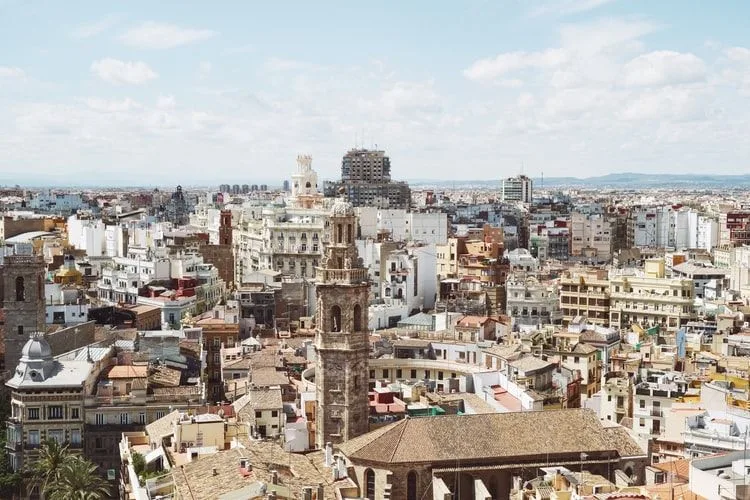
Just five minutes’ walk from Plaza del Ayuntamiento, a good start to a day in Valencia is a breakfast of cold horchata with fartons (cakes) in one of the traditional horchaterías on Plaza de la Reina. It’s a local speciality, but more importantly... it’s delicious! While you’re in one of the city’s prettiest and busiest squares, enjoy the atmosphere, buy an ice cream in an unusual flavour, and admire the silhouette of the Cathedral and the belltower, known as “el Miguelete” and one of the symbols of Valencia.

Did your breakfast fill you with energy? In less than 5 minutes you can reach Plaza de la Virgen, with another view of the Cathedral, and the Basilica of La Virgen de los Desamparados. Now it’s time to have a look inside the Cathedral (did you know the Holy Grail is supposed to be here?) and climb the 207 steps of the Miguelete tower (51 metres tall) for a really unforgettable view.
Back at ground level, you’re very close to the curious Plaza Redonda, a circular space surrounded by traditional craft shops and tapas bars, and another star attraction, the Valencia Silk Exchange, a UNESCO World Heritage site.

Visiting the Lonja and the Mercado Central
Time for some tapas. Many people regard the 15th-century Lonja de la Seda or Silk Exchange as the prettiest sight in Valencia. We recommend going inside to see its delicate spiral columns and peaceful courtyard full of orange trees. Opposite, you will surely notice the striking Art Nouveau architecture of the food market, Mercado Central. As stunning as the exterior is, the real experience is inside. There are over 1200 stands selling food and drink of every kind, and the colours and scents of fruit, vegetables and spices are overwhelming.

Left: Interior of La Lonja / Centre: Miguelete Bell Tower / Right: Central Market in ValenciaLeft: Interior of La Lonja / Centre: Miguelete Bell Tower / Right: Central Market in Valencia

As you will undoubtedly be feeling hungry by now, you can take the opportunity to have lunch in the market’s Central Bar with a menu based on the fresh seasonal produce all around you. Alternatively, you can take a table at one of the many bars and restaurants on the stairs around the Lonja, Plaza del Collado, Plaza del Negrito or Calle Caballeros to try clóchinas al vapor (mussels), tellinas (clams), esgarraet (pepper salad), patatas bravas, etc.

Afternoon in the Turia Gardens and cool evening
After a good lunch, you might like a stroll in the Turia Gardens. Five minutes from Plaza de la Virgen, you’ll find the magnificent 14th-century Serranos Towers. From here you can enter the Turia Gardens, a park that winds nine kilometres along the former course of the river Turia. A lot of people like to cycle from end to end! If you’re an art lover, you could stop along the way at the Valencia Institute of Modern Art (IVAM), with artists like Julio González and Ignacio Pinazo among its collections.

Tourists at the Serrano Towers in ValenciaTourists at the Serrano Towers in Valencia
If you still have the time and energy, you could pass by the National Ceramics Museum just to see its very photogenic façade. Otherwise, it’s time to look for a place to have dinner and a drink, on a square in the charming Carmen district or the trendy Ruzafa neighbourhood.


VALENCIA CATHEDRAL

The Gothic Cathedral is Valencia’s most important religious building, and its tower, “el Miguelete”, is one of the symbols of the city.

DAY 2:
Today we’ll explore two very different sides of Valencia: avant-garde architecture in the City of Arts and Sciences, and the seafront, bathed in the inimitable light of the Mediterranean.

A morning in the City of Arts and Sciences
You can reach this innovative cultural complex, designed by the architect Santiago Calatrava, by walking or cycling through the Turia Gardens. But as you already did that yesterday, you could take a bus instead (EMT line 95), or the metro (the Alameda stop is about 15 minutes from the site).
You’ll want to set aside the whole morning to see the Palau de les Arts, the Ágora, the Hemisfèric (an Imax cinema), the Science Museum and the Oceanogràfic (Europe’s largest aquarium). If you’re travelling with children and you don’t have time to see everything, the aquarium is the best option (another day you could take them to see the Bioparc).

Left: City of Arts and Sciences / centre: Paella on an open fire / Right: Tourists on Valencia beach.Left: City of Arts and Sciences / centre: Paella on an open fire / Right: Tourists on Valencia beach.

A paella by the sea
You must be thinking… I’ve been in Valencia since yesterday and I still haven’t had a paella. The local dish par excellence is always delicious, but accompanied by a sea view, it’s a thousand times better. It takes about half an hour on bus line 95 to reach the Marina and El Cabanyal-Las Arenas beach (or Malvarrosa beach in summer, if you fancy a swim) where you can enjoy an authentic Valencian paella or a stew of freshly-caught fish. There are several regular bus lines (1, 2, 19, 31 and 32) and some special summer lines to Valencia’s beaches.

A spectacular sunset at La Albufera Natural Park
For a really special sunset in Valencia you should get out of the city centre and go to La Albufera Natural Park, just over 10 kilometres away. Here you’ll find wild beaches and dunes, rice paddies, and a huge lake where you can take a boat ride and watch the sun go down in a blaze of colour. If you don’t have a car, it takes about half an hour to get here on EMT bus line 25 or the Albufera Tourist Bus.

La Albufera Natural ParkLa Albufera Natural Park
Don’t forget your camera, because you’ll take some of the most beautiful photos of the trip. If you have more than 2 days, we recommend spending a whole day exploring this area, especially in summer if you want a day at the beach.

Top things to see and  do in Ronda

Top things to see and do in Ronda

New Bridge

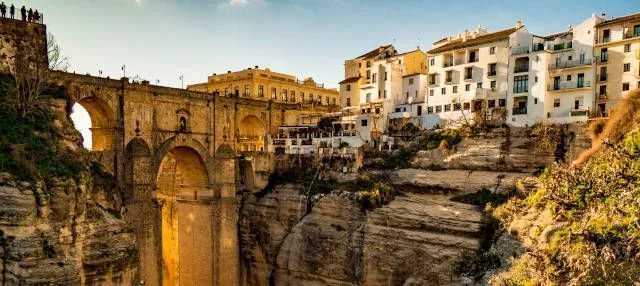
One of southern Spain’s most famous attractions, Ronda’s epic Puente Nuevo or New Bridge, spans the 328-feet-deep El Tajo gorge, linking El Mercadillo (The Little Market), the newer part of town, with the old Moorish quarter. Completed in 1793, it took some forty years and the lives of 50 construction workers to build.

Day Trip to Ronda from Seville Spain

For just 2.50 euros you can visit the museum in a little stone-walled cavern in the middle of the bridge, which was used as a prison throughout the 19th century and during Spain’s Civil War (1936-1939). It is also said, that during the Civil War both Republican and Nationalist prisoners whose luck had run out were thrown from the bridge to their deaths. For a searing fictionalization of a massacre which it is said was loosely-based on events in Ronda, see Hemingway’s For Whom the Bell Tolls.

18th-century bullring

Opened in 1785, Ronda’s stately bullring is now used just once a year for the exclusive annual bullfight of the town’s September Feria. It was on the pale sands of this historic arena that a new kind of bullfighting was forged by Francisco Romero in the 18th century. Romero introduced the now iconic red cape known as "the muleta"and faced the bull on foot, whereas before matadors had performed on horseback.

Ronda´s historic bullring; pixabay

Outside the arena are statues of Antonio Ordonez, another important Ronda bullfighter and of a life-size fighting bull, which better enables you to understand how hard it must be to keep still when one of these half-ton animals is running at you.  There are several daily tours of the bullring and you can learn more about the controversial spectacle that takes place within it, at the excellent museum.

Plaza de Toros de Ronda, 15 Calle Virgen de la Paz, Ronda, Spain, 0034 952 87 41 32

Ernest Hemingway Pathway

Ronda’s bullfighting culture-inspired not one but two works by the Nobel Prize-winning author Ernest Hemingway. Ronda-born Cayetano Ordonez (1904-1961) was the model for the swaggering bullfighter Pedro Romero in Hemingway´s Fiesta – a novel which also made the bull-running fiesta of Pamplona world-famous (some would say much for the worse). Cayetano’s son, Antonio Ordonez (1932-1998), became a great torero as well and his intense rivalry with matador Luis Miguel Dominguín during the 1959-60 season was documented by Hemingway in A Dangerous Summer.

The writer is remembered in Ronda by thePaseo de Ernest Hemingway, a pathway that runs alongside the top of El Tajo river in the ‘new’ part of town and which offers some of the best views of the surrounding landscape.

rsz_dsc01868

Hemingway was inspired by Ronda´s great bullfighters; Encarni Novillo

The Moorish Palace

La Casa del Rey Moro was in fact built in the 18th century, long after the town fell to the Christians in 1485. It sits atop El Tajo gorge on the old Moorish side of town and, although the palace is closed to the public, you can still walk down the steep stone staircase of the Water Mine – which actually does date from the city’s time under Muslim rule – all the way to the bottom of El Tajo.

Matt Blackwell, flickr

Ronda´s “Water Mine” Matt Blackwell, flickr

During Ronda’s Moorish occupation, it was to this perilous staircase that Christian slaves are said to have been chained in order to pass containers of water up to the town from the river Guadalevin. The neck-craning views of Puente Nuevo from the bottom of the gorge are well worth the 300-step trek back to the top.

Casa del Rey Moro, 9 Calle Cuesta de Santo Domingo, Ronda, Spain, 0034 952 18 71 19

Walking in El Tajo

On either side of the New Bridge, there are scenic walking routes to the bottom of El Tajo canyon. On the side of the old town, a little country path takes you down the hillside and under the great bridge itself, via some slightly hairy sections that resemble a much lower but less well-maintained version of Malaga’s terrifying Caminito del Rey.

On the side of the newer part of town, a better-maintained pathway takes you across one of the quaint older bridges that New Bridge was meant to improve upon, and back up the other side of the gorge past the Casa del Rey Moro. Both of these undemanding walks provide an abundance of spots from which to contemplate the untamed beauty of Ronda’s location.

One of the pathways leading down into Ronda´s "El Tajo" gorge; Encar Novillo

One of the pathways leading down into Ronda´s “El Tajo” gorge; Encarni Novillo

Old and New Town

El Tajo canyon not only rendered necessary Ronda’s most iconic attraction, but it also divides the town into two separate halves, each with its own style and atmosphere. La Ciudad – or The Town – is the original Moorish part and weaves around one central Street, Calle Armiñan, south of Puente Nuevo.

The best time to explore the old quarter -Ronda was under Muslim dominion from 712 to 1485- is in the evening or at night when the coach-loads of tourists are in their restaurants or hotels on the other side of the canyon.

On the northern cliffs of El Tajo is the more commercial part of town, known as El Mercadillo  or The Little Market – it was developed after the Arabs were expelled towards the end of the fifteenth century. The heart of modern-day Ronda has retained all of the beauty and charm of Andalusia’s gorgeous ‘white villages’, even if its Plaza España is now home to a Macdonalds.

A pretty backstreet in the old Moorish quarter of Ronda; Harvey Barrison, flickr

A pretty backstreet in the old Moorish quarter of Ronda; Harvey Barrison, flickr

The Arabic Baths

Despite the fact they were in continual use for some 600 years, Ronda’s 10th and 11th-century Arabic baths are among the best-preserved in Spain (along with those in Granada).

Ronda´s Arabic baths are mong the best-preserved in Spain; Bobo Boom, flickr

Ronda´s Arabic baths are among the best-preserved in Spain; Bobo Boom, flickr

Though their working parts are no longer in existence, it is not hard to imagine the busy social life that unfolded within these cool, domed rooms, the ceilings of which are attractively studded with star-shaped vents for light and ventilation. They were situated outside the old city walls, near to one of Ronda’s original bridges, the Puente Arabe.

Baños Arabes, 11 Calle Molino de Alarcón, Ronda, Spain, 0034 952 18 71 19

Balconies

The pathway that runs from Ronda’s bullring and along the cliff-edge to Paseo Ernest Hemingway and Puente Nuevo contains a number of viewing points that are hilariously called ‘Balcons Coños’ in Spanish. These balconies jut out over the cliffside and provide straight-down views that will make even the least vertigo-suffering of visitors shudder.

These vertiginous platforms feel much sturdier than they look when viewed from a distance, especially if there are a number of (cursing) visitors crammed onto them.

Hernán Piñera, flickr

One of Ronda´s hair-raising balconies Hernán Piñera, flickr

Bird watching

If you can bring yourself to inch onto one of the precipitous balconies overhanging El Tajo canyon, they provide a perfect spot from which to try and catch sight of some of the area’s beautiful airborne wildlife.

"El Tajo" gorge is home to many beautiful species of birds; Encarni Novillo

“El Tajo” gorge is home to many beautiful species of birds; Encarni Novillo

The gorge that splits Ronda in two is an ideal hunting and nesting ground for its many species of bird, among which are eagles, kestrels, falcons and the menacing Griffon Vulture, which has a giant 9-meter wingspan. Ronda’s clifftop location allows you to feel part of these magnificent birds’ natural habitat in a way you rarely can at less stomach-churning heights.

Original post: Mark Naylen, The Culture Trip

Discover Ronda’s Sweet Delights: A Guide to Famous Sweets and Desserts

Discover Ronda’s Sweet Delights: A Guide to Famous Sweets and Desserts

Ronda, being a charming city in the Andalusian region of Spain, offers some delightful sweets and desserts that are worth trying. Here are some of the famous sweets you can find in Ronda:

  1. Yemas de Ronda: Yemas are a traditional Spanish sweet made with egg yolks and sugar. In Ronda, they have their own version called "Yemas de Ronda," which are small, rich, and sweet egg yolk candies often wrapped in colorful papers.
  2. Almendrados: These are almond-based cookies that are popular in many regions of Spain, including Ronda. They are made with ground almonds, sugar, and egg whites, giving them a chewy and nutty texture.
  3. Tortas de Aceite: A type of sweet, thin, and crispy biscuit made with olive oil, sugar, and anise. They are perfect for enjoying with a cup of coffee or tea.
  4. Alfajores: These are traditional Andalusian sweets made with almond and honey. They have a soft, cake-like texture and are often dusted with powdered sugar.
  5. Roscos de Vino: These wine-infused ring-shaped cookies are a popular treat during festive occasions in Ronda. They are flavored with wine and anise, giving them a unique taste.
  6. Pestiños: Commonly served during Christmas, pestiños are deep-fried pastries coated with honey or sugar syrup and sprinkled with sesame seeds.
  7. Mantecados and Polvorones: While not originally from Ronda, you can find these traditional Spanish shortbread cookies in many places throughout Spain, and Ronda is no exception. They are especially popular during the Christmas season.

When visiting Ronda, make sure to explore the local bakeries and pastry shops to discover these delicious treats and get a taste of the region's sweet culinary offerings.

Museum of Alhambra

Museum of Alhambra

Museum of Alhambra

Located in the interior of the Palace of Charles V (Palacio de Carlos V), the Museum of the Alhambra offers visitors a unique possibility to see art or architecture objects from the Monument, bound to the Culture that originated it, by means of the most modern museum techniques.

The Museum possesses the best collection of Nasrid Art in the world, with specimens coming from artefacts found archaeological excavations and restored in the Alhambra, making a visit to it an ideal complement to a tour of the artistic-historical monumental complex.

The Museum in Honour of Ángel Barrios is a collection that gathers musical equipment, instruments, drawings, paintings, watercolors, scores and correspondence dedicated by different authors to this important musician and composer born in Granada, who passed away in 1964, and to the figure of his father, Antonio Barrios “the Polinario”, one of last “cicerones” of the Alhambra of the early 20th century, in whose now disappeared tavern, located where today is the Museum, met intellectuals and artists of the time.


Schedule


    • 15 OCTOBER – 31 MARCH

WEDNESDAY TO SATURDAY 8:30 – 18:00 H
SUNDAYS AND TUESDAY 8:30 – 14:30 H
MONDAYS CLOSED

  • 1 APRIL – 14 OCTOBER
    WEDNESDAY TO SATURDAY
    8:30 – 18:00 H
    SUNDAYS AND TUESDAY
    8:30 – 14:30 H
    MONDAYS CLOSED
  • SATURDAYS IN THE MUSEUM
    MAY TO SEPTEMBER
    8:30 – 21:30 H

Medina & Gate of Wine

Medina & Gate of Wine

Medina & Gate of Wine

To some extent the function of this Gate today is similar to what it had been during the Nasrid period. It is the main entrance gate to the Medina of the Alhambra and serves to enclose the residential and artisan district within the walled fortress. Because it was an inner gate, it provided direct access to the fortress, as opposed to the outer gates, which required more protection and were built as L-shaped passageways. Inside, however, there was room enough for benches for the guards that controlled all access to the fortress.

Architecturally one of the oldest structures in the Nasrid Alhambra , it was built during the time of the Sultan Muhammad III (1302-1309), although the decoration of both façades pertains to different periods

The door on the east side, carved in sand stone, probably belongs to the 13th century or the beginning of the 14th century, although the tombstone over the door lintel refers to Sultan Muhammad V, who ruled the fortress in the second half of the 14th century. This east façade was the outer side of the gate and, therefore, the traditional Islamic symbol of the key was engraved above the arch key.

The inner side, i.e. the west façade, even when it follows a similar structural pattern, was decorated during the second mandate of Sultan Muhammad V, more specifically after 1367, the date of the military campaigns of Jaen, Baeza and Ubeda. Remarkable are the beautifully decorated spandrels hanging from the arch, made up of dry-rope manufactured tiles, and the composition of the stucco walls that frame the upper floor’s window, and the rest of well-preserved polychromatic painting on the right side of the arch.