Valencia city best beaches

Valencia city best beaches

In Valencia, you can roll rich culture, phenomenal food, and golden beaches into one fabulous city getaway. This east-coast city’s Mediterranean sands get the morning sun before almost anywhere else in Spain, and the sea can be warm enough for swimming as early as April and as late as November.

Valencia’s coastline mixes great sweeps of sand with coves and sand dunes, and its popularity is confirmed by the many resorts that pepper the shore. There’s variety enough for everyone, though: here, you’ll find buzzy city beaches packed with locals, quiet spots amid wild wetlands, water sports, tapas, festivals and plenty of ice-cold beer.

There are Valencia’s best beaches, starting with the one closest to the city center.


Playa de Las Arenas

Valencia’s most central beach has all-around appeal. Las Arenas is a broad, sandy stretch that dips gently toward the Mediterranean. In summer, beachside restaurants serve up piles of paella, nightclub denizens party till dawn, and the hotels behind the promenade are packed with visitors. You’ll find volleyball courts, sun loungers and bars beachside; in the water, swimmers duck in and out of waves, while SUP (stand-up paddleboarding), sailing and windsurfing keep active types busy.

Once you’ve maxed out your beach time, you can explore El Cabanyal, an appealing fishing barrio behind Las Arenas with pretty tiled buildings, a rice museum, and some excellent backstreet tapas bars (check out Casa Montaña). Just to the south is the modern marina, which has hosted the Americas Cup and European Grand Prix, while to the north stretch other beaches, including Malvarrosa.

cabanas and umbrellas on Las Arenas beach, Valencia, Spain
Las Arenas, Valencia’s most central beach, has all-around appeal ©hessbeck/Shutterstock
Playa de la Malvarrosa
Heading north from Las Arenas, you’ll reach Malvarrosa beach, another long, wide stretch of sand with a long promenade. Though it can still be packed on weekends, this beach is generally quieter and more relaxed than Las Arenas, with a more local feel. This makes it a good spot if you want to take a half-step off the tourist trail but still have toilets and city buses close at hand.

Malvarrosa gets its name from the mallow flower, a sweetly fragrant shrub that used to grow here. While there are a few restaurants by the promenade (La Murciana is a good bet for tapas and seafood), the main activities here are sunbathing and splashing in the warm sea.


Playa de Patacona

Past Malvarrosa, Patacona is far enough from central Valencia that it’s technically part of Alboraya, a town that’s been absorbed into the city suburbs. Quieter than either Malvarrosa or Las Arenas, it remains easy enough to reach from the center, with a nice feeling of space. What’s more, its distance from the port means the water is cleaner. Malvarrosa can feel positively tranquil early in the day, as the sun rises over the Mediterranean and horseback riders trot past the palm trees.

You’ll find a few beachfront restaurants and a 25-minute walk inland leads you to Alboraya, the traditional home of horchata, a sweet, creamy drink made with tiger nuts.


Playa de Pinedo

The closest beach heading south from the center of Valencia, Pinedo is tucked to the other side of the port, making it more sheltered than some of the other southern beaches. There’s a dedicated pet area at its northern end, a nudist stretch at the southern end, and water sports in the Turia river. It’s popular with locals and is a great place to get a sense of Valencian life – expect family picnics, strolling couples, and fried fish on the beach.

Just south of here is L’Arbre del Gos, a quieter stretch that’s great for strolling. Facilities are more limited here, although you can do go-karting.

The best of the southern beaches
The further south you go from Valencia, the wilder it gets. El Saler beach, 13km from the city, offers water sports against a backdrop of pine trees. Beyond that, La Garrofera beach has long grass and rolling dunes beyond its soft sands, while La Devesa beach, just beyond the city’s outskirts, is right next to the Albufera lagoon, Spain’s largest.

These southern beaches are still easily accessible from the center (La Devesa is around a 30-minute drive), while offering the opportunity to mix quality beach time with some serious exploring. Here you can bird-watch, cycle, roam sand dunes, visit viewpoints and discover the home of paella – and still get back to the city well before the locals have even started thinking about their night out.


Other great beaches near Valencia

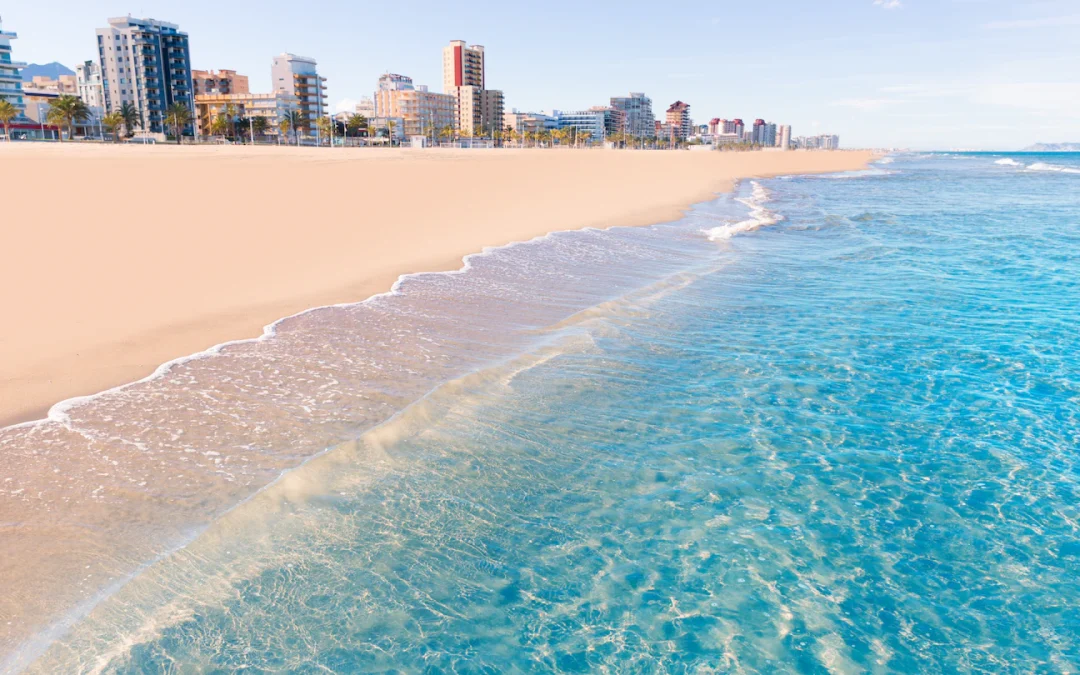
There are superb beaches further afield, too. To the south lies the Costa Blanca, where Playa de Gandia features vast, resort-dotted stretches of sand and a gorgeous 16th-century quarter further inland. Near Dénia and Xàbia, alluring, secluded coves along the coastline beckon.

To the north, the highlights of the Costa del Azahar include Sagunto, which has expansive sands and a fabulous history (don’t miss the medieval castle). Beyond that lie Benicàssim, a likable resort that’s beloved for its famous aqua park and even more famous alt-rock and dance festival, and Peñíscola, an old town with a stunning setting that overlooks a slim but lovely beach.


How to get to Valencia’s best beaches

Several excellent beaches are within easy reach of the city center. Metrovalencia lines 4 or 8 or buses 1, 2, 19, 31, or 32 are convenient for Las Arenas and the beaches to the north, while buses 14 or 15 head past the more secluded southern beaches.

Cars or taxis will save time, especially for the southern beaches; the local ride-sharing app is Cabify. Trains and intercity buses connect Valencia with the likes of Playa de Gandia and Benicàssim, which can be accessed from the city on a full-day trip or with an overnight stay.

Another option to reach the city beaches is to follow the Jardines del Turia, a series of gardens running along the old riverbed through the center of Valencia to the port. It’s an uplifting trip, very manageable on a bike (or as a long walk), and you can take in attractions like the Ciudad de las Artes y las Ciencias and Gulliver en route.

The central beaches all offer restaurants, toilets, and showers, but facilities can be sparser on the more remote beaches. It’s always worth bringing a bottle of water and some sunblock.
Ciudad de Las Artes y las Ciencias

Ciudad de Las Artes y las Ciencias

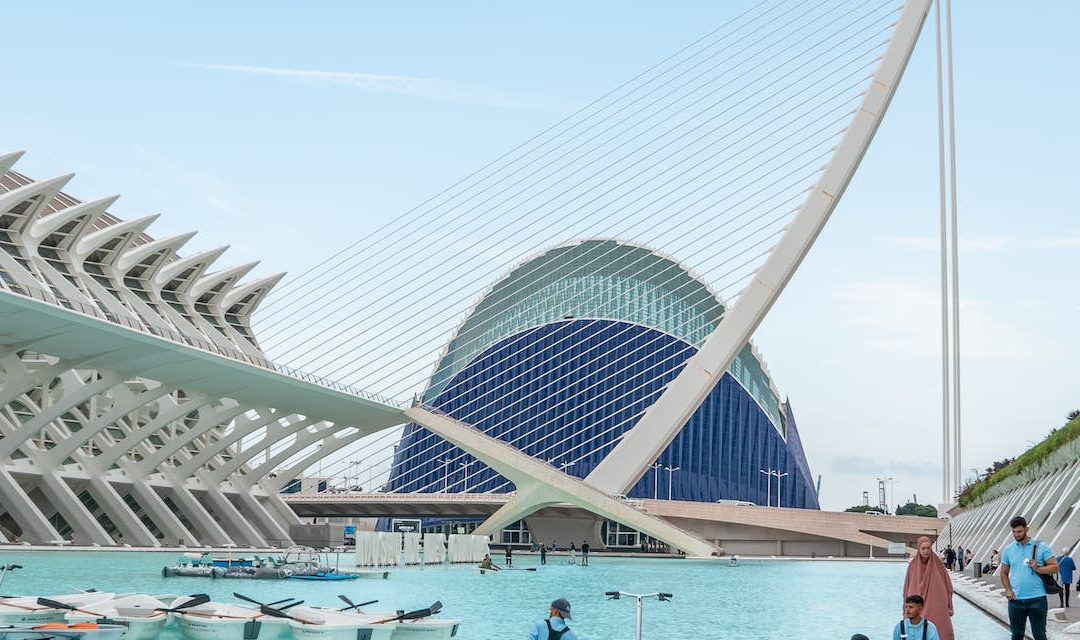
This aesthetically stunning complex occupies a massive 350,000-sq-metre swath of the old Turia riverbed. It’s occupied by a series of spectacular buildings that are mostly the work of world-famous, locally born architect Santiago Calatrava. The principal buildings are a majestic opera house, a science museum, a 3D cinema and an aquarium. Calatrava is a controversial figure for many Valencians, who complain about the expense and various design flaws. Nevertheless, if your taxes weren't involved, it's awe-inspiring and pleasingly family-oriented.

Inicio

What to see and do in Valencia in two days

What to see and do in Valencia in two days

A pleasant Mediterranean city
If you just have two days to visit this city, we recommend a route taking you to some of its most famous sights. Get ready for strolls around the pedestrianised city centre, views of the sea, and the classic paella. You’ll want to enjoy every moment in Valencia.

DAY 1:
You can spend the first day in the historic city centre. Take your time discovering all Valencia’s most famous heritage buildings, mainly in the Gothic style. You can do it all in a leisurely walk.
A morning in the historic quarter
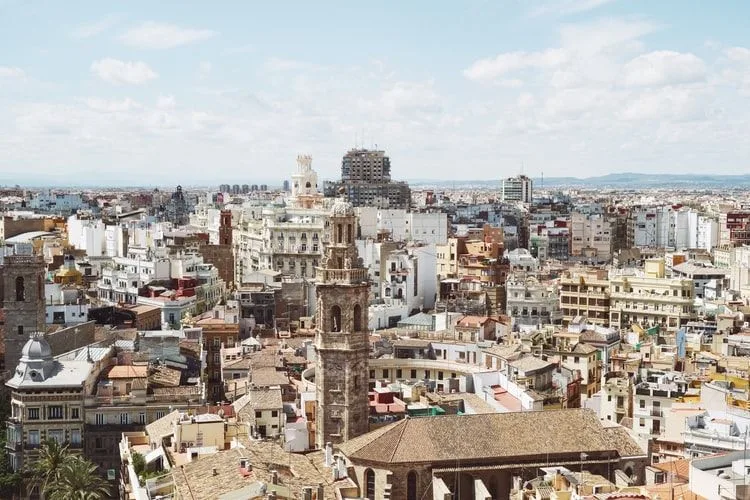
Just five minutes’ walk from Plaza del Ayuntamiento, a good start to a day in Valencia is a breakfast of cold horchata with fartons (cakes) in one of the traditional horchaterías on Plaza de la Reina. It’s a local speciality, but more importantly... it’s delicious! While you’re in one of the city’s prettiest and busiest squares, enjoy the atmosphere, buy an ice cream in an unusual flavour, and admire the silhouette of the Cathedral and the belltower, known as “el Miguelete” and one of the symbols of Valencia.

Did your breakfast fill you with energy? In less than 5 minutes you can reach Plaza de la Virgen, with another view of the Cathedral, and the Basilica of La Virgen de los Desamparados. Now it’s time to have a look inside the Cathedral (did you know the Holy Grail is supposed to be here?) and climb the 207 steps of the Miguelete tower (51 metres tall) for a really unforgettable view.
Back at ground level, you’re very close to the curious Plaza Redonda, a circular space surrounded by traditional craft shops and tapas bars, and another star attraction, the Valencia Silk Exchange, a UNESCO World Heritage site.

Visiting the Lonja and the Mercado Central
Time for some tapas. Many people regard the 15th-century Lonja de la Seda or Silk Exchange as the prettiest sight in Valencia. We recommend going inside to see its delicate spiral columns and peaceful courtyard full of orange trees. Opposite, you will surely notice the striking Art Nouveau architecture of the food market, Mercado Central. As stunning as the exterior is, the real experience is inside. There are over 1200 stands selling food and drink of every kind, and the colours and scents of fruit, vegetables and spices are overwhelming.

Left: Interior of La Lonja / Centre: Miguelete Bell Tower / Right: Central Market in ValenciaLeft: Interior of La Lonja / Centre: Miguelete Bell Tower / Right: Central Market in Valencia

As you will undoubtedly be feeling hungry by now, you can take the opportunity to have lunch in the market’s Central Bar with a menu based on the fresh seasonal produce all around you. Alternatively, you can take a table at one of the many bars and restaurants on the stairs around the Lonja, Plaza del Collado, Plaza del Negrito or Calle Caballeros to try clóchinas al vapor (mussels), tellinas (clams), esgarraet (pepper salad), patatas bravas, etc.

Afternoon in the Turia Gardens and cool evening
After a good lunch, you might like a stroll in the Turia Gardens. Five minutes from Plaza de la Virgen, you’ll find the magnificent 14th-century Serranos Towers. From here you can enter the Turia Gardens, a park that winds nine kilometres along the former course of the river Turia. A lot of people like to cycle from end to end! If you’re an art lover, you could stop along the way at the Valencia Institute of Modern Art (IVAM), with artists like Julio González and Ignacio Pinazo among its collections.

Tourists at the Serrano Towers in ValenciaTourists at the Serrano Towers in Valencia
If you still have the time and energy, you could pass by the National Ceramics Museum just to see its very photogenic façade. Otherwise, it’s time to look for a place to have dinner and a drink, on a square in the charming Carmen district or the trendy Ruzafa neighbourhood.


VALENCIA CATHEDRAL

The Gothic Cathedral is Valencia’s most important religious building, and its tower, “el Miguelete”, is one of the symbols of the city.

DAY 2:
Today we’ll explore two very different sides of Valencia: avant-garde architecture in the City of Arts and Sciences, and the seafront, bathed in the inimitable light of the Mediterranean.

A morning in the City of Arts and Sciences
You can reach this innovative cultural complex, designed by the architect Santiago Calatrava, by walking or cycling through the Turia Gardens. But as you already did that yesterday, you could take a bus instead (EMT line 95), or the metro (the Alameda stop is about 15 minutes from the site).
You’ll want to set aside the whole morning to see the Palau de les Arts, the Ágora, the Hemisfèric (an Imax cinema), the Science Museum and the Oceanogràfic (Europe’s largest aquarium). If you’re travelling with children and you don’t have time to see everything, the aquarium is the best option (another day you could take them to see the Bioparc).

Left: City of Arts and Sciences / centre: Paella on an open fire / Right: Tourists on Valencia beach.Left: City of Arts and Sciences / centre: Paella on an open fire / Right: Tourists on Valencia beach.

A paella by the sea
You must be thinking… I’ve been in Valencia since yesterday and I still haven’t had a paella. The local dish par excellence is always delicious, but accompanied by a sea view, it’s a thousand times better. It takes about half an hour on bus line 95 to reach the Marina and El Cabanyal-Las Arenas beach (or Malvarrosa beach in summer, if you fancy a swim) where you can enjoy an authentic Valencian paella or a stew of freshly-caught fish. There are several regular bus lines (1, 2, 19, 31 and 32) and some special summer lines to Valencia’s beaches.

A spectacular sunset at La Albufera Natural Park
For a really special sunset in Valencia you should get out of the city centre and go to La Albufera Natural Park, just over 10 kilometres away. Here you’ll find wild beaches and dunes, rice paddies, and a huge lake where you can take a boat ride and watch the sun go down in a blaze of colour. If you don’t have a car, it takes about half an hour to get here on EMT bus line 25 or the Albufera Tourist Bus.

La Albufera Natural ParkLa Albufera Natural Park
Don’t forget your camera, because you’ll take some of the most beautiful photos of the trip. If you have more than 2 days, we recommend spending a whole day exploring this area, especially in summer if you want a day at the beach.

The Route of Modernist Architecture in Valencia

The Route of Modernist Architecture in Valencia

The Modernism Route in Valencia usually starts at Plaza de la Almoina, one of the oldest in the historic center, to see the house Punt de Ganxo (1902), so called because the decoration of its facade recalls a crochet point. From there you continue through the streets Colón, Sorní, Ramilletes and Marqués del Turia, in search of other beautiful modernist houses, such as the House of Dragons (1901), the Ordeig House (1907), the Casa Chapa (1916) and the Palacete de Ayora (1900), surrounded by gardens.

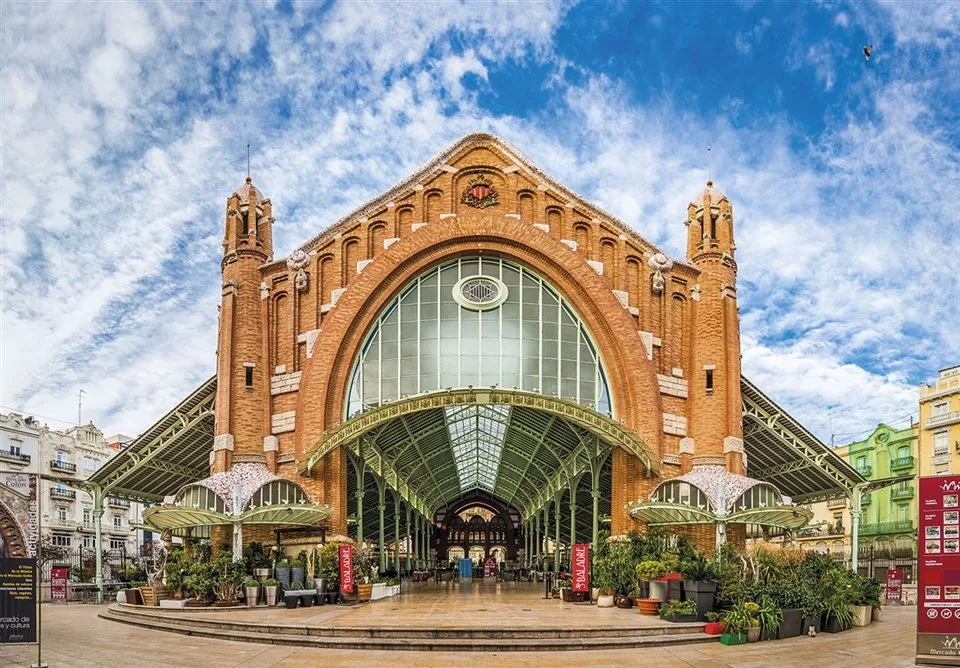
The markets Colon (1914) and Central (1910), with their characteristic structures of iron, glass and brick, are other essential stages; the last one is next to the Silk Exchange, a jewel of the civil Gothic declared Unesco Heritage.

Modernism in Valencia was characterized by the exaltation of proper signs, such as the orchard or the faults. It is seen in the Estación del Norte (1917), one of the most beautiful in Spain, which has a ceramic facade that imitates oranges and an interior with mosaic murals and tiles.