Granada: Discover the last kingdom of Al-Andalus

Granada: Discover the last kingdom of Al-Andalus

Granada: Discover the last kingdom of Al-Andalus

Nestled at the foot of the Sierra Nevada mountains, Granada is one of Spain’s most enchanting destinations. Few cities in Europe combine such a rich blend of history, culture, architecture, and breathtaking scenery. Home to the world-famous Alhambra, charming medieval neighbourhoods, vibrant local traditions, and a remarkable Andalusi heritage, Granada offers visitors an unforgettable journey through more than a thousand years of history.

For over two centuries, Granada served as the capital of the Nasrid Kingdom, the last Muslim state in the Iberian Peninsula. During this period, the city flourished as a centre of art, science, architecture, literature, and commerce, leaving behind one of humanity’s greatest architectural masterpieces: the Alhambra. Today, visitors can still wander through streets that preserve the atmosphere of medieval Al-Andalus while enjoying the lively character of a modern Andalusian city.

Whether you are planning a short city break or exploring Andalusia on a longer itinerary, Granada is a destination that deserves far more than a single day.

History

Granada’s origins stretch back to ancient times, when Iberian settlements occupied the surrounding hills before the arrival of the Romans. During Roman rule, nearby Iliberri became an important regional centre, although Granada itself remained relatively modest.

The city’s fortunes changed dramatically following the arrival of Islam in the Iberian Peninsula in the eighth century. The Zirid dynasty established Granada as the capital of its taifa kingdom during the eleventh century, constructing the first defensive walls and developing the Albaicín hill into a thriving urban centre.

In the thirteenth century, after the Christian conquest of Córdoba and Seville, Muhammad I ibn al-Ahmar founded the Nasrid Kingdom of Granada. Protected by the surrounding mountains and sustained by sophisticated agricultural systems, the kingdom became the last independent Muslim state in Iberia.

For more than 250 years, Granada experienced an extraordinary period of artistic and architectural achievement. The Nasrid sultans transformed Sabika Hill into the magnificent Alhambra, while the Generalife served as their summer palace and agricultural estate. Skilled artisans perfected decorative plasterwork, carved wooden ceilings, intricate tile mosaics, and refined hydraulic engineering that continue to impress visitors today.

In 1492, Granada surrendered peacefully to the Catholic Monarchs, Ferdinand and Isabella, ending nearly eight centuries of Muslim political rule in the Iberian Peninsula. Although the city entered a new chapter under Christian rule, much of its Andalusi urban fabric survived, allowing modern visitors to experience one of Europe’s best-preserved medieval Islamic cities.

Best Time to Visit

Spring brings mild temperatures, blooming gardens, and ideal conditions for walking through the Albaicín and visiting the Alhambra.
Autumn offers equally pleasant weather with fewer crowds, making it one of the best seasons for sightseeing.

Summers can be hot during the day, although evenings remain enjoyable thanks to Granada’s elevated location. Winter is surprisingly attractive, combining quiet streets with the possibility of seeing snow on the nearby Sierra Nevada while enjoying relatively mild conditions in the city itself.

The nearby Sierra Nevada ski resort also makes Granada unique among European destinations, allowing visitors to combine cultural tourism with winter sports.

While many travellers visit Granada as a day trip, the city deserves at least two or three days.

A longer stay allows visitors to explore the Alhambra at a relaxed pace, wander through the Albaicín and Sacromonte, visit museums and monuments, experience local gastronomy, and enjoy Granada’s unique atmosphere after the day-trippers have departed.

Granada also serves as an excellent base for exploring the Alpujarras, Sierra Nevada National Park, the Costa Tropical, and other destinations across eastern Andalusia.


The Alhambra Palaces: Spain’s Greatest Monument

No visit to Granada is complete without exploring the Alhambra, one of the world’s most celebrated architectural masterpieces and a UNESCO World Heritage Site.

Perched above the city, the Alhambra was far more than a palace. It functioned as a complete palatine city containing royal residences, administrative buildings, military fortifications, workshops, baths, mosques, gardens, water channels, and residential quarters.

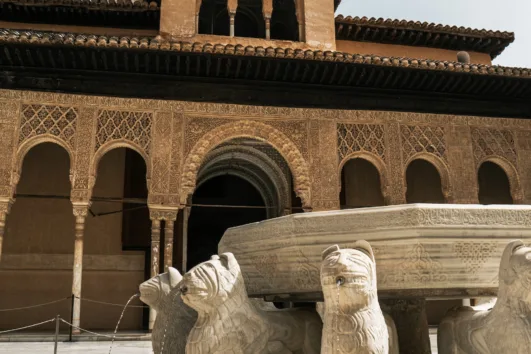
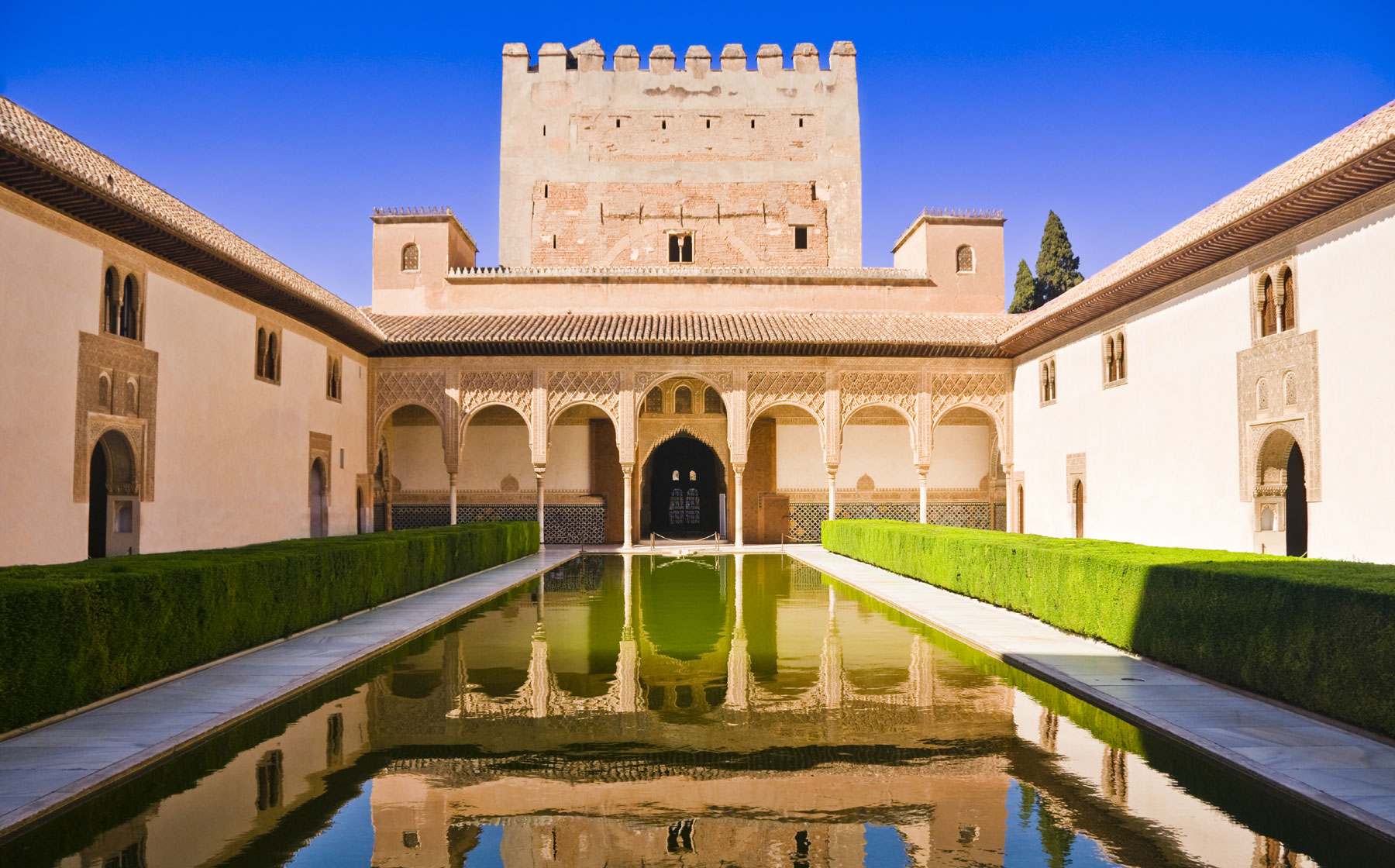
Its most famous buildings are the Nasrid Palaces, where elegant courtyards, delicate stucco decoration, Arabic inscriptions, geometric patterns, carved cedar ceilings, marble columns, and tranquil reflecting pools create an atmosphere unlike anywhere else in Europe.

The Court of the Lions, Hall of the Ambassadors, Hall of the Two Sisters, Court of the Myrtles, and countless other rooms demonstrate the extraordinary artistic sophistication achieved during the Nasrid period.

Visitors should also explore the Alcazaba, the oldest section of the complex, whose towers offer spectacular panoramic views across Granada, the Albaicín, and the Sierra Nevada.

The Generalife Gardens

Adjacent to the Alhambra lies the Generalife, the summer palace of the Nasrid rulers.

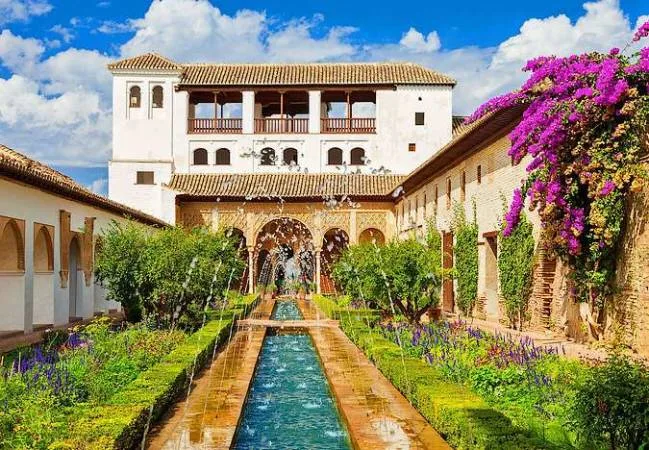
Designed as a place of rest and contemplation, the Generalife combines elegant architecture with beautifully landscaped gardens, terraces, orchards, fountains, and water channels that showcase the advanced hydraulic engineering of Al-Andalus.

Water plays a central role throughout the complex, creating cooling effects, reflections, and soothing sounds that perfectly complement the surrounding vegetation.

Today, the Generalife remains one of the finest surviving examples of medieval Islamic garden design.

The Albaicin: Granada’s Medieval Quarter

Across the Darro Valley rises the Albaicín, Granada’s oldest neighbourhood and another UNESCO World Heritage Site.

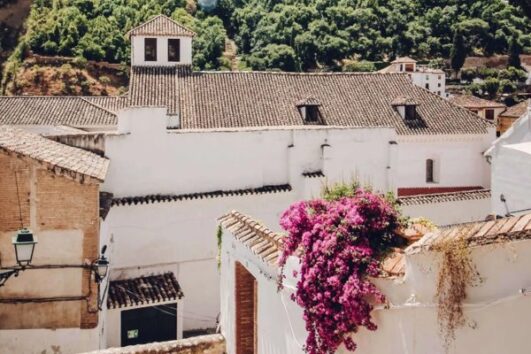
Its steep, winding streets follow the medieval layout established during the Zirid and Nasrid periods. Whitewashed houses, hidden courtyards, traditional cármenes, small plazas, and ancient city gates preserve the atmosphere of medieval Granada.

Walking through the Albaicín reveals countless reminders of the city’s Islamic past, including sections of the Zirid walls, historic cisterns, former mosques converted into churches, and traditional houses built around peaceful interior patios.

The neighbourhood is best explored slowly, allowing time to discover hidden viewpoints, artisan workshops, cafés, and quiet corners away from the busiest tourist routes.

Sacromonte: The Hillside of Caves

Beyond the Albaicín lies Sacromonte, one of Granada’s most distinctive districts. Built along the hillside overlooking the Alhambra, Sacromonte is famous for its traditional cave dwellings, many of which remain inhabited today. These whitewashed caves maintain a naturally comfortable temperature throughout the year and have become an iconic feature of Granada’s cultural landscape.

The neighbourhood is closely associated with flamenco and offers visitors a unique opportunity to experience performances in intimate cave venues while enjoying panoramic views over the city.

The Sacromonte Abbey, founded in the seventeenth century, adds another historical dimension to this fascinating district.

Granada’s Best Views

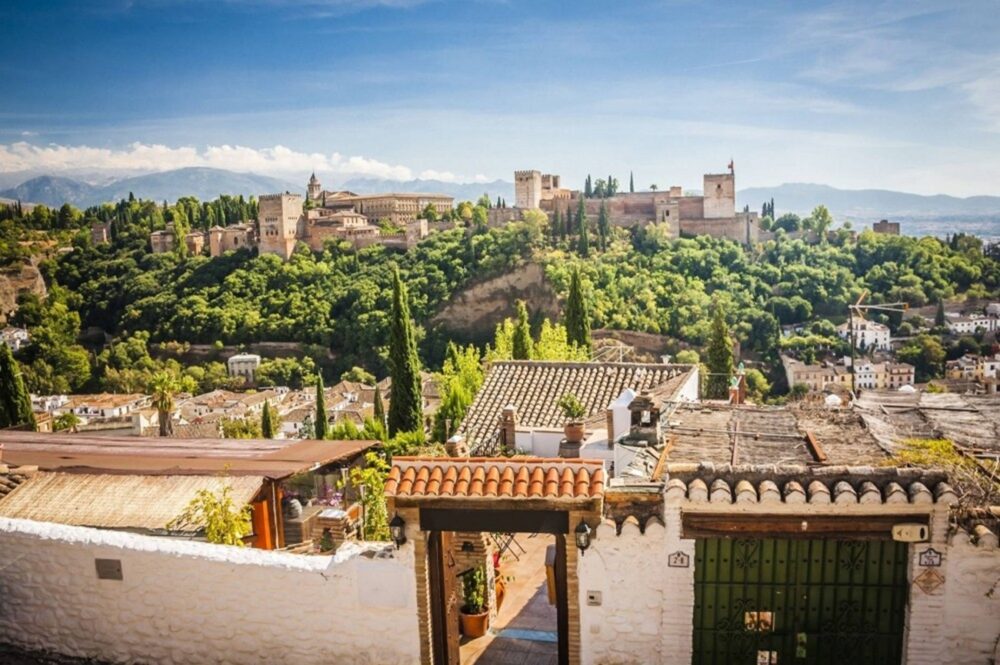
Granada is famous for its spectacular viewpoints. The Mirador de San Nicolás is undoubtedly the most celebrated, offering breathtaking views of the Alhambra set against the snow-capped Sierra Nevada mountains. At sunset, the changing light transforms the palace into one of Spain’s most photographed landscapes.

Other excellent viewpoints include the Mirador de San Miguel Alto, which provides panoramic views over the entire city, and several quieter terraces scattered throughout the Albaicín and Sacromonte.


The Historic Centre

Granada’s city centre combines elegant avenues with narrow medieval streets filled with history.

Plaza Nueva, despite its name, is one of the city’s oldest squares and serves as the gateway to both the Albaicín and the Alhambra.

The Carrera del Darro is widely regarded as one of Spain’s most beautiful streets. Running alongside the Darro River, it features historic bridges, Renaissance palaces, ancient mills, and spectacular views towards the Alhambra.

Nearby, the Realejo district reflects Granada’s former Jewish quarter and offers charming plazas, hidden churches, traditional taverns, and contemporary street art.

Featured Articles

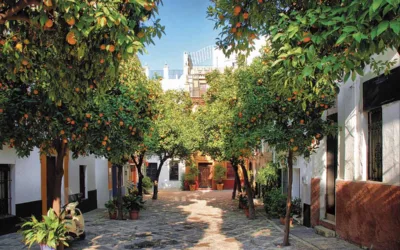
Seville’s Most Charming Streets fo a Picturesque Stroll in the Historic Center

Seville’s Most Charming Streets fo a Picturesque Stroll in the Historic Center

Explore Seville’s historic heart with our guide to the most enchanting streets in the city’s center. From the famous Calle Sierpes, lined with shops and tapas bars, to the cobbled beauty of Calle Mateos Gago near the iconic Santa Cruz neighborhood, discover the perfect routes for leisurely walks. Immerse yourself in the neoclassical allure of Tetuán Street, the artistic ambiance of Regina Street, and the riverside views of Betis Street in Triana. Whether you’re seeking shopping, history, or tranquil beauty, Seville’s historic streets have it all.

Seville

Seville

Seville

Seville is one of Europe’s most captivating cities, where magnificent monuments, lively plazas, fragrant orange trees, and centuries of history create an unforgettable destination. As the capital of Andalusia, Seville is famous for its impressive architectural heritage, vibrant culture, and warm hospitality, but beneath its lively atmosphere lies a remarkable past shaped by Romans, Andalusis, Castilians, merchants, explorers, and artists.

For more than five centuries, Ishbiliya—as Seville was known during the period of Al-Andalus—was one of the most important cities in the Iberian Peninsula. Its rulers transformed the city into a flourishing political, economic, and cultural centre whose legacy still defines much of modern Seville. Today, visitors can admire magnificent palaces, ancient walls, elegant courtyards, and gardens that preserve the artistic achievements of that period alongside later Gothic, Renaissance, Baroque, and Mudéjar masterpieces.

Whether you are visiting for a day or spending several nights exploring its neighbourhoods, Seville offers an extraordinary journey through more than two thousand years of history.


History

Seville’s origins date back over two millennia. The Romans established Hispalis as an important provincial city, constructing roads, temples, aqueducts, and public buildings that laid the foundations for future growth.

Following the arrival of Islam in the Iberian Peninsula in the early eighth century, the city became known as Ishbiliya and rapidly developed into one of the principal cities of Al-Andalus. During the Umayyad Emirate and later the Caliphate of Córdoba, Seville prospered as a commercial centre thanks to its strategic position on the Guadalquivir River.

After the collapse of the Caliphate in the eleventh century, Seville became the capital of the powerful Taifa Kingdom ruled by the Abbadid dynasty. Under rulers such as Al-Mu’tamid, the city enjoyed a remarkable cultural flowering, attracting poets, scholars, musicians, and craftsmen from across the Islamic world.

Later, the Almoravids and subsequently the Almohads incorporated Seville into their empires. The Almohad period during the twelfth century transformed the city’s skyline with ambitious construction projects, including the Great Mosque, the Giralda minaret, defensive walls, bridges, and royal palaces.

In 1248, King Ferdinand III conquered Seville for the Kingdom of Castile. Rather than erasing its Andalusi heritage, many buildings were preserved, adapted, and expanded, giving rise to the distinctive Mudéjar style that characterises much of the city’s architecture.

Following the discovery of the Americas, Seville became the principal gateway for trade with the New World. During the sixteenth century, it was among Europe’s richest cities, attracting merchants, explorers, artists, and scholars whose influence helped shape Spain’s Golden Age.

Today, Seville’s historic centre is one of the largest in Europe and has been recognised by UNESCO for its outstanding cultural value.


Spring is widely considered the ideal season to visit Seville. Temperatures are pleasant, gardens are in bloom, and the city’s major festivals take place between March and May.  Autumn also offers comfortable weather with fewer crowds and excellent conditions for sightseeing.

Summers are extremely hot, often exceeding 40°C (104°F). Visitors should explore early in the morning and during the evening while reserving indoor attractions for the hottest part of the day. Winter remains mild, making Seville an attractive destination throughout the year.

Although Seville’s main monuments can be visited in two days, three or four days allow a much deeper appreciation of the city.

Seville also serves as an excellent base for day trips to Córdoba, Cádiz, Jerez de la Frontera, Carmona, and the famous White Villages of Andalusia.


The Legacy of Al-Andalus

Although visitors often associate Seville with flamenco and grand Christian monuments, much of the city’s identity was shaped during the centuries of Al-Andalus.

The street layout of the historic centre, many surviving walls and gates, irrigation systems, gardens, decorative arts, and architectural techniques all reflect this remarkable legacy.

The Giralda, sections of the Alcázar, the Torre del Oro, fragments of the city walls, ancient gates such as the Puerta de Córdoba and Puerta de la Macarena, and numerous archaeological remains continue to tell the story of Ishbiliya.

Understanding this heritage allows visitors to appreciate Seville not simply as a beautiful city but as one of the great centres of medieval Islamic civilization in Western Europe.

TOP ATTRACTIONS

The Royal Alcázar: A Living Palace

The Royal Alcázar is undoubtedly Seville’s most remarkable monument and one of the oldest royal palaces in continuous use anywhere in the world.Its origins lie in the fortified palaces constructed by Andalusi rulers during the tenth and eleventh centuries. Successive dynasties expanded the complex, while after the Christian conquest, Castilian monarchs continued building new palaces inspired by Andalusi craftsmanship rather than replacing it.

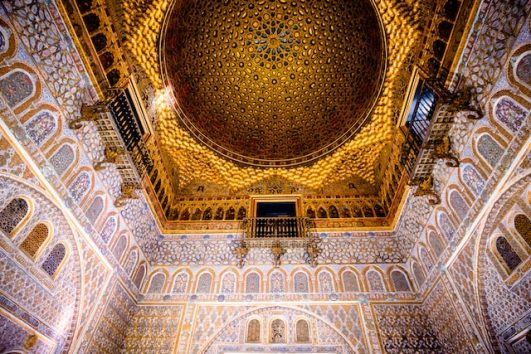
The result is an extraordinary architectural ensemble where Islamic geometry, intricate plasterwork, carved wooden ceilings, colourful ceramic tiles, Gothic chapels, Renaissance halls, and Baroque additions coexist harmoniously.

The Palace of King Pedro I is considered one of the finest examples of Mudéjar architecture ever built, created by Muslim craftsmen working for a Christian monarch.

Outside, magnificent gardens filled with fountains, palm trees, orange blossoms, pavilions, and reflecting pools offer a peaceful escape from the bustling city.

Seville Cathedral and the Giralda

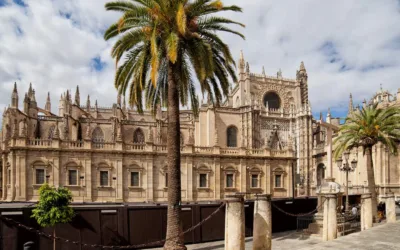
Standing beside the Alcázar is one of the largest Gothic cathedrals in the world. Built after the Christian conquest on the site of the former Almohad Great Mosque, Seville Cathedral reflects the city’s growing wealth and prestige during the late Middle Ages.

The cathedral preserves one of the mosque’s most iconic features: the Giralda.

Originally constructed during the twelfth century as the mosque’s minaret, the Giralda is one of the greatest surviving masterpieces of Almohad architecture. Its elegant proportions, decorative brickwork, horseshoe arches, and geometric ornamentation continue to define Seville’s skyline.

Following the Christian conquest, a Renaissance bell tower was added above the original minaret rather than demolishing it. Visitors climbing the Giralda enjoy spectacular panoramic views across the city.

Santa Cruz: Seville’s Most Atmospheric Quarter

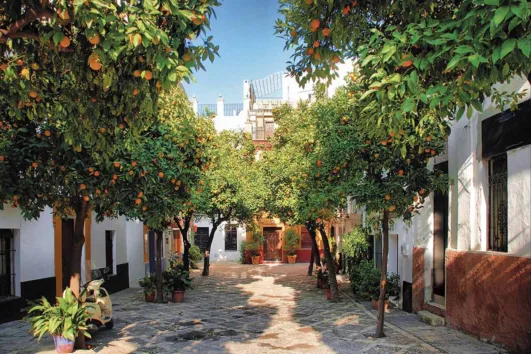
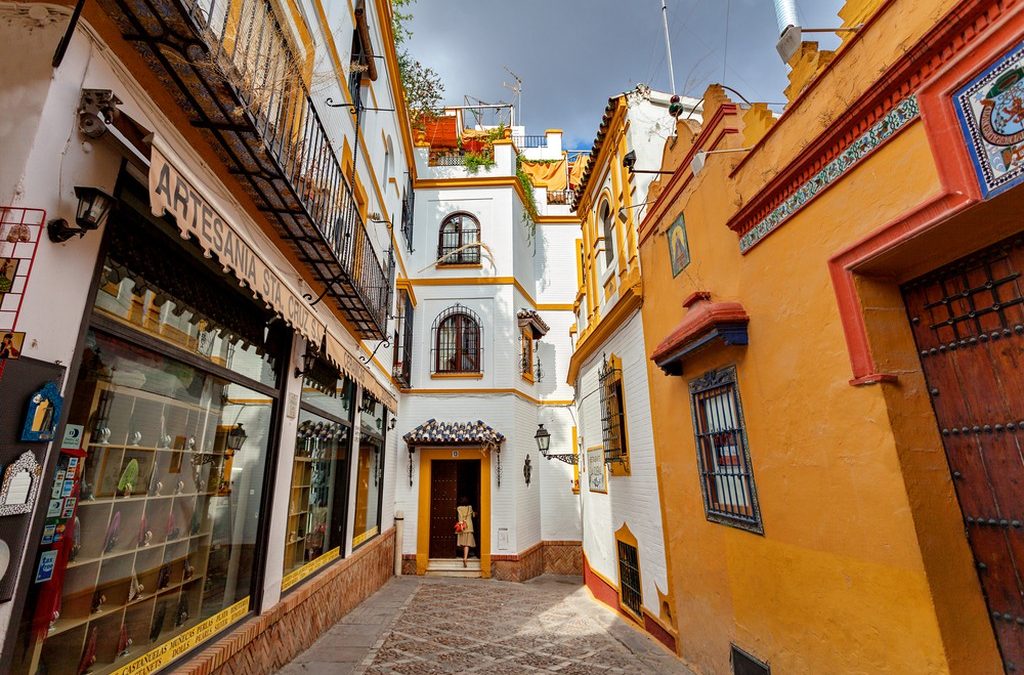
Santa Cruz is perhaps Seville’s most famous neighbourhood. Its labyrinth of narrow streets, shaded squares, flower-filled balconies, hidden patios, and whitewashed houses preserves the medieval street pattern that developed during the Andalusi period.

Walking through Santa Cruz reveals charming plazas such as Plaza de Doña Elvira, Plaza de Santa Cruz, and Plaza de los Venerables, each offering quiet corners away from the busiest tourist routes.

Today the district is home to traditional restaurants, artisan workshops, boutique hotels, and some of the city’s finest examples of domestic architecture.


The Guadalquivir River

The Guadalquivir River has shaped Seville’s history for more than two thousand years. It allowed Roman merchants, Andalusi traders, and later Spanish fleets sailing to the Americas to transform the city into an international commercial centre.

Today, pleasant riverside promenades connect many important landmarks.

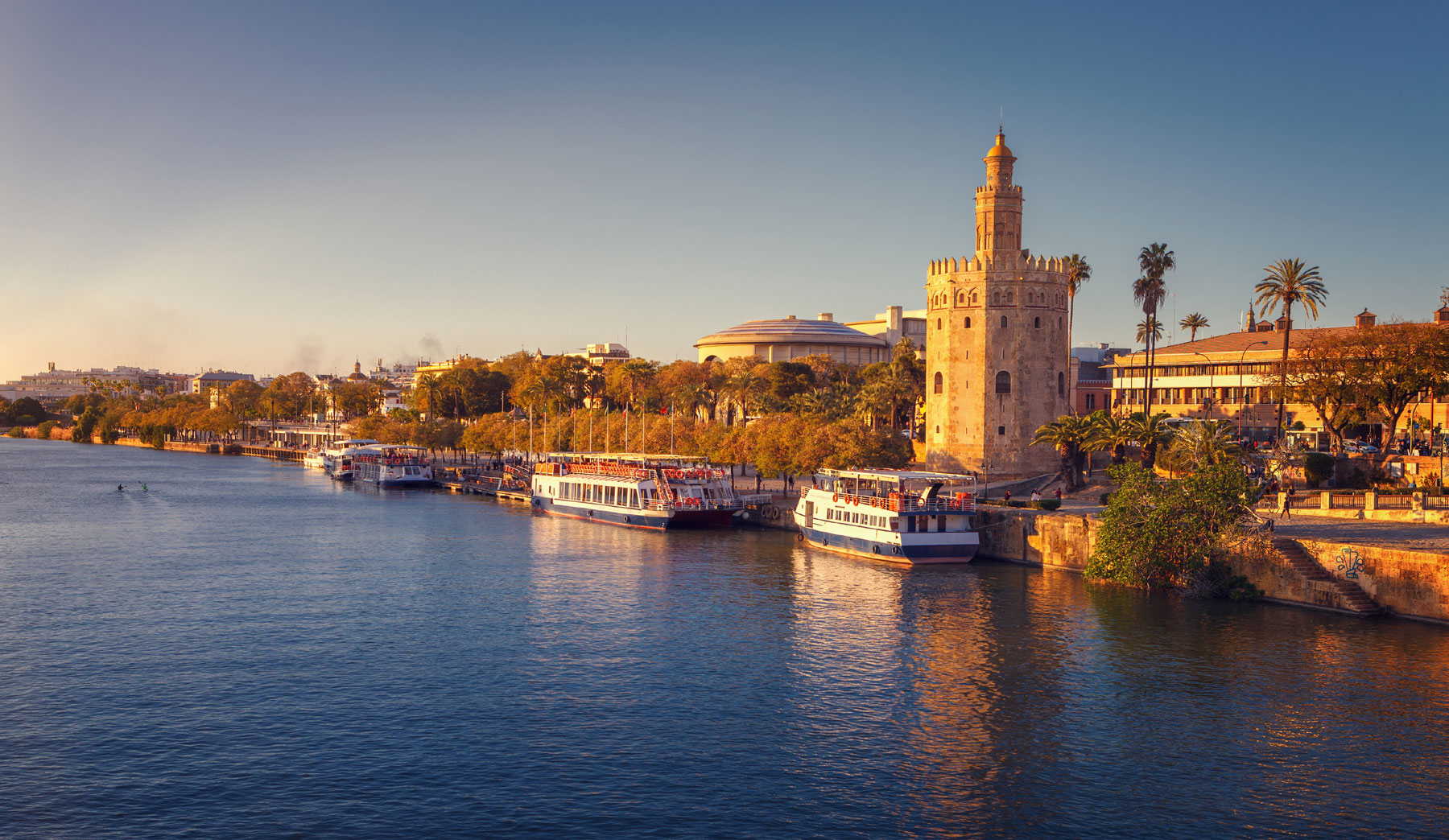
Among them is the Torre del Oro, a defensive tower built by the Almohads in the early thirteenth century to protect access to the city from the river. Nearby, visitors can enjoy boat cruises, cycling routes, gardens, and panoramic views across the historic centre.

Plaza de España and María Luisa Park

Although much younger than Seville’s medieval monuments, Plaza de España has become one of Spain’s most iconic public spaces.

Constructed for the Ibero-American Exposition of 1929, the enormous semicircular plaza combines Renaissance Revival and Neo-Mudéjar architecture with colourful ceramic decoration representing every Spanish province.

Bridges crossing canals, elegant towers, tiled alcoves, and impressive galleries make it one of the city’s most photographed locations.

Adjacent María Luisa Park provides extensive gardens, fountains, shaded avenues, and peaceful walking paths ideal for escaping the summer heat.


Featured Articles

Seville’s Most Charming Streets fo a Picturesque Stroll in the Historic Center

Seville’s Most Charming Streets fo a Picturesque Stroll in the Historic Center

Explore Seville’s historic heart with our guide to the most enchanting streets in the city’s center. From the famous Calle Sierpes, lined with shops and tapas bars, to the cobbled beauty of Calle Mateos Gago near the iconic Santa Cruz neighborhood, discover the perfect routes for leisurely walks. Immerse yourself in the neoclassical allure of Tetuán Street, the artistic ambiance of Regina Street, and the riverside views of Betis Street in Triana. Whether you’re seeking shopping, history, or tranquil beauty, Seville’s historic streets have it all.

Royal Alcazar of Seville

Royal Alcazar of Seville

The oldest palace of Spain is in Seville, Andalusia. Seville Alcazar was initially built by the Arabs in the early 8th century and has been expanded by further Spanish Kings, converting it into their royal residence.

Cordoba

Cordoba


Cordoba: Discover the Historic Heart of Al-Andalus

Cordoba is one of Spain’s most extraordinary cities and an essential destination for anyone interested in history, architecture, and the legacy of Al-Andalus. Once the capital of the Umayyad Caliphate and one of the largest, wealthiest, and most intellectually advanced cities in medieval Europe, Córdoba remains a living museum where Roman, Andalusi, Jewish, and Christian heritage coexist within a remarkably preserved historic centre.

Today, the city offers far more than its famous Mosque-Cathedral. Hidden courtyards overflowing with flowers, narrow medieval streets, elegant palaces, traditional taverns, archaeological remains, and the tranquil banks of the Guadalquivir River invite visitors to slow down and explore. Recognised as a UNESCO World Heritage Site, Córdoba rewards those who look beyond its monuments and discover the stories that shaped one of Europe’s greatest civilizations.

Whether you are visiting for a day or planning a longer stay, Córdoba offers an unforgettable journey through more than two thousand years of history.

Spring is widely considered the best season to visit Córdoba. Pleasant temperatures coincide with several famous festivals, including the Patios Festival, the Battle of the Flowers, and the May Fair. Autumn also offers comfortable weather and fewer crowds, making it ideal for sightseeing.

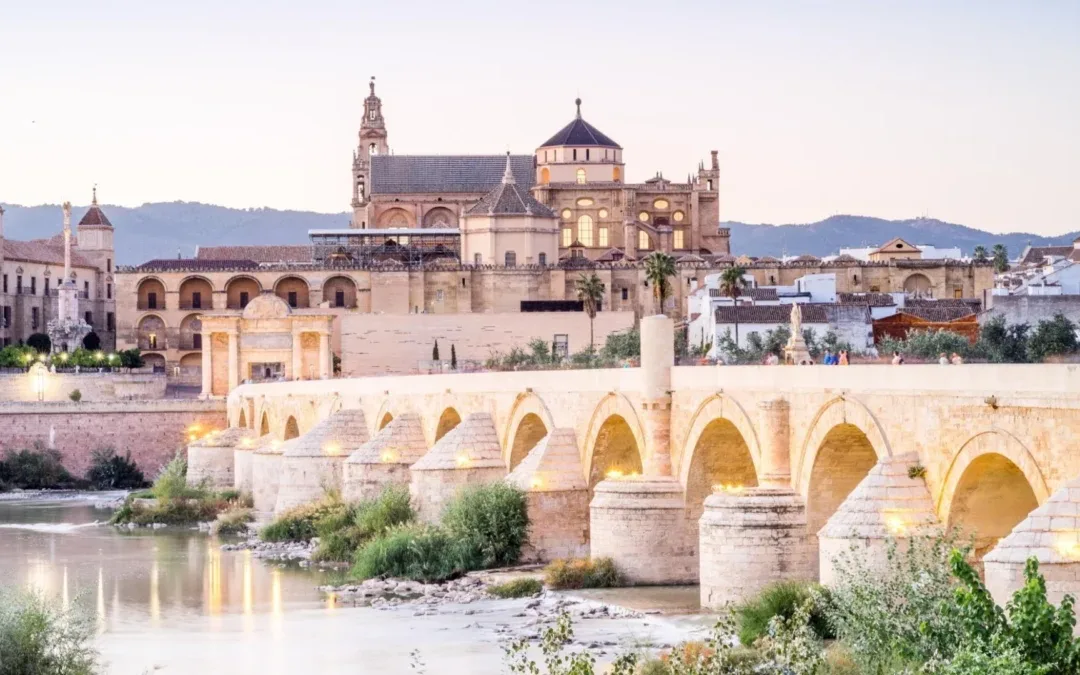
Córdoba’s origins date back to Roman times, when it became an important provincial capital of Hispania. The Romans left behind impressive engineering works, including the iconic Roman Bridge, sections of the city walls, and the Temple of Claudius Marcellus.

Following the arrival of Islam in the Iberian Peninsula in the early eighth century, Córdoba entered its golden age. In 756, Abd al-Rahman I established the Umayyad Emirate of Córdoba after escaping the Abbasid revolution in Damascus. He transformed the city into the political and cultural centre of Al-Andalus and began the construction of the Great Mosque, one of the masterpieces of Islamic architecture.

The city’s greatest period came under Abd al-Rahman III, who proclaimed himself Caliph in 929. During the tenth century, Córdoba became one of the largest cities in the world, with a population estimated between 300,000 and 500,000 inhabitants. It rivalled Constantinople and Baghdad as a centre of learning, science, philosophy, medicine, astronomy, literature, and commerce.

Scholars from different faiths worked side by side in its libraries, schools, and workshops. The city became renowned for its physicians, mathematicians, philosophers, architects, and craftsmen, whose influence extended across Europe and the Mediterranean.

After the collapse of the Caliphate in the early eleventh century, Córdoba gradually lost political power but retained its cultural importance. In 1236, King Ferdinand III incorporated the city into the Kingdom of Castile. Many Islamic buildings were adapted to Christian use while preserving much of their original architecture, creating the unique cultural landscape visitors admire today.


TOP ATTRACTIONS

The Mosque-Cathedral

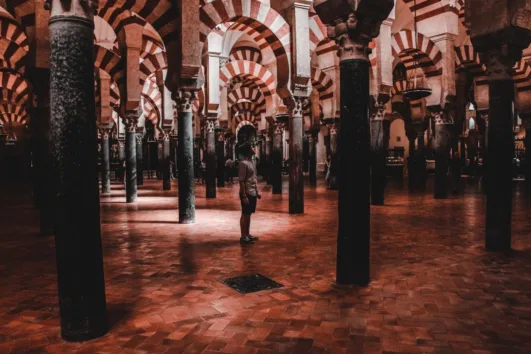
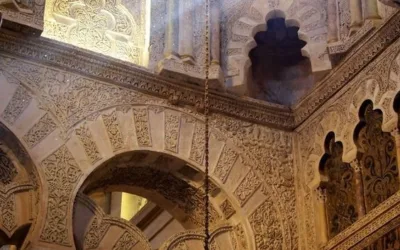
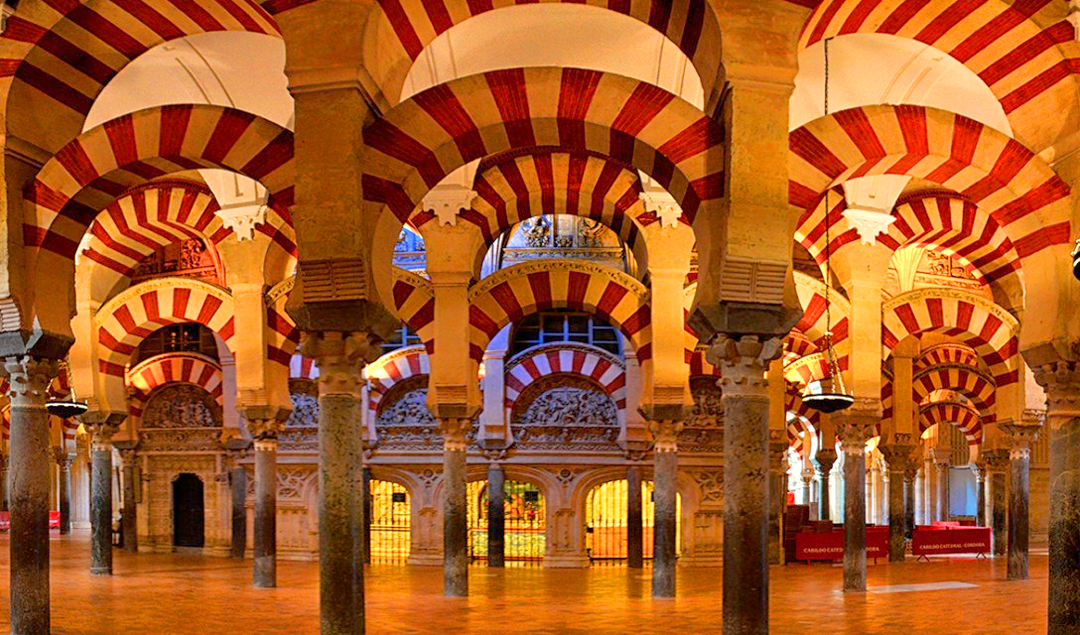
The Mosque-Cathedral is undoubtedly the city’s most iconic landmark and one of the most extraordinary buildings in the world.


The Former Madinat Qurtubah & Jewish Quarter  

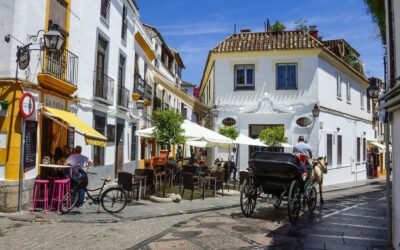
Small squares, artisan workshops, traditional patios, and hidden courtyards create an intimate atmosphere perfect for leisurely walks within the city walls.

The Roman Bridge & Calahorra Tower-Museum 

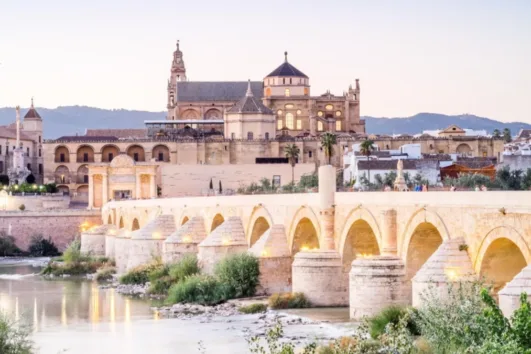
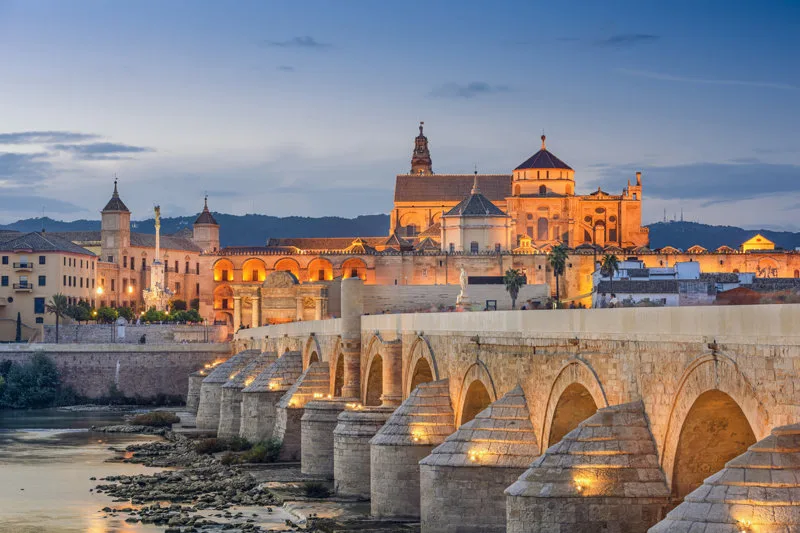
Long before becoming the capital of Al-Andalus, Córdoba was an important Roman city. The Roman Bridge, stretching across the Guadalquivir River, has connected both sides of the city for nearly two thousand years. Although restored over the centuries, much of its structure remains faithful to its Roman origins.

At one end stands the Calahorra Tower, originally an Islamic defensive fortress later adapted by Christian rulers. Today it houses an interesting museum exploring medieval Córdoba’s cultural diversity. 

Córdoba’s Famous Courtyards 

One of Córdoba’s most beloved traditions is the decoration of private courtyards with hundreds of flowers, fountains, ceramic pots, citrus trees, and fragrant plants.

Originally inspired by Roman domestic architecture and later refined during the Andalusi period, these patios provide natural cooling during the hot Andalusian summers.

Every May, the city celebrates the Festival of the Patios, when residents open their beautifully maintained courtyards to visitors. The festival has been recognised by UNESCO as Intangible Cultural Heritage.

Even outside festival season, several patios remain open throughout the year, offering a glimpse into this unique local tradition.

Palaces & Squares

The Alcázar de los Reyes Cristianos combines medieval fortifications with beautiful gardens, fountains, and towers overlooking the Guadalquivir.

The Plaza de la Corredera, unlike any other square in Andalusia, reflects Castilian urban design and serves as a lively gathering place lined with cafés and restaurants.

Nearby, Plaza del Potro preserves the atmosphere of old Córdoba and appears in Miguel de Cervantes’ Don Quixote.

Walking without a fixed itinerary often leads to charming alleys, quiet plazas, traditional artisan shops, and unexpected viewpoints that reveal the city’s authentic character.


Featured Articles 

Spain muslim-friendly tourism is on rise

Spain muslim-friendly tourism is on rise

Muslim-friendly tourism in Spain is on the rise. With more Muslims travelling to the Iberian peninsula to explore its rich Islamic history, a fledgling industry has sprung up to provide Halal food and services, as well as tailored tours.

Muslim Spain Brief History

Muslim Spain Brief History

By the time ‘Abd al-Rahman reached Spain, the Arabs from North Africa were already entrenched on the Iberian Peninsula and had begun to write one of the most glorious chapters in Islamic history.

After their forays into France were blunted by Charles Martel, the Muslims in Spain had begun to focus their whole attention on what they called al-Andalus, southern Spain (Andalusia), and to build there a civilization far superior to anything Spain had ever known. Reigning with wisdom and justice, they treated Christians and Jews with tolerance, with the result that many embraced Islam. They also improved trade and agriculture, patronized the arts, made valuable contributions to science, and established Cordoba as the most sophisticated city in Europe.

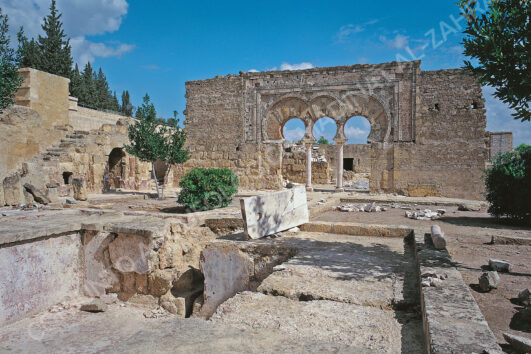
By the tenth century, Cordoba could boast of a population of some 500,000, compared to about 38,000 in Paris. According to the chronicles of the day, the city had 700 mosques, some 60,000 palaces, and 70 libraries – one reportedly housing 500,000 manuscripts and employing a staff of researchers, illuminators, and bookbinders. Cordoba also had some 900 public baths, Europe’s first street lights and, five miles outside the city, the caliphal residence, Madinat al-Zahra. A complex of marble, stucco, ivory, and onyx, Madinat al-Zahra took forty years to build, cost close to one-third of Cordoba’s revenue, and was, until destroyed in the eleventh century, one of the wonders of the age. Its restoration, begun in the early years of this century, is still underway.

Photo: A forest of eight hundred and fifty pillars connected by Moorish arches lines the great mosque of Cordoba.

By the eleventh century, however, a small pocket of Christian resistance had begun to grow, and under Alfonso VI Christian forces retook Toledo. It was the beginning of the period the Christians called the Reconquest, and it underlined a serious problem that marred this refined, graceful, and charming era: the inability of the numerous rulers of Islamic Spain to maintain their unity. This so weakened them that when the various Christian kingdoms began to pose a serious threat, the Muslim rulers in Spain had to ask the Almoravids, a North African Berber dynasty, to come to their aid. The Almoravids came and crushed the Christian uprising, but eventually seized control themselves. In 1147, the Almoravids were in turn defeated by another coalition of Berber tribes, the Almohads.

Although such internal conflict was by no means uncommon- the Christian kingdoms also warred incessantly among themselves- it did divert Muslim strength at a time when the Christians were beginning to negotiate strong alliances, form powerful armies, and launch the campaigns that would later bring an end to Arab rule.

The Arabs did not surrender easily; al-Andalus was their land too. But, bit by bit, they had to retreat, first from northern Spain, then from central Spain. By the thirteenth century their once extensive domains were reduced to a few scattered kingdoms deep in the mountains of Andalusia – where, for some two hundred years longer, they would not only survive but flourish.

It is both odd and poignant that it was then, in the last two centuries of their rule, that the Arabs created that extravagantly lovely kingdom for which they are most famous: Granada. It seems as if, in their slow retreat to the south, they suddenly realized that they were, as Washington Irving wrote, a people without a country, and set about building a memorial: the Alhambra, the citadel above Granada that one writer has called “the glory and the wonder of the civilized world.”

The Alhambra was begun in 1238 by Muhammad ibn al-Ahmar who, to buy safety for his people when King Ferdinand of Aragon laid siege to Granada, once rode to Ferdinand’s tent and humbly offered to become the king’s vassal in return for peace.

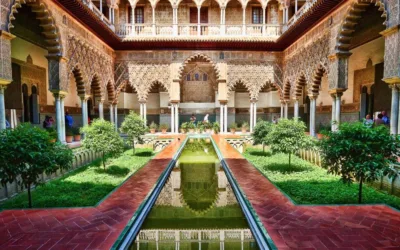
Photo: Pool in the Patio de los Arrayanes reflects the grandeur of the incomparable Alhambra.

It was a necessary move, but also difficult – particularly when Ferdinand called on him to implement the agreement by providing troops to help the Christians against Muslims in the siege of Seville in 1248. True to his pledge, Ibn al-Ahmar complied and Seville fell to the Christians. But returning to Granada, where cheering crowds hailed him as a victor, he disclosed his turmoil in that short, sad reply that he inscribed over and over on the walls of the Alhambra: “There is no victor but God.”

Over the years, what started as a fortress slowly evolved under Ibn al-Ahmar’s successors into a remarkable series of delicately lovely buildings, quiet courtyards, limpid pools, and hidden gardens. Later, after Ibn al-Ahmar’s death, Granada itself was rebuilt and became, as one Arab visitor wrote, “as a silver vase filled with emeralds.”

Meanwhile, outside Granada, the Christian kings waited. In relentless succession they had retaken Toledo, Cordoba, and Seville. Only Granada survived. Then, in 1482, in a trivial quarrel, the Muslim kingdom split into two hostile factions and, simultaneously, two strong Christian sovereigns, Ferdinand and Isabella, married and merged their kingdoms. As a result, Granada fell ten years later. On January 2, 1492 – the year they sent Columbus to America – Ferdinand and Isabella hoisted the banner of Christian Spain above the Alhambra and Boabdil, the last Muslim king, rode weeping into exile with the bitter envoi from his aged mother, “Weep like a woman for the city you would not defend like a man!”


Photo: A Moorish-built tower soars above Guadalquivir River in Seville.

In describing the fate of Islam in Spain, Irving suggested that the Muslims were then swiftly and thoroughly wiped out. Never, he wrote, was the annihilation of a people more complete. In fact, by emigration to North Africa and elsewhere, many Muslims carried remnants of the Spanish era with them and were thus able to make important contributions to the material and cultural life of their adopted lands.

Much of the emigration, however, came later. At first, most Muslims simply stayed in Spain; cut off from their original roots by time and distance they quite simply had no other place to go. Until the Inquisition, furthermore, conditions in Spain were not intolerable. The Christians permitted Muslims to work, serve in the army, own land, and even practice their religion – all concessions to the importance of Muslims in Spain’s still prosperous economy. But then, in the period of the Inquisition, all the rights of the Muslims were withdrawn, their lives became difficult, and more began to emigrate. Finally, in the early seventeenth century, most of the survivors were forcibly expelled.

Source: Islamicity


Discover Granada’s Enchanting Streets: A Guide to Strolling the Historic Center

Discover Granada’s Enchanting Streets: A Guide to Strolling the Historic Center

Immerse yourself in the captivating beauty of Granada’s historic center as we unveil the most picturesque streets for your leisurely exploration. From the romantic Carrera del Darro, offering views of the majestic Alhambra, to the bustling Calle Elvira with its Moorish charm, our guide will lead you through the heart of Granada’s cultural heritage. Whether you seek history, architecture, or local ambiance, these streets offer an unforgettable experience.

Welcome to the enchanting city of Granada, where history, culture, and architecture intertwine in the heart of the historic center. There’s no better way to uncover the essence of this Andalusian gem than by taking a leisurely stroll through its most beautiful streets. In this guide, we’ll unveil the hidden treasures and iconic avenues that make Granada’s historic center a must-visit destination. From the riverside romance of Carrera del Darro to the bustling vitality of Calle Elvira, join us on a virtual tour of Granada’s most enchanting streets.

Here are some of the most beautiful streets to explore in the historic center of Granada:

  1. Carrera del Darro: This picturesque street runs along the Darro River and is famous for its charming cobblestone paths, historic bridges, and views of the Alhambra Palace. It’s one of the most scenic streets in Granada.
  2. Paseo de los Tristes: Also located along the Darro River, this promenade is lined with cafes and offers stunning views of the Alhambra. It’s a great place to relax and enjoy the ambiance.
  3. Calle Calderería Nueva: Often referred to as the “Tea House Street,” this narrow, winding street in the Albaicín neighborhood is known for its Moorish-style tea houses, shops, and colorful lanterns.
  4. Calle Elvira: This historic street is famous for its lively atmosphere, tapas bars, and Moorish-style architecture. It’s a hub of activity, especially in the evenings.
  5. Calle Alcaicería: Located near the Cathedral, this street is a reconstructed version of the city’s old silk market. It’s a delightful place to shop for souvenirs and immerse yourself in Granada’s history.
  6. Carrera de la Virgen: This wide avenue leads to the Basilica of San Juan de Dios and is known for its grand architecture, historic buildings, and bustling streets.
  7. Plaza Nueva: While technically a square, the surrounding streets are filled with shops, cafes, and historic buildings. It’s a central meeting point in Granada.
  8. Calle Reyes Católicos: This street connects Plaza Nueva to the Gran Vía and is lined with shops, boutiques, and historic landmarks. It’s a great place for shopping and people-watching.
  9. Plaza Bib-Rambla: This lively square is surrounded by historic buildings and is known for its open-air cafes, flower stalls, and street performances.
  10. Calle Zacatín: Located in the Albaicín, this charming street is lined with artisan shops selling handmade crafts, ceramics, and textiles.

These streets in Granada’s historic center offer a delightful mix of Moorish and Spanish architecture, as well as a vibrant atmosphere that allows you to immerse yourself in the city’s rich cultural heritage while enjoying a leisurely stroll.

Seville’s Most Charming Streets fo a Picturesque Stroll in the Historic Center

Seville’s Most Charming Streets fo a Picturesque Stroll in the Historic Center

Seville’s Most Charming Streets fo a Picturesque Stroll in the Historic Center

Welcome to Seville, a city where history, culture, and beauty converge in its historic center. As you explore this enchanting Andalusian gem, taking a leisurely stroll through its picturesque streets is an experience not to be missed. In this guide, we’ll lead you through the most charming streets in Seville’s historic heart, offering a perfect blend of history, architecture, and local ambiance. From world-famous thoroughfares to hidden gems waiting to be discovered, let’s embark on a memorable journey through Seville’s captivating streets.

Explore Seville’s historic heart with our guide to the most enchanting streets in the city’s center. From the famous Calle Sierpes, lined with shops and tapas bars, to the cobbled beauty of Calle Mateos Gago near the iconic Santa Cruz neighborhood, discover the perfect routes for leisurely walks. Immerse yourself in the neoclassical allure of Tetuán Street, the artistic ambiance of Regina Street, and the riverside views of Betis Street in Triana. Whether you’re seeking shopping, history, or tranquil beauty, Seville’s historic streets have it all.

Certainly, here are some beautiful streets in the historic center of Seville that are perfect for a leisurely stroll on foot:

Water Lane 

This narrow and picturesque alley is a hidden gem near San Francisco Square. It’s a delightful spot to discover

Alcázares Street 

Close to the Royal Alcázar, this street offers appealing views of Andalusian architecture. It’s surrounded by historic buildings and is perfect for a relaxed stroll.

    Mateos Gago Street 

    Located in the heart of the Santa Cruz neighborhood, this cobbled street is famous for its historic charm. It’s surrounded by historic buildings, restaurants, and bars.

    Placentines Street 

     Another street near the cathedral, this cobbled alley is known for its medieval architecture and historic ambiance.

    Sierpes Street 

    One of the most famous and picturesque streets in Seville, it’s lined with shops, boutiques, cafes, and tapas bars. Perfect for shopping for souvenirs and soaking in the local atmosphere.

    Francos Street

     Close to Seville Cathedral, this street is famous for its restaurants and souvenir shops. It’s an ideal place to explore after visiting the cathedral.

    Tetuán Street

    This street is known for its neoclassical architecture and lively atmosphere. You can find shops, boutiques, and cafes along the street.

    Regina Street

    Located in the Alfalfa neighborhood, this street is known for its bohemian and artistic atmosphere. It’s a great place to explore art galleries and designer shops.

    Betis Street

    This street in the Triana neighborhood runs parallel to the Guadalquivir River and offers beautiful river views and views of the Torre del Oro. It’s especially charming at sunset.


    Ángel María Camacho Street

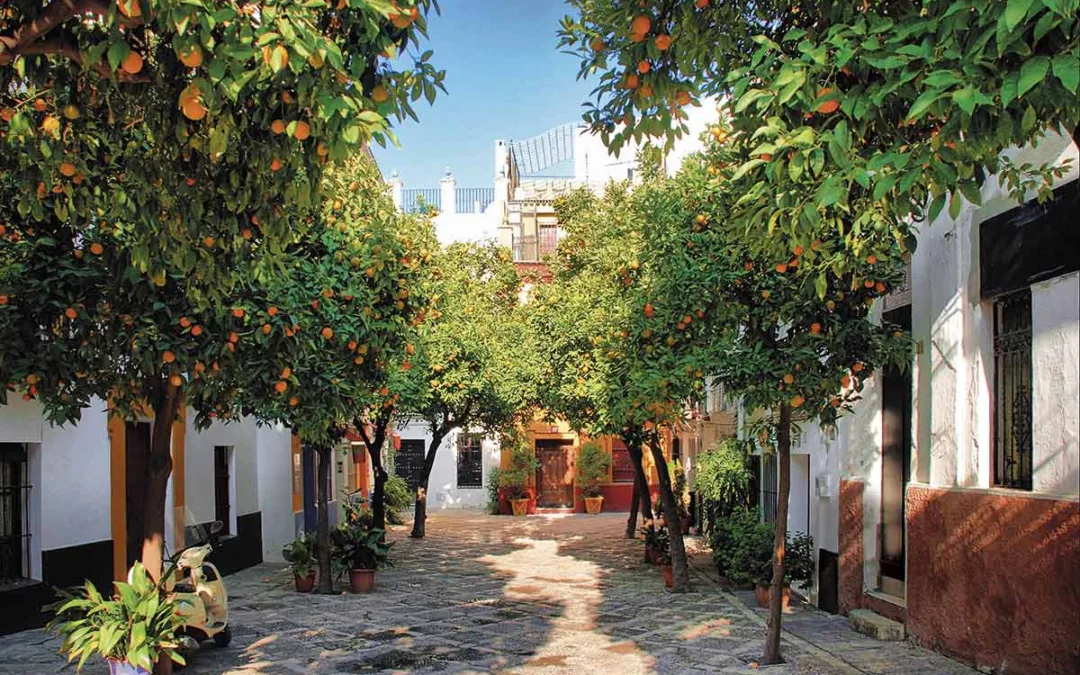
    This picturesque street is located in the San Lorenzo neighborhood and is adorned with potted orange trees. It’s a pleasant place for a tranquil walk.