Granada: Discover the last kingdom of Al-Andalus
Granada: Discover the last kingdom of Al-Andalus
Nestled at the foot of the Sierra Nevada mountains, Granada is one of Spain’s most enchanting destinations. Few cities in Europe combine such a rich blend of history, culture, architecture, and breathtaking scenery. Home to the world-famous Alhambra, charming medieval neighbourhoods, vibrant local traditions, and a remarkable Andalusi heritage, Granada offers visitors an unforgettable journey through more than a thousand years of history.
For over two centuries, Granada served as the capital of the Nasrid Kingdom, the last Muslim state in the Iberian Peninsula. During this period, the city flourished as a centre of art, science, architecture, literature, and commerce, leaving behind one of humanity’s greatest architectural masterpieces: the Alhambra. Today, visitors can still wander through streets that preserve the atmosphere of medieval Al-Andalus while enjoying the lively character of a modern Andalusian city.
Whether you are planning a short city break or exploring Andalusia on a longer itinerary, Granada is a destination that deserves far more than a single day.
History
Granada’s origins stretch back to ancient times, when Iberian settlements occupied the surrounding hills before the arrival of the Romans. During Roman rule, nearby Iliberri became an important regional centre, although Granada itself remained relatively modest.
The city’s fortunes changed dramatically following the arrival of Islam in the Iberian Peninsula in the eighth century. The Zirid dynasty established Granada as the capital of its taifa kingdom during the eleventh century, constructing the first defensive walls and developing the Albaicín hill into a thriving urban centre.
In the thirteenth century, after the Christian conquest of Córdoba and Seville, Muhammad I ibn al-Ahmar founded the Nasrid Kingdom of Granada. Protected by the surrounding mountains and sustained by sophisticated agricultural systems, the kingdom became the last independent Muslim state in Iberia.
For more than 250 years, Granada experienced an extraordinary period of artistic and architectural achievement. The Nasrid sultans transformed Sabika Hill into the magnificent Alhambra, while the Generalife served as their summer palace and agricultural estate. Skilled artisans perfected decorative plasterwork, carved wooden ceilings, intricate tile mosaics, and refined hydraulic engineering that continue to impress visitors today.
In 1492, Granada surrendered peacefully to the Catholic Monarchs, Ferdinand and Isabella, ending nearly eight centuries of Muslim political rule in the Iberian Peninsula. Although the city entered a new chapter under Christian rule, much of its Andalusi urban fabric survived, allowing modern visitors to experience one of Europe’s best-preserved medieval Islamic cities.
Best Time to Visit
Spring brings mild temperatures, blooming gardens, and ideal conditions for walking through the Albaicín and visiting the Alhambra.
Autumn offers equally pleasant weather with fewer crowds, making it one of the best seasons for sightseeing.
Summers can be hot during the day, although evenings remain enjoyable thanks to Granada’s elevated location. Winter is surprisingly attractive, combining quiet streets with the possibility of seeing snow on the nearby Sierra Nevada while enjoying relatively mild conditions in the city itself.
The nearby Sierra Nevada ski resort also makes Granada unique among European destinations, allowing visitors to combine cultural tourism with winter sports.
While many travellers visit Granada as a day trip, the city deserves at least two or three days.
A longer stay allows visitors to explore the Alhambra at a relaxed pace, wander through the Albaicín and Sacromonte, visit museums and monuments, experience local gastronomy, and enjoy Granada’s unique atmosphere after the day-trippers have departed.
Granada also serves as an excellent base for exploring the Alpujarras, Sierra Nevada National Park, the Costa Tropical, and other destinations across eastern Andalusia.
The Alhambra Palaces: Spain’s Greatest Monument
No visit to Granada is complete without exploring the Alhambra, one of the world’s most celebrated architectural masterpieces and a UNESCO World Heritage Site.
Perched above the city, the Alhambra was far more than a palace. It functioned as a complete palatine city containing royal residences, administrative buildings, military fortifications, workshops, baths, mosques, gardens, water channels, and residential quarters.
Its most famous buildings are the Nasrid Palaces, where elegant courtyards, delicate stucco decoration, Arabic inscriptions, geometric patterns, carved cedar ceilings, marble columns, and tranquil reflecting pools create an atmosphere unlike anywhere else in Europe.
The Court of the Lions, Hall of the Ambassadors, Hall of the Two Sisters, Court of the Myrtles, and countless other rooms demonstrate the extraordinary artistic sophistication achieved during the Nasrid period.
Visitors should also explore the Alcazaba, the oldest section of the complex, whose towers offer spectacular panoramic views across Granada, the Albaicín, and the Sierra Nevada.
The Generalife Gardens
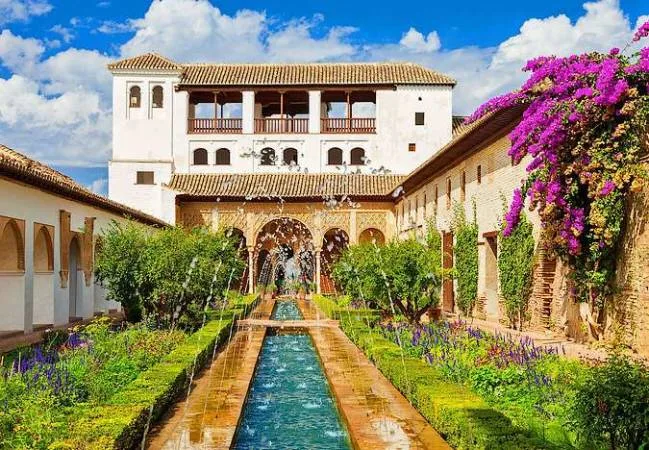
Adjacent to the Alhambra lies the Generalife, the summer palace of the Nasrid rulers.
Designed as a place of rest and contemplation, the Generalife combines elegant architecture with beautifully landscaped gardens, terraces, orchards, fountains, and water channels that showcase the advanced hydraulic engineering of Al-Andalus.
Water plays a central role throughout the complex, creating cooling effects, reflections, and soothing sounds that perfectly complement the surrounding vegetation.
Today, the Generalife remains one of the finest surviving examples of medieval Islamic garden design.
The Albaicin: Granada’s Medieval Quarter
Across the Darro Valley rises the Albaicín, Granada’s oldest neighbourhood and another UNESCO World Heritage Site.
Its steep, winding streets follow the medieval layout established during the Zirid and Nasrid periods. Whitewashed houses, hidden courtyards, traditional cármenes, small plazas, and ancient city gates preserve the atmosphere of medieval Granada.
Walking through the Albaicín reveals countless reminders of the city’s Islamic past, including sections of the Zirid walls, historic cisterns, former mosques converted into churches, and traditional houses built around peaceful interior patios.
The neighbourhood is best explored slowly, allowing time to discover hidden viewpoints, artisan workshops, cafés, and quiet corners away from the busiest tourist routes. For a deeper introduction with historical context, see our private Albaicín tour in Granada with an official guide.
Sacromonte: The Hillside of Caves
Beyond the Albaicín lies Sacromonte, one of Granada’s most distinctive districts. Built along the hillside overlooking the Alhambra, Sacromonte is famous for its traditional cave dwellings, many of which remain inhabited today. These whitewashed caves maintain a naturally comfortable temperature throughout the year and have become an iconic feature of Granada’s cultural landscape.
The neighbourhood is closely associated with flamenco and offers visitors a unique opportunity to experience performances in intimate cave venues while enjoying panoramic views over the city.
The Sacromonte Abbey, founded in the seventeenth century, adds another historical dimension to this fascinating district.
Granada’s Best Views
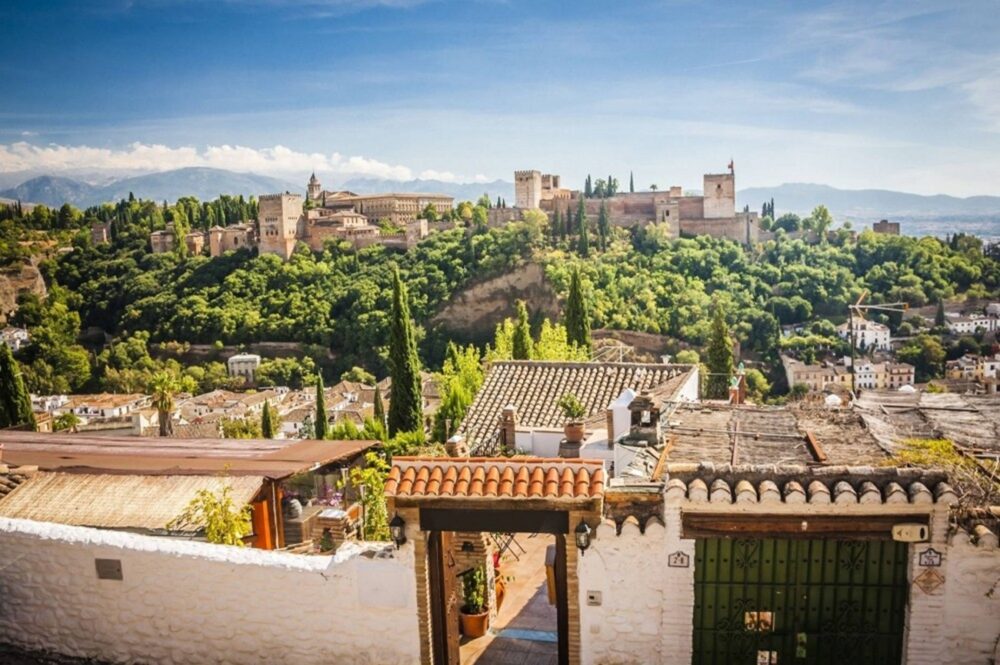
Granada is famous for its spectacular viewpoints. The Mirador de San Nicolás is undoubtedly the most celebrated, offering breathtaking views of the Alhambra set against the snow-capped Sierra Nevada mountains. At sunset, the changing light transforms the palace into one of Spain’s most photographed landscapes.
Other excellent viewpoints include the Mirador de San Miguel Alto, which provides panoramic views over the entire city, and several quieter terraces scattered throughout the Albaicín and Sacromonte.
The Historic Centre
Granada’s city centre combines elegant avenues with narrow medieval streets filled with history.
Plaza Nueva, despite its name, is one of the city’s oldest squares and serves as the gateway to both the Albaicín and the Alhambra.
The Carrera del Darro is widely regarded as one of Spain’s most beautiful streets. Running alongside the Darro River, it features historic bridges, Renaissance palaces, ancient mills, and spectacular views towards the Alhambra.
Nearby, the Realejo district reflects Granada’s former Jewish quarter and offers charming plazas, hidden churches, traditional taverns, and contemporary street art.
Granada Private Tours
Related products
-
Sale!

Alhambra Palaces Private Tour with Al-Andalus Expert Guide
Original price was: 175.00 €.145.00 €Current price is: 145.00 €. -

Madrid Al-Andalus Heritage Private Tour
250.00 € -
Sale!
Albaicin & Sacromonte Quarters Private Tour
Original price was: 220.00 €.190.00 €Current price is: 190.00 €. -
Alhambra Palaces Group Tour with Tickets
49.00 € -
Sale!
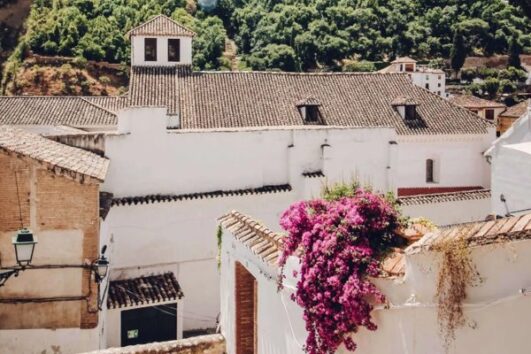
Albaicin Quarter Al-Andalus Heritage Private Tour
Original price was: 175.00 €.145.00 €Current price is: 145.00 €.
Featured Articles
Seville

Top Islamic Heritage Site in Seville, Andalusia

Muslim Spain Brief History

Seville’s Most Charming Streets fo a Picturesque Stroll in the Historic Center
Explore Seville’s historic heart with our guide to the most enchanting streets in the city’s center. From the famous Calle Sierpes, lined with shops and tapas bars, to the cobbled beauty of Calle Mateos Gago near the iconic Santa Cruz neighborhood, discover the perfect routes for leisurely walks. Immerse yourself in the neoclassical allure of Tetuán Street, the artistic ambiance of Regina Street, and the riverside views of Betis Street in Triana. Whether you’re seeking shopping, history, or tranquil beauty, Seville’s historic streets have it all.

Discover Seville’s Islamic Heritage: Must-Visit Landmarks for Muslim Travelers
Explore Seville’s rich Islamic history with our guide to the top landmarks and cultural sites for Muslim travelers. From the stunning Alcázar to the Giralda Tower and hidden gems like the Santa Paula Mosque, uncover the city’s captivating heritage.
Top things to see and do in Ronda

Unveiling the Past of Ishbiliya: Exploring Seville’s Landmarks during Al-Andalus
Discover the enchanting city of Seville, once known as Ishbiliya, during the illustrious era of Al-Andalus. Immerse yourself in the rich history and explore remarkable landmarks that offer a glimpse into this bygone era. Follow our suggested itinerary for a captivating day visit.

20 Must Visit Attractions in Seville