Doctors of Al-Andalus: The Great Healers

Doctors of Al-Andalus: The Great Healers

 The Great Healers of Their Time

The physicians of Islamic lands enjoyed broad—and well-deserved—recognition throughout the Middle Ages, and were even sought after in the courts of Christian kings.

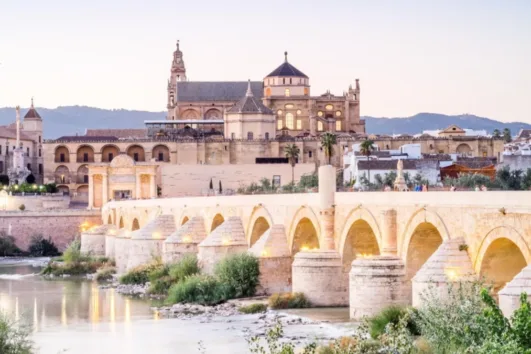
In the year 958, Sancho I of León was deposed by rebellious nobles, who used as a pretext the fact that the monarch could not fulfill royal duties with dignity due to his extreme obesity. His grandmother, Queen Toda of Navarre, sought help at the Caliphal court of Córdoba: she asked ʿAbd al-Raḥmān III for a cure for her grandson’s morbid obesity and for military support so he could regain the throne.

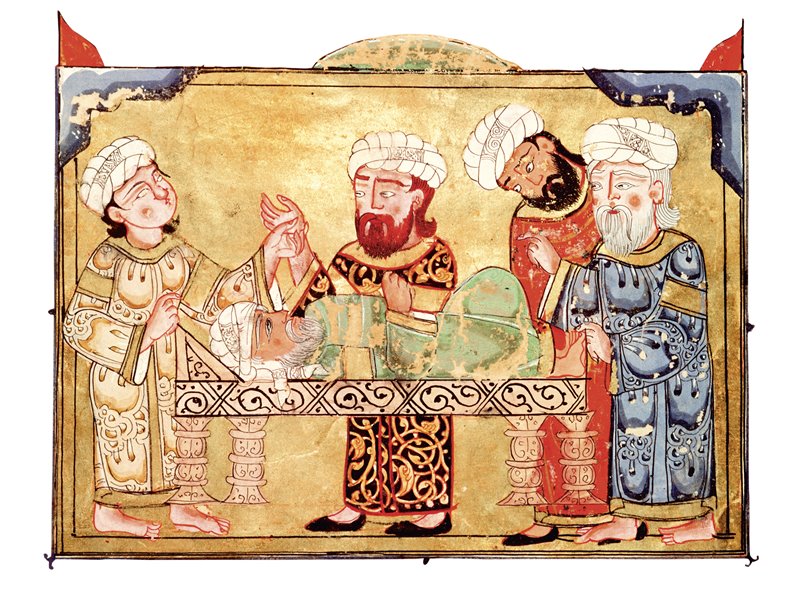
In the Andalusi capital, the physician Hasday ibn Shaprut, a Jew from Jaén, placed the Leonese monarch on a strict regimen and managed to reduce his weight. In this way, the sovereign could ride properly as expected, and the aid of Cordoban troops enabled him to recover the lost crown.

This anecdote illustrates the broad and justified recognition enjoyed by physicians in Islamic countries during the Middle Ages. Ibn Shaprut was not the only outstanding doctor at ʿAbd al-Raḥmān’s court; it also featured, for example, the wisdom of the surgeon Abū al-Qāsim al-Zahrāwī, known to Christians as Abulcasis. The excellent training of all these figures and the vast scope of knowledge available to them—shared with scholars from North Africa or the far reaches of Iran—can be explained by the building of a vast scientific community made possible through the use of a single language, Arabic, across the immense territories united by the dazzling expansion of Islam.

The Oldest Roots

Before Muhammad’s message spread beyond the Arabian Peninsula, the Arabs already possessed an early medical culture known as “Islamic” or “Prophetic medicine”, since its protagonist was Muhammad, the Prophet. Archaic and pious, it abounds in general exhortations. It says, for example: “Use medical treatments, for God has not created any disease without providing a remedy for it, with the exception of one illness: old age.”

Many of its remedies—such as the use of honey, olive oil, or suction with cups (ḥijāma)—belong to healing or prophylactic (preventive) practices that go back to ancient Arabia and bear Babylonian traits, so their roots extend to the 3rd millennium BCE. Even today they are still used in many Islamic countries.

In a parallel field lies the “interpretation of dreams” (taʾbīr al-anām), to which the Prophet himself attached great importance.

Already in the 8th century, Ibn Sīrīn composed the first major Arabic work on this subject, whose main source was the Oneirocritica by the Greek author Artemidorus of Ephesus, written eight centuries earlier. Without doubt, the Arabs’ intense attention to psychological life originates there. Moreover, recourse to spiritual healing is more common than one might think.

There were many pseudo-scientific and astrological medicines: in medical treatises there sometimes emerges an entire world of rituals, filled with seals and talismans. Islam did not reject this wholesale, and “white” magic was considered permissible within certain rules.

The Islamic elites soon understood the importance of adopting the most brilliant features of Greco-Roman culture, preserved in Egypt and the Near East, and they sought for themselves all the knowledge and technologies they called the “sciences of the ancients”, among which medicine was included.

But the limits of Arabic medicine expanded infinitely after, in 622, Muhammad proclaimed his message to the Arab tribes. The caliphs, his successors, extended their dominions from India to southern France in barely two centuries.

The Science of the Ancients

With the expansion of Islam, the cities where Greek science—radiating from Alexandria—was cultivated fell under Muslim rule: Edessa and Nisibis in Byzantine Syria, and Gundishapur in Sasanian Persia. Greek physicians had fled to the latter city after Emperor Justinian closed the Academy of Athens in 529. Christian doctors of Nestorian faith also settled there, expelled by the Byzantines from Edessa because their beliefs were contrary to religious orthodoxy.

The Greek science preserved in these territories became the foundation for the development of Arabic medicine, thanks to the work of polyglot physicians who, between the 9th and 10th centuries, served as teachers and translators. Among them were Yūḥannā ibn Māsawayh, known in the West as Ioannis Mesuae, born into a learned family from Gundishapur, and his disciple Ḥunayn ibn Isḥāq, called Iohannitius in Latin, responsible for around fifty high-quality translations. Both were Nestorian Christians, a Syriac-speaking community whose language was very similar to Arabic, which facilitated translation of Greek texts.

Physicians of different beliefs worked together, debating and studying in Arabic, just as today is done in English.

This work enjoyed broad patronage, reaching its peak with the founding of the famous House of Wisdom (Bayt al-Ḥikma) in Baghdad by Caliph al-Maʾmūn, who placed Ibn Isḥāq in charge of the translators. With the translation of works from Greek, Persian, and Sanskrit, Arabic medicine became the most informed and diverse in the world at the dawn of the 10th century.

Pagan, Christian, Jewish, Hindu, and many other scholars adopted Arabic as a scientific language. That is, physicians of different religions worked together, discussing and studying in Arabic, just as today people do in English. For this reason we speak here of “Arabic medicine”: we are not referring to an “Arab” ethnicity, but rather to an intellectual community that shared the language of the Qur’an, which became a common language of science and culture.

This phenomenon also flourished in al-Andalus, Muslim Spain, during the 10th century. There, a classic text—the De materia medica by Dioscorides—was translated for Caliph ʿAbd al-Raḥmān III, whose court included, as mentioned, Abulcasis, an eminent surgeon whose Book of the Arrangement (drawing on the work of the Byzantine physician Paul of Aegina) enjoyed extraordinary prestige. Córdoba, the capital of al-Andalus, rivaled the new Islamic teaching centers of the Mediterranean: Kairouan in Tunisia, Fez in Morocco, and Cairo in Egypt. We know of more than a hundred Arabic medical works written before the year 1000; the transmission of the past was a reality, and a science of its own was beginning to emerge.

The Era of Encyclopedias

Thanks to the prestige of knowledge and a certain intellectual freedom, during the period of splendor of the Abbasid Caliphate of Baghdad—between the 10th and 11th centuries—the compilation of great systematic works became the hallmark of universal scholars, who practiced medicine alongside philosophy, the sciences, and political tasks.

Among them, three names shone brightest. One was al-Rāzī (Rhazes for the Latins), a multifaceted Iranian and expert pharmacologist, who lived at court, directed the great hospital of Baghdad, and wrote almost two hundred works. The second was al-Majūsī, whose compilation, the Complete Book on the Art of Medicine, is a masterpiece for its balance between theory and practice. However, this text was overshadowed by the work of the third great figure of the age: Ibn Sīnā, whom we know as Avicenna.

Avicenna, the Sage

This extraordinary philosopher was already a physician at the age of eighteen. In those times, curing an emir could lead to directing a ministry—as happened in his case. He wrote extensively on all sciences, and his Canon (or “rule”) of medicine is one of the most famous medical works of all time. Its success is due to its theoretical strength and its effort at rationalization; for Avicenna, systematic and clear, logic is the foundation of diagnosis.

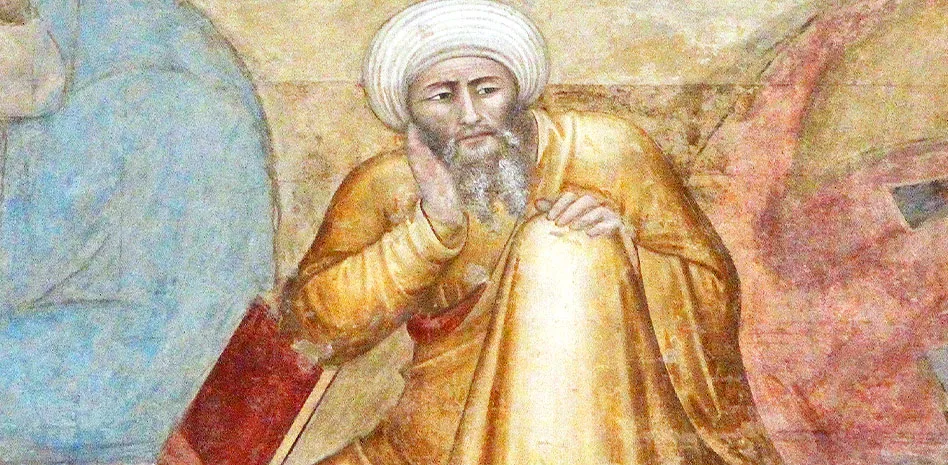
In the West, Arabic science shone through the work of two famous 12th-century Cordoban philosophers and physicians: Averroes (Ibn Rushd), whose Kulliyāt (“Totality”) became the Colliget of the Latins; and the Jew Maimonides (Mūsā ibn Maymūn), who became personal physician to the Muslim champion of the Crusades: Saladin, Sultan of Egypt.

His case was not unique: Jewish medicine flourished through involvement with Islamic rule; in fact, Arabic was the language of Jewish culture throughout the Middle Ages.

Theory and Practice

The theoretical basis of Arabic medicine does not differ essentially from Greek and Roman medicine. At its core lies humoral medicine, attributed to Hippocrates (who lived in the 4th century BCE), which divides the four basic human fluids into: blood, phlegm, yellow bile, and black bile. Health and illness depend on the balance among them. Thus, those who suffer an excess of black bile are sad people, said to have “black humor”, which is exactly what “melancholic” means in Greek.

Similarly, “sanguine,” “phlegmatic,” and “choleric” temperaments reflect imbalances in the other humors. Health is achieved by restoring the balance through diets and purges; hence the importance of hygiene and diet in Arabic medicine.

Despite the predominance of this “theoretical” medicine, new therapies and anatomical observations were developed. Above all, ophthalmology stood out. The use of a hollow syringe to suction out cataracts was a remarkable innovation attributed to ʿAmmār ibn ʿAlī in the 10th century, who also developed a method for diagnosing operable cataracts based on the pupil’s reaction to light.

Nevertheless, the greatest specialist in surgery was the Andalusi Abulcasis, who employed an extremely wide range of instruments: forceps, tweezers, trepans, scalpels, probes, cauteries, lancets, and specula, whose drawings illustrate his Book of the Arrangement.

During the 16th century, Western surgeons continued to study this true encyclopedia of medical knowledge, which gave as much importance to techniques for combating pain (with cold or with soporific sponges) as to sutures and bandages.

Special mention should be made of practical surgeons or empirical physicians, experts in treating inflammations and tumors, as well as in extracting arrows and healing wounds, fractures, and dislocations. Pharmacology and toxicology evolved alongside alchemy, to which we owe, among other contributions, the alembic, ammonia, and alcohol.

Caring for the Sick

A distinctive feature of Islamic culture was the construction of centers of study (madrasas) and public hospitals (bīmāristāns), maintained through donations—though they should not be seen as a novelty compared to the Christian or Buddhist world. Every great city competed to host both institutions, between which there was constant movement of teachers and books. Hospitals allowed the poorest to benefit from the knowledge of physicians as notable as al-Rāzī, director of the Baghdad hospital.

The best-known bīmāristān is the one Sultan al-Qalāwūn built in Cairo in 1285: it could care for eight thousand patients in four pavilions devoted to different pathologies and arranged around a climate-controlled courtyard with fountains. Some of these institutions still operate, such as the bīmāristān founded by Nūr al-Dīn in Damascus in 1154. There were also hospitals that received mentally ill patients—something unknown in the West. In the 12th century, the Jewish traveler Benjamin of Tudela described the Baghdad hospital: “They detain there all the madmen found in the city during the summer, who have lost their reason due to excessive heat, fastening each of them with iron chains; all the time they remain there they are fed by the royal household, and when they regain their reason they are released and each returns to his home and household. […] Each month the king’s officials question them to see whether some have recovered their reason.”

Hospitals allowed the poorest to benefit from the knowledge of physicians as notable as al-Rāzī, director of the hospital of Baghdad.

Although Arabic medicine shines on its own, in Christian Western Europe only about forty texts were known out of roughly a thousand recorded medical writings. The last well-known authors were the Andalusi physicians Ibn Zuhr (Avenzoar)—who improved tracheotomy and discovered the cause of scabies and pericarditis—and Averroes. But nothing more was known of the great botanist Ibn al-Bayṭār or the epidemiologist Ibn al-Khaṭīb (who left testimony of the Black Death), even though they too were Andalusis living on the very frontier of Christendom. Thus, it is exaggerated to believe—as was once thought—that Islamic medicine stagnated after the 13th century; we still remain unaware of a great many later writings.

What Was Al-Andalus? Understanding Andalusian Muslim Spain

What Was Al-Andalus? Understanding Andalusian Muslim Spain

Al-Andalus Civilization 

When traveling through southern Spain or reading about its past, the name Al-Andalus often appears. For many visitors, it sounds intriguing yet unfamiliar. Was it a country, a culture, or simply a historical period?

Al-Andalus refers to the parts of the Iberian Peninsula that were governed by Muslims from the early eighth century until the late fifteenth century. For almost 800 years, this region developed into one of the most sophisticated and influential societies of medieval Europe, leaving behind a legacy that still shapes Spain today.

Al-Andalus was not a fixed political entity, but a civilization that evolved over centuries. Its borders changed and its rulers came and went, yet a shared Andalusian cultural and intellectual world emerged across the region.

This society became known for its urban life, scientific curiosity, artistic refinement, and engagement with knowledge. Andalusian cities flourished as centers of learning, where philosophy, medicine, astronomy, and mathematics were actively studied. Scholars wrote in Arabic, Latin, and Hebrew, contributing to an intellectual environment that connected Europe with the wider Islamic world.

A Land of Cultural Exchange 

One of the defining characteristics of Al-Andalus was its multicultural character. Muslim, Christian, and Jewish communities lived in close proximity for long periods, interacting in everyday life, administration, trade, and scholarship.

This environment of exchange allowed ideas to circulate across religious and cultural boundaries. Ancient texts were preserved and translated, scientific methods refined, and artistic traditions shared. While coexistence was not always free of conflict, the Andalusian experience remains a powerful historical example of cultural interaction in medieval Europe.

The material legacy of Al-Andalus is especially visible in its architecture and urban design. Andalusian buildings were conceived as harmonious spaces where light, water, geometry, and calligraphy played essential roles.

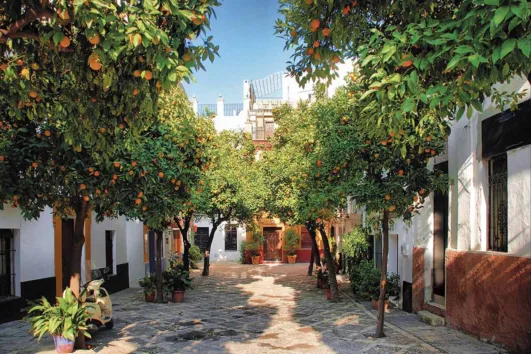
Courtyards, gardens, and fountains were not decorative additions but central elements reflecting a worldview in which nature and spirituality were deeply connected. This architectural language shaped palaces, mosques, fortifications, and residential quarters, many of which still define the historic landscapes of southern Spain.

The End of Al-Andalus and its Legacy

The political end of Al-Andalus came in 1492, when the last Muslim-ruled kingdom fell. However, its disappearance as a state did not erase its influence.

Andalusian culture survived through language, craftsmanship, agricultural practices, music, and collective memory. Thousands of Spanish words have Arabic roots, and traditional techniques remain visible in crafts and daily life. Al-Andalus did not vanish; it became woven into the cultural fabric of Spain.

Understanding Al-Andalus is essential for understanding Spain’s history and identity. It challenges simplified narratives of European history and highlights the profound contribution of Islamic civilization to the development of the West.

For modern travelers and readers, Al-Andalus offers historical depth, intercultural perspective, and a shared Mediterranean heritage that continues to resonate today.

Today, many visitors seek meaningful cultural experiences rather than surface-level sightseeing. Walking through historic neighborhoods, observing Andalusian architecture, and learning about medieval Muslim Spain allows travelers to connect with a layered and often overlooked past.

Most Influential Figures of Al-Andalus

Most Influential Figures of Al-Andalus

Most Influential Figures of Al-Andalus

Al-Andalus, the name given to the parts of the Iberian Peninsula under Muslim rule from 711 to 1492, produced some of the most iconic figures in history. Their contributions to science, philosophy, literature, and governance have left an indelible mark, not only in their time but also in the collective memory of the modern Muslim world. 


1. Ibn Rushd (Averroes) – The Master of Philosophy

Ibn Rushd (1126–1198), born in Córdoba, was a philosopher, jurist, and physician who became famous for his commentaries on Aristotle. His works bridged Islamic thought with European scholasticism and emphasized the importance of reasoning in understanding the world. His writings inspire modern thinkers, especially in discussions about the relationship between religion and science.


2. Abu Qasim Khalaf Ibn Abbas Al Zahrawi (Albucasis) – A Pioneer in Surgery

Al-Zahrawi (936–1013), from Córdoba, is known as the father of modern surgery. His medical encyclopedia, Al-Tasrif, introduced innovative surgical techniques and tools that were used for centuries. He remains a cornerstone in the history of medicine, and his name is often associated with the foundations of modern surgical practices.


3. Ibn Hazm – A Poet and Thinker

Born in Córdoba in 994, Ibn Hazm is renowned for The Ring of the Dove, a literary masterpiece on love and emotions. He was also a key figure in Islamic jurisprudence and theology. His poetic and intellectual contributions are celebrated in Arabic literature and culture, reflecting timeless human experiences.


4. Ibn Tufail – A Visionary Storyteller

Ibn Tufail (1105–1185), a philosopher and physician, is best known for his novel Hayy ibn Yaqzan. The story explores themes of self-discovery and the pursuit of knowledge through the tale of a boy raised alone on an island. His novel is regarded as one of the earliest examples of philosophical fiction, influencing literature and philosophical thought worldwide.


5. Ibn Arabi – A Spiritual Guide

Born in Murcia in 1165, Ibn Arabi is one of the most renowned Sufi mystics. His works, like The Meccan Revelations, explore themes of divine love and the unity of all existence. His teachings continue to inspire spiritual seekers and are a central part of Sufi traditions around the world.


6. Maimonides (Musa ibn Maymun) – A Universal Thinker

Although of Jewish heritage, Maimonides (1138–1204), born in Córdoba, made significant contributions to philosophy, medicine, and religious thought. His works have influenced scholars across cultures and religions. Maimonides is celebrated for fostering understanding and bridging Islamic, Jewish, and Western traditions. 

Abd al-Rahman I

Abd al-Rahman I

Abd al-Rahman I

‘Abd Al-Raḥmān I: Abū l-Muẓaffar ‘Abd al-Raḥmān b. Mu‘āwiya b. Hišām b. ‘Abd al-Malik b. Marwān al-Dājil (the immigrant), Villa of al-‘Ulyà, place of Syria between Palmyra and Damascus (Syria) 731 – 788 C. Founder and first emir Omeya of Cordoba (independent), urbanizer of the territory, organizer of the administration and armies of the emirate, poet, eloquent and ingenious speaker and man of great culture.

It is not known exactly where he was born, some say in Dayr Ḥanīna and others, like Ibn Ḥayyān (whose opinion we bow to), in al-‘Ulyà, both relatively close to Damascus. Grandson of the caliph Hišām b. ‘Abd al-Malik, reigning between 105/724 and 125/745, his father Mu’āwiya died under the reign of said caliph. His mother Rāh (Joy) was a Berber slave originally from the Nafza tribe; this North African bond explains in large part the flight to the West, where he initially tried to take over a territory or province.

Little is known of his childhood and adolescence. When the Abbasids killed the last Umayyad caliph, Marwan II, on 7 July 750, Abderraman was barely 20 years old. The Abbasids, eager to destroy any Umayyad suitors, proclaimed a false amnesty for the members of the ruling family; but it was violated, and the massacre of Abu Futrus took place, not far from Jaffa in Palestine, where about eighty Umayyads lost their lives, only the grandchildren of caliph Hisham who had not believed in such amnesty escaping.

Yet one by one they fell, not being spared but the young Abderraman, his two sisters, Umm al-Asbag and Amat al-Raḥmān, and his four year old son Sulaymān, and some of their faithful, including his clients Badr and Sālim Abū Šuŷā’. First, he flees towards the Euphrates, perhaps with the purpose of misleading his pursuers, before heading for the isthmus of Suez to Egypt, where his sisters have settled. Abderramán continues his flight west with his son, in the company of his most loyal clients he takes refuge in Barqa (Cyrenaica), from there he heads to Ifrīqiya (present-day Tunisia), expecting to receive a good reception from the governor of the territory, ‘Abd al-Raḥmān b. Ḥabīb al-Fihrī -close relative of Yūsuf al-Fihrī, Vali of al-Ándalus- in his capital of al-Qayrawān. Wary, however, The ambitions of the Umayyad princes for power, as others of their own family had come to the country before, and even though he had declared himself against the change of regime and the Abbasid dynasty, He intended to take advantage of the circumstances to transform his province into an independent state and inaugurate his own dynasty. Obviously, he tried to get rid of the Emigre who, He sought refuge among the Banū Mugīṭ, clients of the Umayyad caliph ‘Abd al-Malik b. Marwan. But, feeling insecure, he passed into the territory of the Berber Miknasas. Retired in the place of Bāra, in the midst of great difficulties he was saved by the wife of Abū Qurra Wānsūs al-Barbarī, seeking refuge in Sabra among the Berbers Nafza, The Commission has been working on a number of proposals for the creation of a new European Community.

Indeed, Abderramán was able to implement political, fiscal, administrative, institutional and military measures in al-Andalus under not easy circumstances. According to the historian P. Chalmeta, it was between 756 and 757 when the pillars of what will be for centuries the Andalusian system were set. The system was set up on a regular and stable economic basis, and money issues were launched towards the 767. The Emigrant intensified the Arabization or, better to say, the Syrianization of al-Andalus, encouraging the immigration of Umayyads and clients, which led to the rise of the Ahl Qurajah, “the people of Qurays” as a socio-economic group and the emergence of a core of client families, in which the great posts of the Andalusian military and civil administration during the emirate and the caliphate would be recruited. The fiscal, judicial and army restructuring will shape the subsequent evolution of the state of Córdoba, while its buildings will be the model followed for centuries in the Maghreb.

Logically this whole organization had a greater tax pressure affecting differently the Muslims and protected (Christians, soon Mozarabic, and Jews) which gave rise to numerous revolts of all kinds, Arabs, Berbers, neo-Cavants, etc. The uprisings were in their years of unceasing reign. The old regime’s favourites were not easily resigned to the new state of affairs. Yusuf al-Fihrī initially resided in Cordoba, but later escaped by violating his promise and rising in a rebellion in the area of Merida in 758, where he recruited an army of 20,000 men, mostly Berbers and baladids, that is, first-time conquerors; but was defeated on his way to Cordoba by the loyal governors of Seville and Morón, even with fewer troops, not more than 1,500 men, but with greater strategic fighting capabilities, something that long characterized the Syrians coming with Balj to the country in a second wave. Yūsuf then headed for the lands of Toledo, where he wandered for several months, being finally betrayed by his supporters who murdered him in 759 and sent his head to the Emir, who soon got rid of al-Ṣumayl, who had just been imprisoned, being strangled in prison the same year.

This did not prevent him from having to face successive rebellions of different kinds: On the one hand, there would be those provoked by those who had lost the preponderance of formerly and by nostalgic for the old regime, much less oppressive; On the other hand, the Yemenis who had raised the new emir did not like to be called to exercise power; on the other hand, the Berbers could not stand being relegated and, In short, others allied themselves with external enemies.

Three years after the death of the last Vali of al-Andalus, in effect, Toledo rose to the command of the chief fihrí Hišam b. ‘Urwa, who ruled on his own the ancient capital of the Visigoths. This uprising would not be quelled until 764 when the Umayyad army, commanded by Badr and Tammām b. ‘Alqama, He restored the new order. The main seditious ones were taken to Cordoba where they would be crucified. Still at the end of Abderraman’s reign, the only surviving son of Yusuf al-Fihrī, the blind Abu l-Aswad Muḥammad, rose up in Toledo against the Umayyad power; but would be defeated by the emir himself on September 11, 785.

Abderramán I also had to fight against the Yemeni Arabs or Kalbis, his early allies, Not having been rewarded for their support as they had hoped, and without being able to exercise any influence over the sovereign, they took part in quite a few conspiracies against his regime. In 763 the Arab chief al-‘Alā’ b. Mugīṭ rose against the emir in the district of Beja (southern Portugal) hoisting the black flag of the Abbasid caliphs. Provided with money and precise instructions by the caliph al-Mansūr had landed in al-Andalus with the promise of obtaining the government of the country if he succeeded in dethroning the usurper Umayyad. This attracted him not few supporters especially Yemeni, the Umayyad emir came to be besieged in Carmona, but a lucky exit gave him victory, al-‘Alā’ perished in the combat, as well as prominent leaders of the insurgency. The heads of all of them were embalmed and placed in a sack, together with the investiture diploma and the black Abbasid flag. A merchant left such a gift overnight in the market of al-Qayrawān (present-day Tunisia), the domain of the Abbasid at that time. It seems that the caliph upon hearing the news in Baghdad exclaimed: “Praise be to God, who has put the sea between me and this devil”.

Not because of that the Yemenis lost hope to shake off the yoke of the Umayyad emir and continued participating in other rebellions (Seville in 766; attempted capture of Cordoba in the absence of the emir in 774). It can be said that the Yemeni uprisings did not cease until 780.

Abderramán also had to face various Berber revolts in Santaver (province of Cuenca), in the Levant, in Coria, etc. The most important was the insurrection promoted by “el fatimí” Šaqyā b. ‘Abd al-Wāḥid al-Miknāsī in 768, who would come to dominate the region that extends between the basins of the Tagus and the Guadiana. After, from the city of Santaver took over the squares of Coria, Medellín and Mérida, settling in Sopetrán (present-day province of Guadalajara). The emir could only end this rebellion by means of treason and bribery. Saqya was killed by two of his supporters in 776. These rebellions speak so much of antagonisms racial, as of the distress of the Berbers to be relegated, having been they the first conquerors of al-Andalus.

It is noted, however, that much of the north of the peninsula and the entire quadrant of the northwest after the central system, escape the domain of Abderramán. “The first independent emir could no longer devote himself to conquering that part of the territory which had escaped him, and if he had done so he would never have founded a dynasty. It had to fight too many dissidents, while at the same time countering the centrifugal forces that threatened its alliances”. Even the Marwānīs themselves sometimes tried to dethrone him, violating the rules of hospitality and loyalty, as happened in 779-780 with the Umayyad ‘Abd al-‘Salām b. Yazīd and the emir’s own nephew, ‘Ubayd Allāh b. Aban, who paid for his boldness with their lives. Four years later, the son of his brother al-Walīd, al-Mugīra and a son of al-Ṣumayl conspired against the emir, being executed for this.

Abderramán had to secure the upper frontier of which Septimania was not part, especially its center, that is, the city of Zaragoza, whose Arab lords Husayn b. Yaḥyā al-Anṣārī and his partner Sulaymān b. Yaqẓān to avoid the dominion of the Umayyad, this second, proposed to seek help from Charlemagne, through Ibn al-‘Arābī, a notable who had broken the idea. The intervention of Charlemagne in al-Andalus occurred in May 778, without the expected results; since hoping not to find resistance in Zaragoza, He didn’t come equipped with war machines to take it. Behind its walls Husayn b. Yaḥyā al-Anṣārī who had not participated in the pacts of his adlaters with Charlemagne, knowing that they would ultimately strip him from his domains, He allied with Abderramán in deciding the resistance. Charlemagne, encountering unexpected resistance and feeling betrayed, took his country to Sulayman and Ibn al-‘Arabi, retreating through a gorge in the valley of Echo, where part of the rear of the second army “was first arrested and then annihilated”.

After the episode of the Frankish invasion the emir organized a campaign from Zaragoza in 781 and he spent to travel the lands crossed by the Franks in their retreat, with the clear purpose of restoring Andalusian hegemony over these regions, imposing tributes and forcing local magnates to hand over hostages. The areas subdued then were the Ribera, La Rioja, Navarra and Cerretania, which sources mark as land of infidels, and which, in effect, were beyond the limits of al-Ándalus, and constituted frontier lands (tagr), being outside the political-social and cultural formation of what will be al-Ándalus. Years later (782-783) Abderramán must have taken the city of Zaragoza by force, beating it with almajaneques. Its inhabitants were expelled for a few days from the city. Ḥusayn was executed, as well as his accomplices, appointing his paternal uncle ‘Alī b. Ḥamza as governor of Zaragoza to be relieved not long after.

Abderramán I had to procure money from clients and Umayyads, especially land, hence he tried to recover the state property; also, as Chalmeta points out, reduced the estates of Artoba, Witiza, from 899 or 599, to twenty, and suppressed the quasi-independent enclave of Tudmir (Teodomiro), recognized by a pact during the conquest of al-AramariaAndalus; which brought greater wealth to the emir, but also dissidence. Dissent that would be conjured up either badly or by enlisting a private army. The emir understood that if he wanted to gain a stable and independent power, he had to have a force that depended only on him. Since the victory of al-Muṣāra (138/756) who gave him the dominion of Cordoba, warned Abderraman that his Yemeni allies were plotting to assassinate him, was surrounded by a guard of 700 men recruited from his clients, Cordobeses, Berbers and even neo-Crenses; this would be the core of his elite troops. Eight years later, in order to end Hišām b. ‘Urwa uprooted in Toledo, the emir ordered to extend the permanent shifts of troops under arms for six months instead of three.

Later, in 764, after the last great Yemeni revolt was ended, he began to buy slaves (mamālik) and to recruit massively Berbers for his army, Some say that their number was forty thousand, which would lead to the decline of the traditional army, recruited within the country and its gradual replacement by mercenaries, essential in the subsequent caliphal victories of the time of Almanzor. The maintenance would lead to higher tax requirements, as well as the establishment of a system of territorial concessions (iqtā’āt).

It is obvious, on the other hand, that the transformation of a province into an independent kingdom or state brought with it demands of various kinds, such as defensive, urbanistic and sumptuous. The walls of Cordoba and other cities, especially those of the Marches or borders were repaired. Extra-urban palace residences were built (al-Rušāfa and Munyat al-Nā’ūra). The emir builds, rebuilds, structures. It is the political-administrative centre of the Alcázar of Córdoba, after the demolition and remodeling of the old dār al-imāra, the “house of command”, primitive Visigoth palace. He also erected a post house (dār al-burud) and the urbanization and distribution of markets. Finally, the emir erected the building which, after successive extensions, due to its later architectural influence, would be the most important in al-Andalus’ history. Indeed, in the year 785 was built the first mosque aljama, on the site of the basilica of San Vicente (This one was demolished after the purchase of half of it, which had been in Christian hands since the time of the conquest) spending on its construction the figure of eighty to one hundred thousand gold dinars.

Abderramán I’s reforms were many and of uneven scope, without it being possible to specify the dates and modalities of their implementation. It seems certain that there was an administrative redistribution, creating a series of provinces or coras, from what used to be a single province. It is certain that during his reign the urbanization and arabization of al-Andalus intensified and that its buildings and many of its administrative measures would be imitated, The European Community has a long tradition of being a leader in the field of education.

Ibn Rush (Averroes)

Ibn Rush (Averroes)

Ibn Rush (Averroes)

Ibn Rušd: Abū l-Walīd Muḥammad b. Aḥmad b. Aḥmad b. Rušd al-Qurṭubī. Called Al-Ŷadd (the grandfather). Cordoba, 450 H./1058 C. – 520 H./1126 C. Muslim jurist and theologian.

Studied jurisprudence, theology, prophetic traditions, grammar, language and literature with Abū Ŷacfar Aḥmad b. Muḥammad b. Rizq al-Umawī al-Qurṭubī, Muḥammad b. Faraŷ Ibn al-Ṭallā’, Abū Muḥammad b. cAlī al-Gassānī al-Ŷayyānī; Abū Marwān cAbd al-Malik b. Sirāŷ, Abū cAbd Allāh Muḥammad b. Jayra Ibn Abī l-cĀfiya al-Umawī al-Ŷawharī y Abū l- cAbbās Aḥmad b. cUmar b. Anas Ibn al-Dalā’ī al-cUḍrī.

Ibn Rušd did not undertake the study-extension trip to the East; However, this did not prevent him from gaining a thorough knowledge of Islamic law and other Islamic religious sciences which made him a renowned jurist, The most outstanding of its time, both in al-Andalus and in the Maghreb.

Leaving aside the fact that al-Andalus would have been placed on a par with the East in the teaching of Islamic religious science, the reasons why he did not travel to the East could be the same as why he did not make the pilgrimage to Mecca, He considered that in their time the Andalusians and the Magrebites were not obliged to perform this rite in the absence of plausible possibilities of doing so without risk for their lives and their goods.

His career had a prominent political and social projection through the judiciary, legal advice at both public and private levels, and education. The public aspect of his activity, however, caused him some problems.

On a date which it is not possible to specify exactly, Ibn Rušd and other jurists ruled that, according to the legal doctrine of the school of Mālik b. Anas in al-Andalus, the sales of properties usurped or acquired in an unlawful manner had to be cancelled, even if they were carried out on behalf of the Treasury and even if these sales were old. Transactions of this type had been made by both relatives of the kings of taifas deposed by the Almoravids in Seville, Almería and Córdoba, as governors appointed by the Almoravids after their conquest of al-Andalus. Other city jurists such as Abū l-Qāsim Ibn Ḥamdīn were of the opinion that the implementation of this ruling would seriously harm the interests of the people. Indeed, the people rose up against Ibn Rušd and those who had ruled like him, but Ibn Ḥamdīn managed to placate them in return, apparently that Ibn Rušd and those who had spoken like him would publicly retract.

In 511/1117 the Almoravid emir cAlī b. Yūsuf b. Tāšufīn appointed him supreme judge of Cordoba. He held the office for four years, after which, according to his own testimony, he asked the emir to relieve him so that he could devote himself entirely to the writing of his works. According to other sources, it was his involvement in the uprising of the Cordobeses against the Almoravid garrison of the city between the years 513/1119 and 515/1121 that prompted him to abandon the judicial.

The departure from the judiciary did not imply a withdrawal from public life, but instead Ibn Rušd remained active as a mufti member of the city’s advisory council; for a time he also directed the prayer in the mosque aljama of Cordoba and to pronounce the sermon on Fridays, which, according to his biographers, He did nothing but increase his excellence and his position.

One of his principal disciples, the cIyāḍ kādi, highlights the high position our jurist attained before the Almoravid emir, who sought his advice on matters of great importance. He issued numerous opinions at the request of the political authorities, but also and as was proper to the role of the magistrate, in response to questions put to him by other judges, his disciples and, in general, Muslims who approached him on a personal basis, as people used to entrust him with the important matters that concerned them. A good part of these opinions are preserved and show to what extent the prestige as jurist achieved by Ibn Rušd was justified, Their fetuses can be taken as true models in their genre.

Of all his public actions, perhaps the one that had the most impact was the intervention before the Almoravid emir after the campaign of Alfonso I of Aragon for al-Andalus lands in 519/1125 and that, although it did not translate into any territorial gain for the Christian, it showed the weakness of the Almoravid military defenses. Given the help that some Andalusian tributary Christians had given to the Aragonese monarch, the situation of the rest of their coreligionists who still remained in al-AragoneseAndalus was seriously threatened. In the face of this very hectic panorama, in the spring of 520/1126 Ibn Rušd considered it advisable to travel to Marrakech to inform the emir of what happened and advise him to expel the tributaries who, breaking the pact under which they lived in al-Andalus, had given aid to Alfonso I against the Muslims. The emir agreed to what Ibn Rušd proposed and issued an order to all regions of al-Andalus to deport tributaries to Meknes, Salé and other areas on the African shore of the Strait. The emir took advantage of Ibn Rušd’s visit to consult him about the increasingly pressing threat from Ibn Tumart, the leader of the Almohad movement who would eventually dislodge the Almoravids from power. Ibn Rušd advised him to strengthen the walls of Marrakech, advice which was heeded by the emir. The works began in the same year and were completed early next. At the end of the year 520/June 1126 Ibn Rušd returned to Cordoba.

Entre sus discípulos destacan el cadí cIyāḍ; Ibn Baškuwāl; al-Zāhid Abū l-cAbbās Aḥmad Ibn cAbd al-Malik b. cAmīra; Abū Ŷacfar Aḥmad b. Aḥmad b. Aḥmad al-Azdī; Abū l-Ḥaŷŷāŷ al-Ṯagrī; Ibn Sacīd al-Awsī, conocido como al-Qantirāl; Abū l-Walīd b. al-Dabbāg, para el cual el maestro cordobés fue el mejor jurista de al-Andalus; Muḥammad b. Sacāda quien, upon arrival at Fez transmitted the works of the master and therefore can be considered as one of the agents of reception of his work in the Maghreb; Abū l-Ḥasan Muḥammad b. Abī l-Ḥusayn, known as Ibn al-Wazzān (d. 543/1148), who compiled the fetuas of Ibn Rušd; and his own son, Abū l-Qāsim Aḥmad b. Muḥammad Ibn Rušd, (d. 563/1167), who also served in the Cordoba judiciary and was one of the main transmitters of his father’s work. A estos discípulos se puede añadir a Abū Bakr Ibn al-cArabī; Abū l-Walīd b. Jayra; Abū Bakr b. Maymūn; cUmar b. Wāŷib; Abū l-Ḥasan b. al-Nicma; Muḥammad b. Aṣbag al-Azdī, y otros.

As for his personality, his closest biographers describe him as a very religious man, modest, of few words and great righteousness, yet easy to deal with, He was a man of great profit to his private and fellow men, whose company he frequented and a man who kept his commitments.

In Jumada II of 520/July 1126, as a result of the exhaustion that the trip to Marrakech caused him, Ibn Rušd fell ill and died four months later on the night of Sunday 11 of DayQacada of 520/28 November 1126. He was buried in the cemetery of al-cAbbās, located east of Cordoba and where his ancestors were also buried. His son Abū l-Qāsim, the father of the famous philosopher Averroes, prayed the funeral prayers for him. As it corresponded to his prestige, a great crowd is said to have accompanied his coffin to the cemetery and composed numerous elegy in his honor, elegy that, according to the biographers, They did her justice.

Ibn Rušd carried out a work of authentic renewal of the doctrine of the legal school to which he belonged through commentaries on earlier collections of jurisprudence such as that of the Andalusí al-cUtbī. This work was known by the name of its author, al-cUtbiyya, and also as al-Mustachrajah and had apparently fallen into disuse. Ibn Rušd made a commentary on it which is probably his greatest work: Kitāb al-Bayān wa-l-taḥṣīl wa-l-šarḥ wa-l-tawŷīh wa-l-taclīl li-masā’il al-cUtbiyya, también conocido como Kitāb al-Bayān wa-l-taḥṣīl li-mā fĪ l-mustajraŷa min al-tawŷīh wa-l-taclīl, cuyos veinte volúmenes han sido cuidadosamente editados por M. Ḥaŷŷī. The structure of this work and its transmission in later authors has been studied by A. Fernández Félix, who has also used its content to analyse the process of al-IslamAndalus. The reasons that led Ibn Rušd to compose the work entitled al-Muqaddamāt li-awā’il kutub al-Mudawwana are opposite to those that prompted him to compose the Bayan. Al-Muqaddamāt is a commentary on the Mudawwana, a compendium of mālikí jurisprudence prepared by the Tunisian jurist Saḥnūn, which, contrary to what happened with cUtbiyya, had become the fundamental reference of Andalusian jurists of the Almoravid period, It was therefore essential to clarify those passages of the work that created confusion in those who used it. Of the Muqaddamāt there are two printed editions. Its prologue has been translated together with that of the Bayān by A. Fernández Félix. Both works reached such prestige that according to some biographer, not even the founder of the Mālikí school, Mālik b. Anas, had been able to produce anything like it. Both represent the process of revision to which mālikí jurisprudence was subjected in the 12th century in systematic application of the methodological criteria imposed by the science of foundations of law. As a result of this effort, the apparent contradiction between maxims applicable to the same legal case was explained, the grounds on which opinions were based, which were believed to come from the prudent judgement of the founding jurists of the school and not from recognized sources of law, Qur’an and prophetic tradition, and rejected opinions that could not be argued on this basis. As a good conocedor of the causes that gave rise to the disagreements held among Muslim jurists, Ibn Rušd revised the contents of the “Book on problematic traditions” de al-Ṭaḥāwī en su Tahḏīb Kitāb Muškil al-āṯār li- l-Ṭaḥāwī y elaboró un resumen de la obra titulada Kutub al-mabsūḍa fī ijtilāf aṣḥāb Mālik, which dealt with doctrines and divergences of the companions of the founder of the Mālikí school, and which had been composed by Yaḥyà b. Isḥāq b. Yaḥyà (m. 293/905 or 303/916), grandson of the introducer of the Maliki doctrine in al-Andalus. This work is not preserved.

Ibn Rušd was not only aware of the need to clarify obscure aspects of legal works that made his consultation difficult for jurists of later generations but The Commission’s proposal for a Council Directive on the approximation of the laws of the Member States relating to the carriage of goods by road is also designed to summarize the essential aspects of this doctrine in order to facilitate its application in practice. Within this section we can include his Fuṣūl fī l-fiqh al-mālikī or Extracts on mālikí jurisprudence, of which a copy is kept in Tamagrut, and its Mujtaṣar fī l-fiqh or Compendium of Islamic legal doctrine from which at least two manuscript copies are preserved.

His mastery of hereditary law is attested by the writing of an Introduction to the theme entitled al-Muqaddima fī l-farā’iḍ, from which several copies are preserved. Relevant aspects of this doctrine, such as the possibility of excluding an heir from succession, were dealt with in his Kitāb fī-hi “Ḥaŷb al-mawārīṭ” and in his Summary of the Summary of the Work “al-Ḥaŷb” (the exclusion of an heir from succession) according to the doctrine of Mālik b. Anas, founder of the legal school to which Ibn Rušd belonged.

He also composed legal works on various subjects such as his Work on ritual sacrifices (Ḍābā’iḥ), his Book on the fifth [of the spoil] (Kitāb al-jums), of which a copy is preserved in the library of the Escorial, his Book on the Atonement (Kitāb al-kaffāra), of which a copy is also preserved in the library of the Escorial. His book on how to retrieve prayers that could not be performed in time or were performed incorrectly (Kitāb tarqīc al-ṣalawāt), kept in the library of Tamagrut, and a work on ritual ablution (wuḍū’) of which a copy exists in Marrakech.

It also preserves a Profession of faith (cAqīdat al-iman) and is attributed the composition of numerous texts on various Islamic religious sciences (aŷzā’ kaṯīra fī funūn min al-cilm mujtalifa) y una Fahrasa o repertorio de maestros y obras estudiadas con ellos.

His intense activity as a jurisconsult is reflected in his Fatāwà, a collection of legal opinions issued by Ibn Rušd al-Ŷadd, gathered by his disciples and of which there are two editions. As part of this collection has been published his Epistle on the legal status of the properties of unjust rulers who acquired them illicitly and of those acting as them (Risāla fī ḥukm amwāl al-’alama al-wulāt al-muctadīn wa-man kāna fī macnā-hum)which seems to take up the content of the fatwa that Ibn Rušd issued annulling the sale of properties usurped or acquired by illegal means and that provoked the wrath of the people of Cordoba.

Many of these fetuas are transmitted in original version and retain the names of persons, places and dates involved in each case. They are therefore not only a major legal source but also provide valuable information for the study of the political, social and economic history of the Islamic West.

Discovering the Islamic Heritage of Toledo: A Day Tour Guide

Discovering the Islamic Heritage of Toledo: A Day Tour Guide

Exploring Islamic Heritage Sites in Toledo: A Day Tour Guide

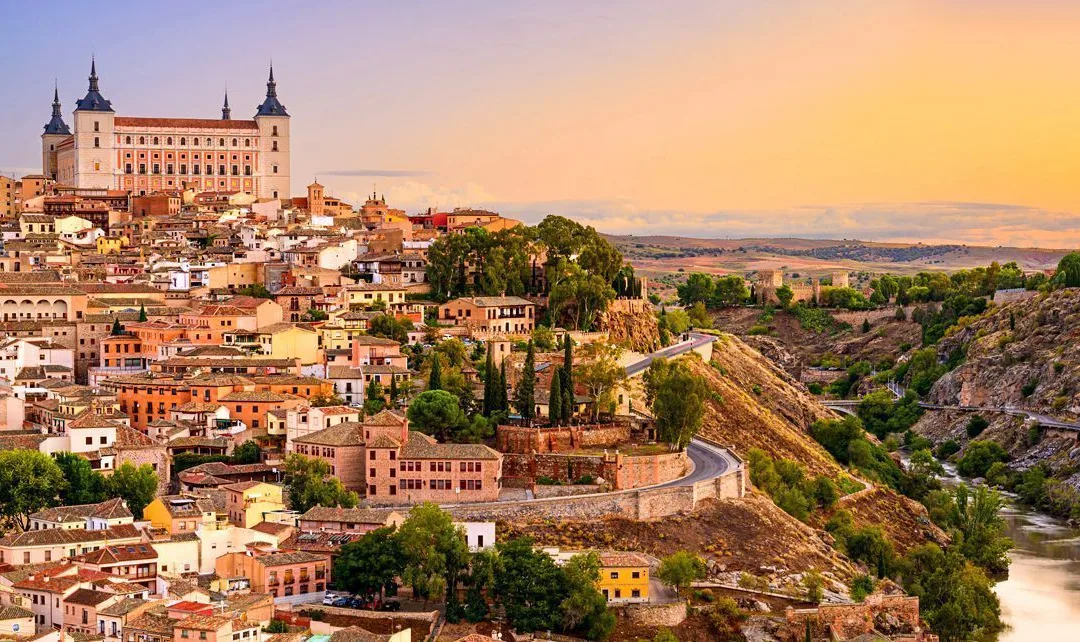
Toledo, the “City of Three Cultures,” is a testament to the rich Islamic heritage that flourished during the Al-Andalus era. This enchanting city, once a prominent center of Islamic culture and learning, offers a wealth of historical sites that showcase the grandeur of Muslim Spain. This day tour guide will help you explore the essential Islamic heritage sites in Toledo, providing an immersive and enriching experience for Muslim travelers.

1. Puerta de Bisagra

Start your journey at the Puerta de Bisagra, an impressive city gate originally built by Muslims. The gate’s design reflects Islamic architectural influences, with its grand arches and fortified towers. This historic entryway sets the tone for your exploration of Toledo’s rich Islamic past.

2. Mezquita del Cristo de la Luz

Your next stop is the Mezquita del Cristo de la Luz, one of the best-preserved examples of Islamic architecture in Toledo. Built in the late 10th century, this mosque features beautiful horseshoe arches and intricate brickwork. The interior, with its serene and contemplative atmosphere, offers a glimpse into the spiritual life of the Muslim community in Al-Andalus. The site also includes a Christian chapel, highlighting Toledo’s unique cultural fusion.

3. Alcázar of Toledo

Visit the Alcázar of Toledo, a grand fortress with roots dating back to the Islamic era. While the current structure has undergone various changes, its origins as a Muslim fortress remain evident. The Alcázar’s imposing presence and strategic location underscore its historical significance during the time of Al-Andalus.

4. Puente de Alcántara

Cross the historic Puente de Alcántara, a stone bridge that spans the Tagus River. Originally built by the Romans and later enhanced by Muslims, this bridge features fortified towers and arches that reflect the Islamic architectural style. The bridge offers stunning views of Toledo and its picturesque surroundings.

5. Palacio de Galiana

Explore the Palacio de Galiana, a beautiful palace with Islamic architectural elements located just outside the city center. This serene retreat, surrounded by lush gardens, reflects the Muslim emphasis on creating paradisiacal spaces. The palace provides a peaceful escape and a glimpse into the luxurious lifestyle of the Islamic elite.

6. Toledo Cathedral

While predominantly a Gothic structure, Toledo Cathedral was built on the site of a former mosque, symbolizing the city’s Islamic heritage. Inside, you can find Mudéjar influences in some of the design elements, blending Islamic and Christian artistic styles. The cathedral’s bell tower, originally part of the mosque’s minaret, stands as a testament to Toledo’s layered history.

7. Museum of Santa Cruz

This museum houses a diverse collection of artifacts, including pieces from the Islamic period. The museum building itself features Mudéjar architecture, which blends Islamic and Christian artistic styles, providing a fitting end to your journey through Toledo’s Islamic heritage.

8. Mosque of Tornerías

Conclude your day with a visit to the Mosque of Tornerías (Mezquita de las Tornerías). This 11th-century mosque is a prime example of Islamic architecture in Toledo. It has been beautifully preserved and now serves as a cultural center. The mosque’s interior showcases typical Islamic decorative elements, such as horseshoe arches and intricate geometric designs. It offers a serene atmosphere for reflection and a deeper understanding of Toledo’s Islamic past.