Seville
Seville
Seville is one of Europe’s most captivating cities, where magnificent monuments, lively plazas, fragrant orange trees, and centuries of history create an unforgettable destination. As the capital of Andalusia, Seville is famous for its impressive architectural heritage, vibrant culture, and warm hospitality, but beneath its lively atmosphere lies a remarkable past shaped by Romans, Andalusis, Castilians, merchants, explorers, and artists.
For more than five centuries, Ishbiliya—as Seville was known during the period of Al-Andalus—was one of the most important cities in the Iberian Peninsula. Its rulers transformed the city into a flourishing political, economic, and cultural centre whose legacy still defines much of modern Seville. Today, visitors can admire magnificent palaces, ancient walls, elegant courtyards, and gardens that preserve the artistic achievements of that period alongside later Gothic, Renaissance, Baroque, and Mudéjar masterpieces.
Whether you are visiting for a day or spending several nights exploring its neighbourhoods, Seville offers an extraordinary journey through more than two thousand years of history.
History
Seville’s origins date back over two millennia. The Romans established Hispalis as an important provincial city, constructing roads, temples, aqueducts, and public buildings that laid the foundations for future growth.
Following the arrival of Islam in the Iberian Peninsula in the early eighth century, the city became known as Ishbiliya and rapidly developed into one of the principal cities of Al-Andalus. During the Umayyad Emirate and later the Caliphate of Córdoba, Seville prospered as a commercial centre thanks to its strategic position on the Guadalquivir River.
After the collapse of the Caliphate in the eleventh century, Seville became the capital of the powerful Taifa Kingdom ruled by the Abbadid dynasty. Under rulers such as Al-Mu’tamid, the city enjoyed a remarkable cultural flowering, attracting poets, scholars, musicians, and craftsmen from across the Islamic world.
Later, the Almoravids and subsequently the Almohads incorporated Seville into their empires. The Almohad period during the twelfth century transformed the city’s skyline with ambitious construction projects, including the Great Mosque, the Giralda minaret, defensive walls, bridges, and royal palaces.
In 1248, King Ferdinand III conquered Seville for the Kingdom of Castile. Rather than erasing its Andalusi heritage, many buildings were preserved, adapted, and expanded, giving rise to the distinctive Mudéjar style that characterises much of the city’s architecture.
Following the discovery of the Americas, Seville became the principal gateway for trade with the New World. During the sixteenth century, it was among Europe’s richest cities, attracting merchants, explorers, artists, and scholars whose influence helped shape Spain’s Golden Age.
Today, Seville’s historic centre is one of the largest in Europe and has been recognised by UNESCO for its outstanding cultural value.
Spring is widely considered the ideal season to visit Seville. Temperatures are pleasant, gardens are in bloom, and the city’s major festivals take place between March and May. Autumn also offers comfortable weather with fewer crowds and excellent conditions for sightseeing.
Summers are extremely hot, often exceeding 40°C (104°F). Visitors should explore early in the morning and during the evening while reserving indoor attractions for the hottest part of the day. Winter remains mild, making Seville an attractive destination throughout the year.
Although Seville’s main monuments can be visited in two days, three or four days allow a much deeper appreciation of the city.
Seville also serves as an excellent base for day trips to Córdoba, Cádiz, Jerez de la Frontera, Carmona, and the famous White Villages of Andalusia.
The Legacy of Al-Andalus
Although visitors often associate Seville with flamenco and grand Christian monuments, much of the city’s identity was shaped during the centuries of Al-Andalus.
The street layout of the historic centre, many surviving walls and gates, irrigation systems, gardens, decorative arts, and architectural techniques all reflect this remarkable legacy.
The Giralda, sections of the Alcázar, the Torre del Oro, fragments of the city walls, ancient gates such as the Puerta de Córdoba and Puerta de la Macarena, and numerous archaeological remains continue to tell the story of Ishbiliya.
Understanding this heritage allows visitors to appreciate Seville not simply as a beautiful city but as one of the great centres of medieval Islamic civilization in Western Europe.
TOP ATTRACTIONS
The Royal Alcázar: A Living Palace
The Royal Alcázar is undoubtedly Seville’s most remarkable monument and one of the oldest royal palaces in continuous use anywhere in the world.Its origins lie in the fortified palaces constructed by Andalusi rulers during the tenth and eleventh centuries. Successive dynasties expanded the complex, while after the Christian conquest, Castilian monarchs continued building new palaces inspired by Andalusi craftsmanship rather than replacing it.
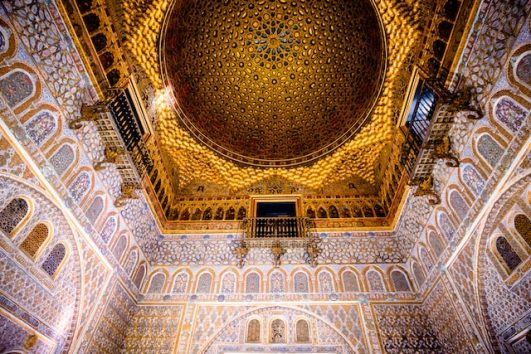
The result is an extraordinary architectural ensemble where Islamic geometry, intricate plasterwork, carved wooden ceilings, colourful ceramic tiles, Gothic chapels, Renaissance halls, and Baroque additions coexist harmoniously.
The Palace of King Pedro I is considered one of the finest examples of Mudéjar architecture ever built, created by Muslim craftsmen working for a Christian monarch.
Outside, magnificent gardens filled with fountains, palm trees, orange blossoms, pavilions, and reflecting pools offer a peaceful escape from the bustling city.
Seville Cathedral and the Giralda
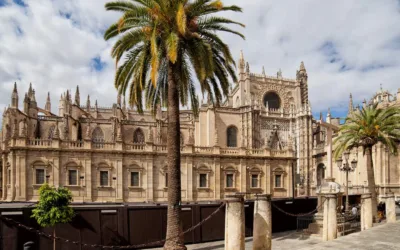
Standing beside the Alcázar is one of the largest Gothic cathedrals in the world. Built after the Christian conquest on the site of the former Almohad Great Mosque, Seville Cathedral reflects the city’s growing wealth and prestige during the late Middle Ages.
The cathedral preserves one of the mosque’s most iconic features: the Giralda.
Originally constructed during the twelfth century as the mosque’s minaret, the Giralda is one of the greatest surviving masterpieces of Almohad architecture. Its elegant proportions, decorative brickwork, horseshoe arches, and geometric ornamentation continue to define Seville’s skyline.
Following the Christian conquest, a Renaissance bell tower was added above the original minaret rather than demolishing it. Visitors climbing the Giralda enjoy spectacular panoramic views across the city.
Santa Cruz: Seville’s Most Atmospheric Quarter
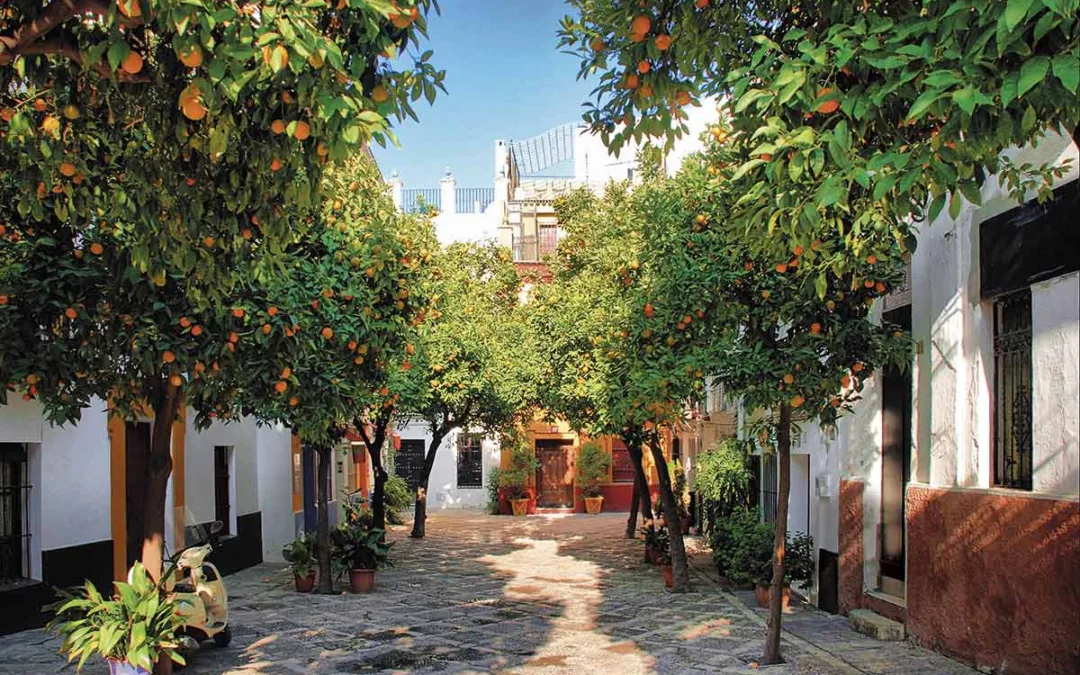
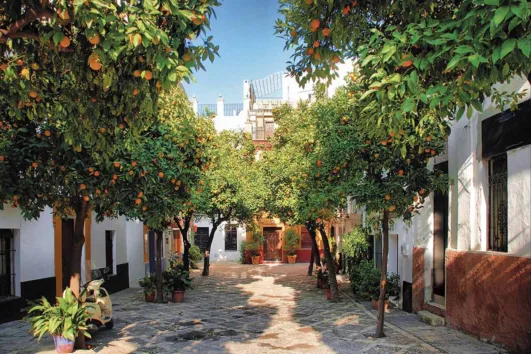
Santa Cruz is perhaps Seville’s most famous neighbourhood. Its labyrinth of narrow streets, shaded squares, flower-filled balconies, hidden patios, and whitewashed houses preserves the medieval street pattern that developed during the Andalusi period.
Walking through Santa Cruz reveals charming plazas such as Plaza de Doña Elvira, Plaza de Santa Cruz, and Plaza de los Venerables, each offering quiet corners away from the busiest tourist routes.
Today the district is home to traditional restaurants, artisan workshops, boutique hotels, and some of the city’s finest examples of domestic architecture.
The Guadalquivir River
The Guadalquivir River has shaped Seville’s history for more than two thousand years. It allowed Roman merchants, Andalusi traders, and later Spanish fleets sailing to the Americas to transform the city into an international commercial centre.
Today, pleasant riverside promenades connect many important landmarks.
Among them is the Torre del Oro, a defensive tower built by the Almohads in the early thirteenth century to protect access to the city from the river. Nearby, visitors can enjoy boat cruises, cycling routes, gardens, and panoramic views across the historic centre.
Plaza de España and María Luisa Park
Although much younger than Seville’s medieval monuments, Plaza de España has become one of Spain’s most iconic public spaces.
Constructed for the Ibero-American Exposition of 1929, the enormous semicircular plaza combines Renaissance Revival and Neo-Mudéjar architecture with colourful ceramic decoration representing every Spanish province.
Bridges crossing canals, elegant towers, tiled alcoves, and impressive galleries make it one of the city’s most photographed locations.
Adjacent María Luisa Park provides extensive gardens, fountains, shaded avenues, and peaceful walking paths ideal for escaping the summer heat.
Seville Private Tours
Featured Articles

Top Islamic Heritage Site in Seville, Andalusia

Muslim Spain Brief History

Seville’s Most Charming Streets fo a Picturesque Stroll in the Historic Center
Explore Seville’s historic heart with our guide to the most enchanting streets in the city’s center. From the famous Calle Sierpes, lined with shops and tapas bars, to the cobbled beauty of Calle Mateos Gago near the iconic Santa Cruz neighborhood, discover the perfect routes for leisurely walks. Immerse yourself in the neoclassical allure of Tetuán Street, the artistic ambiance of Regina Street, and the riverside views of Betis Street in Triana. Whether you’re seeking shopping, history, or tranquil beauty, Seville’s historic streets have it all.

Discover Seville’s Islamic Heritage: Must-Visit Landmarks for Muslim Travelers
Explore Seville’s rich Islamic history with our guide to the top landmarks and cultural sites for Muslim travelers. From the stunning Alcázar to the Giralda Tower and hidden gems like the Santa Paula Mosque, uncover the city’s captivating heritage.
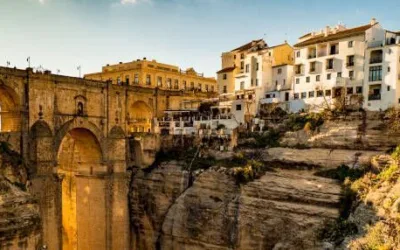
Top things to see and do in Ronda

Unveiling the Past of Ishbiliya: Exploring Seville’s Landmarks during Al-Andalus
Discover the enchanting city of Seville, once known as Ishbiliya, during the illustrious era of Al-Andalus. Immerse yourself in the rich history and explore remarkable landmarks that offer a glimpse into this bygone era. Follow our suggested itinerary for a captivating day visit.

20 Must Visit Attractions in Seville
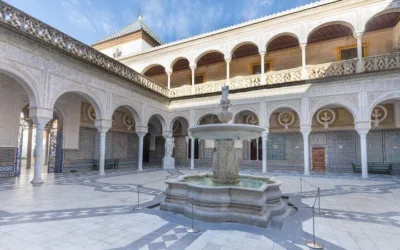
Don’t miss this spectacular 16th-century mansion in Seville
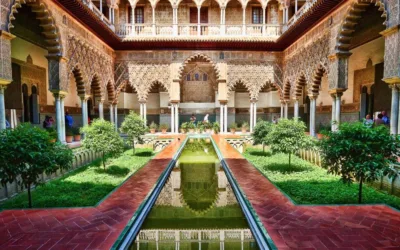
Royal Alcazar of Seville
The oldest palace of Spain is in Seville, Andalusia. Seville Alcazar was initially built by the Arabs in the early 8th century and has been expanded by further Spanish Kings, converting it into their royal residence.
The magnificent Plaza de España of Seville