Must-Visit Attractions in Granada

Must-Visit Attractions in Granada

Discover Granada in 2 Days

Must-See Attractions & Insider Tips


Alhambra Palaces

Alhambra Muslim Tour - Spain - Muslim Travel

Granada’s star attraction and one of Andalusia’s most iconic sights is the Alhambra fortress. The greatest surviving relic of southern Spain’s 800 years under Muslim rule, between the 8th and 15th centuries, this sprawling complex sits forbiddingly atop the Darro Valley, with the crisp peaks of the Sierra Nevada in the background.

Originally dating from the 9th century, the fort and walls were extensively rebuilt in the 1200s by the muslim ruler of what was then the Emirate of Granada, Mohammed ben Al-Ahmar. Particularly beautiful are the Nasrid palaces; built by the Nasrid Kings – the last muslimi rulers of Granada – during the 13th and 14th centuries, which feature some of the Alhambra’s most intricate interiors.

The Generalife: A Sultan’s Retreat and Verdant Oasis


Generalife Palace Al Andalus Alhambra Granada

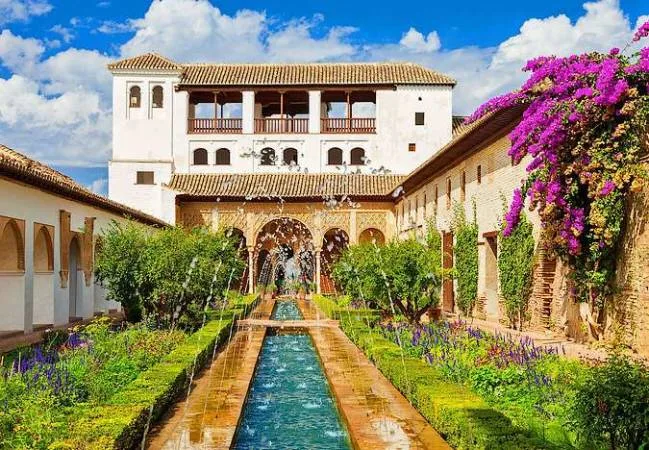
The Generalife served as the Alhambra’s recreational estate, a serene escape for the sultans during the scorching Andalusian summers. This magnificent almunia (a rural retreat with orchards and gardens) was designed as a haven of tranquility, with its lush gardens offering shade and refreshment. Narrow pathways meander alongside vibrant flowerbeds and reflective ponds, where the elegant archways and whitewashed walls of the estate are perfectly mirrored in the water.

An open-air walkway connects the northern and southern parts of the Generalife, offering breathtaking views of the Albaicín, Granada’s historic Arabic quarter. From the Alhambra and Generalife, the Albaicín’s whitewashed houses and cobbled streets create a stunning panorama that captures the essence of the city.

Before leaving the Alhambra hill, take a detour to the Carmen de los Mártires gardens. This lesser-known gem is a peaceful retreat of colorful flowerbeds, small ponds, and shaded paths that are refreshingly quiet compared to the bustling Alhambra. In spring and summer, it offers an idyllic escape from the intense sun, with panoramic views over the city and the countryside beyond. A charming fairytale tower sits in the heart of the gardens—climb its spiral staircase for a romantic vantage point over Granada.

Explore the Enchanting Albaicín: Granada’s Historic Muslim Quarter

Wander through the narrow, cobblestone streets of the Albaicín, Granada’s oldest and most captivating neighborhood. A UNESCO World Heritage Site, this historic Muslim quarter offers a glimpse into the city’s muslim past, with its whitewashed houses, intricate architecture, and stunning views of the Alhambra.

A Journey Through Time
Dating back to the 11th century, the Albaicín was the heart of Granada’s Islamic culture. As you stroll through its winding lanes, you’ll encounter beautiful Nasrid-style homes, ancient cármenes (traditional Andalusian houses with gardens), and remnants of the city’s medieval walls. The area’s charm lies in its blend of history and modern life, where traditional tea houses sit alongside vibrant local shops.

Don’t Miss the Iconic San Nicolás Viewpoint
No visit to the Albaicín is complete without a stop at the Mirador de San Nicolás, one of the most famous viewpoints in Spain. From this hilltop plaza, you’ll enjoy an unparalleled panoramic view of the Alhambra, framed by the majestic Sierra Nevada mountains. Whether you visit at sunrise, sunset, or any time in between, the view is nothing short of magical.

Street musicians and artists often add to the lively atmosphere, creating the perfect setting to soak in the beauty of Granada. Many visitors consider this view one of the most unforgettable highlights of their trip.

Other Hidden Gems in the Albaicín

  • Explore the charming Placeta de San Miguel Bajo, a quiet square lined with cafés and local restaurants.
  • Admire the Puerta de Elvira, one of the old city gates that once marked the entrance to Granada.

A Stroll Through Culture and Tradition
The Albaicín’s unique character, steeped in history and culture, makes it a must-see on any trip to Granada. Get lost in its labyrinth of streets, savor traditional Andalusian cuisine, and discover why this neighborhood continues to captivate travelers from around the world.


Must-Visit Attractions in Granada Spain Al Andalus heritage

Sacromonte: Granada’s Enchanting Gypsy Quarter

Time seems to stand still in the rustic quarter of Sacromonte, one of Granada’s most unique and captivating neighborhoods. This historic area is known for its whitewashed caves carved into the hillside, where many locals continue to live. These caves come alive at night with impromptu flamenco gatherings, echoing with the soulful melodies and rhythms of this quintessential Andalusian art form.

As you wander through Sacromonte, you’ll find an authentic charm that reflects a mix of traditional and unconventional lifestyles. The area’s improvised dwellings—built from recycled materials like scrap metal, wood, and cloth—add a raw, unpolished character. Visitors are reminded to respect the privacy of residents, especially when signs kindly request refraining from photographs.

Sacromonte is also the beating heart of Granada’s flamenco scene. For a formal flamenco experience, head to Venta El Gallo, where you can enjoy a mesmerizing performance and take in breathtaking views from its fabulous rooftop terrace.

Would you like recommendations for exploring the caves or other flamenco venues in the area?

The Palace of Dar al-Horra: A Hidden Gem in Albaicin 

Dar al Horra Palace Nasrid Albaicin Quarter

Tucked away in Granada’s historic Albaicín district, the Palace of Dar al-Horra is a stunning example of Andalusian architecture. This elegant palace, whose name translates to “House of the Honest,” was once the home of Aixa, mother of Muhammad XII (known as Boabdil), the last ruler of Granada.

Step into a serene oasis where history comes alive. Designed in traditional Andalusian style, the palace features three levels of rooms and quarters surrounding a tranquil central courtyard with a reflective pool—offering shade and respite from the summer heat. You can also explore remnants of the lush gardens and orchards that once graced the grounds. 

The historic Baths Hammam Al-Yawaz (El Bañuelo)

El Bañuelo arab hammam Granada

Nestled along the picturesque Carrera del Darro, El Bañuelo is one of Granada’s oldest and best-preserved Arab baths, dating back to the 11th century. This historic site invites visitors to step into the past and discover the traditions of relaxation and purification in Al-Andalus.

While many hammams were destroyed during the Christian Reconquest, El Bañuelo was spared—a rarity that makes it a must-see landmark. Its survival was likely due to its transformation into a private residence, preserving its architectural beauty and cultural significance.

The baths feature a traditional layout, including cold, warm, and hot rooms designed to promote health and well-being. Inside, you’ll marvel at the stunning star-shaped skylights in the vaulted ceilings, which once filtered sunlight to create a peaceful, meditative ambiance. The elegant horseshoe arches and stone columns further highlight the craftsmanship of the Nasrid period.

Located along Granada’s prettiest street, El Bañuelo is the perfect addition to your stroll through the Carrera del Darro. Its proximity to other landmarks like the Alhambra and Albaicín makes it an easy stop for anyone exploring the historic heart of the city.

Discover the Historical Treasures of Realejo Quarter

The Realejo Quarter, nestled at the foot of the majestic Alhambra, is a living testament to Granada’s rich and layered history. Once the city’s vibrant Jewish neighborhood during the Nasrid dynasty of Al-Andalus, this district flourished as a cultural and intellectual hub. Following the Reconquista in 1492, its identity evolved, leaving behind a fascinating tapestry of medieval buildings, palaces, and remnants of ancient walls that tell the story of centuries gone by.

The Realejo’s historical roots are deeply intertwined with Al-Andalus, the period of Muslim rule in Spain. The neighborhood was originally known as “Garnata al-Yahud,” or “Granada of the Jews,” due to its significant Jewish population during the Nasrid era. Walking its streets today, you’ll find traces of this coexistence, reflected in the layout of the narrow, winding alleys and the elegant architecture that bears the hallmarks of islamic design.

Among the architectural highlights of Realejo are several palatial homes that once belonged to Granada’s elite. These include Casa de los Girones, a beautiful example of Mudéjar architecture, with its intricately carved wooden ceilings and decorative tiles. Another gem is the Palacio de los Condes de Gabia, which now serves as a cultural center hosting exhibitions and events. These buildings showcase the blending of Islamic and Christian influences that define the city’s post-Reconquista era.

The Zirí Wall, an ancient fortification dating back to the 11th century, winds its way through parts of Realejo. Built by the Zirí dynasty, the first Muslim rulers of Granada, this defensive structure protected the city during its early medieval period. Portions of the wall remain remarkably well-preserved, offering a glimpse into the strategic importance of Granada as a fortress city. Strolling along these remnants is like stepping back in time.

The Realejo is more than just a historical treasure trove; it’s a vibrant neighborhood that retains its timeless charm. From its bustling squares, like Plaza del Realejo, to the artistic energy reflected in its murals and street art, the area bridges the past and present. Small artisan shops and traditional taverns add to the authentic experience of exploring this quarter.

As the neighborhood adapted to its Christian rulers, many mosques were replaced or transformed into churches. The Iglesia Santo Domingo, with its ornate Baroque façade and richly decorated interior, is a standout example built in the 16th century.
 

Top 10 things to do when visiting Cordoba, Andalusia

Top 10 things to do when visiting Cordoba, Andalusia

Top 10 things to do when visiting Cordoba, Andalusia

Boasting a fascinating and multi-faceted history, Córdoba is one of the most popular tourist destinations in Spain. From its iconic Mosque-Cathedral to the beautiful flower-adorned patios open to the public every May, this is a city with something for everyone.
Read on for the 10 best things to see and do in Córdoba.

Mosque-Cathedral

Going to Córdoba and not visiting the Mezquita-Catedral would be like leaving the Alhambra out of a trip to Granada: it is the city’s greatest monument. After the Moors captured Córdoba in 711, what had previously been a Visigoth Christian church was split in two and used by both Christians and Muslims as a place of worship. But in 784, on the orders of the Emir Abd al-Rahman, the church was destroyed and work began on a great mosque. Construction lasted for over two centuries. The building was eventually completed in 987, by which point Cordoba was the most important city in the Islamic Kingdom.

When the city was reclaimed by Christians in 1236, the mosque was converted into a church, and in the 16th century Charles V added a Renaissance nave on top of the Moorish structure. The hybrid structure that resulted has fascinated, outraged and confused in equal measure ever since.

1 Calle del Cardenal Herrero, Córdoba, Spain, +34 957 47 05 12

The façade of Córdoba’s Mosque-Cathedral I © waldomiguez/Pixabay


Medina Azahara

Córdoba’s Mosque-Cathedral takes some beating as a historical attraction, but Medina Azahara – situated some 8km (5 miles) outside the city – is just as intriguing. In the middle of the 10th century, ‘The Shining City’ was the adminstrative capital of Al-Andalus, as Moorish-ruled Spain was then known. Construction started in 936 on the order of the Umayyad Caliph of Cordoba, Abd-ar-Rahman III al-Nasir.

Additions and alterations continued for decades, but in 1010 Azahara was looted and thereafter stood deserted for centuries. Its remains were not discovered until the beginning of the 20th century.

Although they only account for about 10% of the original city, they nevertheless give you a good idea of just how magnificent Medina Azahara must have been.

Carretera Palma del Río, km 5.5, Córdoba, Spain, +34 957 10 36 37

Medina Azahara was once the most important city in Andalusia I © -JvL-/Flickr


Old-school tapas bars

Given that Córdoba is the warmest city in Europe, sightseeing here in spring and summer can be seriously thirsty work. Luckily, the old part of the city is absolutely stuffed with bars that might not look like much from the outside, but which serve some of the best tapas in town.

These old-school places are usually full of locals (always a good sign) and are worth it for their wonderfully chaotic atmosphere as well as for the unbelievably cheap home-cooked food. A must-order in such places is salmorejo – a more substantial version of gazpacho that originated in Cordoba.

Particularly good is Taberna La Sacristia near the Palacio de Viana, where you can gaze upon walls plastered with antique bullfighting paraphanelia as you refuel.

3 Calle Alarcón López, 3, Córdoba, Spain, +34 606 40 69 89

Try salmorejo – the city’s most famous dish I © mlgutierrez820/Pixabay

Roman Temple

One of the pleasures of visiting Córdoba is being able to view monuments from all three of its most defintive epochs: Roman, Moorish and Christian. It was not until the 1950s, when Cordoba’s town hall was being expanded, that the remains were discovered.

It was built during the reign of Emperor Claudius in the middle of the 1st century AD and was renovated in the 2nd century AD. Of its giant columns, 10 remain, reaching up into the sky amid modern apartment blocks and offices. Archaeologists have theorised from the quality of marble and workmanship used in the construction of the temple that it must have been a particularly impressive structure, perhaps even one of the most beautiful in the Roman Empire.

Calle Capitulares, s/n, Córdoba, Spain, +34 957 20 17 74

Córdoba’s Roman Temple, discovered in the 1950s I © waldomiguez/Pixabay

Roman Bridge

The city’s famous Roman Bridge, or Puente Romano, dates from the 1st century BC and was extensively rebuilt in the 10th century during the Moorish occupation of the city.

Sitting low over the opaque waters of the Guadalquivir river, which flows down all the way through Andalusia and out into the Atlantic, it is supported by 17 stone arches, of which just two once belonged to the original structure. The middle of the bridge, next to a 17th century statue of Saint Raphael, is the perfect spot from which to survey Cordoba and the green, hilly countryside that surrounds it: it’s a perspective that even locals stop to enjoy while walking over the Puente Romano.

Avenida del Alcázar, s/n, Córdoba, Spain

Córdoba's Roman bridge What to See and Do in Cordoba

Córdoba’s Roman bridge | © Javier Orti/flickr

Patios and courtyards

Córdoba’s prettiest and most unique attractions arose from architectural necessity. The city is one of the hottest in Europe during the summer months, when temperatures frequently exceed an insufferable 40°C (104°F), so it has always been essential for its inhabitants to have a cool retreat for the middle of the day.

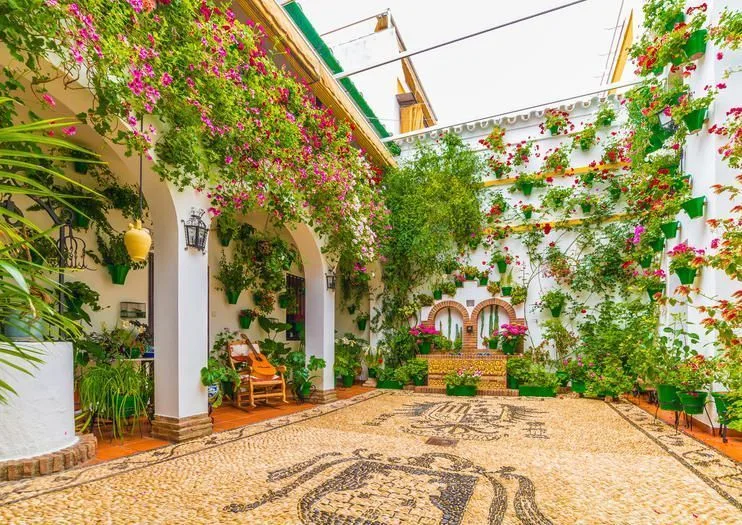
As far back as the Roman occupation of Cordoba, houses were built with an internal, open-aired atrium, which was protected from the sun on all sides by thick stone walls. Over the centuries, these havens of cool and shade were decorated with flowers, plants and fountains – a practice that was refined during the Moorish occupation of Córdoba.

Since 1918 the Feria de los Patios, as it’s called, has been sponsored by Córdoba’s town hall, which offers a prize for the prettiest patio.

Flower's patios what to see and do in Cordoba Andalusa

One of Córdoba’s stunning decorated patios I | © poperopop/Pixabay

Palacio de Viana

The star of Córdoba’s patios feria is the elegant 15th-century Palacio de Viana, a vast building that has been used over the centuries as a residence for Spanish royalty. For an admission price of €5 (US$5.56), you can visit Viana’s 13 patios and gardens.

Intricately designed and aromatically populated with colourful plants, flowers and trees, these are some of Córdoba’s most gorgeous public spaces.  Allow a good hour to slowly wander around these scented, romantic spaces. Peering in through the palace’s old windows as you go; another age of louche affluence and amorous intrigue, once played out amongst Viana’s orange trees and jasmines, comes instantly back to life.

2 Plaza de Don Gome, Córdoba, Spain, +34 957 49 67 41

Beautiful gardens at the Palacio de Viana I © Encarni Novillo

Calleja de las Flores

The annual patios feria and the Palacio de Viana aren’t the only opportunities for seeing the famous flowers of Córdoba. A stroll down most streets in the old quarter will take you past several gorgeously-decorated building facades, but on the Calleja de las Flores every single house looks like something out of a fairytale.

Situated just north of the Mosque-Cathedral in the heart of the old town, this sweet-scented, colourful little street is the prettiest in Córdoba – and in a city where every other house is worthy of being on a postcard, that is quite a compliment.

Calleja de las Flores, Cordoba, Spain

Córdoba’s Calleja de las Flores is lined with the city’s prettiest houses I © tpsdave/Pixabay


Alcazar de los Reyes Cristianos

Often overlooked in favour of the Mosque-Cathedral, the Castle of the Christian Kings is one of the city’s key architectural landmarks. As its name suggests, the construction of this royal palace was ordered by the Catholic King Alfonso XI of Castile in 1328 but – as is so often the case in Andalusia – it was built among the ruins of a vast Moorish fort.

In the late 10th century, when the Islamic Kingdom was at the height of its powers, Córdoba was the kingdom’s – and indeed one of the world’s – great intellectual cities, and the Alcazar housed the largest library in the west. Alfonso used only a fraction of the remains of the original Moorish structure in building the Alcazar, but he chose a Mudejar style, so the Moorish feel of the site has been preserved.

Plaza Campo Santo de los Mártires, s/n, Córdoba, Spain, +34 957 42 01 51

Córdoba’s Castle of the Christian Kings I © Pixels4Free/Pixabay


Bullfighting Museum

Córdoba is steeped in bullfighting history, and you can visit a monument of its most famous matador, Manolete (1917-1947), in Plaza del Conde de Priego in the old town; right opposite the square is Iglesia Santa Marina, where many Córdobese bullfighters have been married. Also well worth a visit is superb Museo Taurino, or bullfighting museum, which offers a fascinating insight into this controversial spectacle.

Plaza Maimónides, s/n, Córdoba, Spain, +34 957 20 10 56


Written by Mark Nayler for The Culture Trip

Andalusia: Explore The Greatest Spain Islamic Heritage

Andalusia: Explore The Greatest Spain Islamic Heritage

Andalusia: Explore The Greatest Spain Islamic Heritage


Spain today is a country with a majority population of Christians. But a lesser known fact is that Muslims conquered and ruled a region of the country called Andalusia or Al-Andalus, at the time, for several centuries. These days were some of the most prosperous times in the history of Al-Andalus, and one of the best examples of minorities -the Christians and Jews- living peacefully in the Andalusian Umayyad dynasty, which lasted from 756 to 1031, and was referred to as “the golden age of tolerance”.


A Brief History of Moorish Spain

Andalusia, known as Al-Andalus was a Muslim territory in today’s Spain and Portugal. The era of Muslim rule began when Tariq Ben Ziyad conquered Andalusia in 711 AD in an attempt to free the region from the Visigoths who were wreaking havoc in the area. History states that he arrived with 7000 of his men and claimed victory, after which followed a period of Islamic rule, which lasted from the eighth to the fifteenth century. This time period Is also often referred to as “Moorish Spain”.


What to see

Andalusia is situated in the southern region of the Iberian peninsula and is made up of several cities, such as Seville, Malaga, Jaen, Almeria, Cordoba, Cadiz, Granada, and Huelva. Seville is the capital of Al-Andalus. Andalusia is a region that has it all, from ancient cities to mountainous ranges, picturesque beaches to deserts.There are also several historical attractions and landmarks that one could visit to get an insight into the days of Islamic rule on Muslim-friendly travel to Andalusia. Islamic architecture in Spain is intricate and ornamental, with delicate designs and high arches. The outside walls are usually made of stone, stucco, and plaster.


The Alhambra Palaces in Granada

This beautiful historic palace is set against a backdrop of the Sierra Nevada mountains. Al Hambara is known as “red fort” or “red palace”, because of the color of its surroundings. It was originally built in 889 AD on Roman ruins as a small fortress during the Muslim rule. Afterward, it remained abandoned until its renovations in the mid-13th century.

Today, it is one of Spain’s most famous attractions, and definitely a place not to be missed on an Andalusian holiday. Here, you can so many amazing things like the Patio of Lions, the Justice Gate, and more. Depending on the time of visit, you might have to book your spot in advance as it can get pretty busy. Tickets cost 14 euros for adults, and 9 euros for disabled persons. Children under 12 are allowed free admission.Address: Calle Real de la Alhambra, s/n, 18009 Granada, Spain.
Open Hours: Tuesday – Saturday: 9 am – 6 pm, Sunday: 9 am to 3 pm (Mondays closed)
+34 958 02 79 71
https://www.alhambra.org/en/

Alhambra de Granada Private Tour Muslim friendly travel

The Royal Alcazar of Seville

This is an ancient royal palace in Spain that was built by the Muslim kings of Moorish Spain. Even today, this is considered to be one of the most beautiful palaces in Spain and is one of the most outstanding examples of Mudejar architecture in the Iberian peninsula. It is also aUNESCO World Heritage Site. The upper levels of the castle are still occupied by Spain’s royal family as the official Seville residence currently.Tickets to visit the Alcazar of Seville cost about 10 euros normally. You do not have to book ahead, although you might experience long queues at times.

Address: Patio de Banderas, s/n, 41004 Sevilla, Spain.
Hours: Monday – Saturday: 9:30AM–5PM
+34 954 50 23 24
www.alcazarsevilla.org/english-version/

Alcazar Seville Andalusia Islamic Heritage Tour


The Giralda Tower in Seville

Originally built as a minaret of the Aljama Mosque during Moorish Spain, today the Giralda serves as the bell tower for the Seville Cathedral. It is one of the most iconic landmarks in all of Spain, but few know the Islamic history it holds. It was gazetted as a UNESCO World Heritage Site in the year 1987. The building remained the tallest in the city for over 800 years. Although it no longer holds the title, you can climb to the top and experience amazing views of the city.

Address: Av. de la Constitución, s/n, 41004 Sevilla, Spain.
http://www.andalucia.com/cities/seville/giralda.html


 Plaza De España in Seville

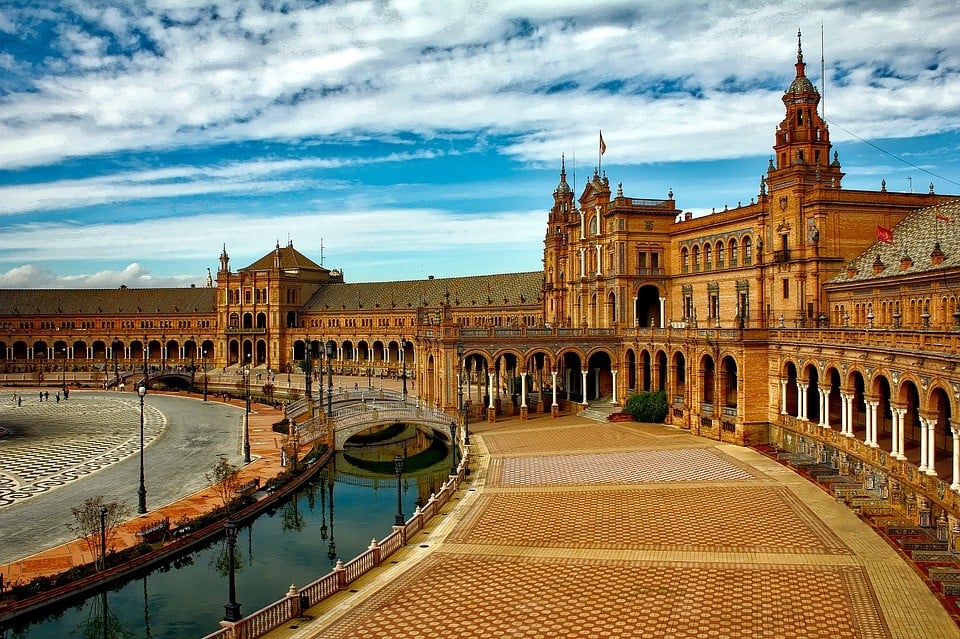
The Plaza De Espana in Seville is one of the best symbols built for the Ibero-American Exposition World Fair in 1929, along with being one of the most beautiful pieces of Neo-Mudejar architecture. This grand building is definitely something you cannot miss on your Andalusian travel itinerary.Not only is the Plaza De Espana an amazing sight to see, there are also plenty of things to see around it, including a beautiful park with ponds and birds. There is also plenty of activity going around at various times of the day, like flamenco dancers!

Address: Av de Isabel la Católica, 41004 Sevilla, Spain


La torre Del oro

Torre Del Oro, translating to “Tower of Gold”, was constructed in the early 13th century by the Almohad Caliphate. The top of the building served as a military watchtower in Seville while the actual tower was used as a prison in the Middle Ages. It is one of the most popular Andalusian attractions for visitors of all kinds, and a great place to witness a bit of history of Moorish Spain.
Address: Paseo de Cristóbal Colón, s/n, 41001 Sevilla, Spain.
Hours: Monday – Sunday: 10:30AM–6:45PM.
Phone: +34 954 22 24 19


Albaicin

Albaicin or Albayzin as it was known during the Muslim rule of Spain is a region of Andalusia that that is a great place to visit. Even today, you can see the narrow winding streets as it existed during the days of the Nasrid Kingdom of Granada. This is often known as “the Arab quarter” or Granada and is one of the best places to witness Moorish architecture. Other attractions you can visit in Albaicin include Carrera Del Darro, one of the oldest streets in the region, Church of San Salvador, a 16th-century mosque that was built over an Albayzin mosque, and numerous 11th-century Arab baths that used to be part of the Mosque of the Walnut Tree. This is also one of the best places to find Halal food in Andalusia.


The old Mosque of Cordoba

The Mosque-Cathedral of Cordoba is also known as the Great Mosque of Cordoba and Mezquita. Although its name contains the word “mosque”, it is also a Catholic Cathedral called the Cathedral of Our Lady of the Assumption. It was one of the biggest mosques in the world, and it’s unique design reflecting the harmony between the Muslims, Christians, and Jews.The history of the building goes even beyond Moorish Spain. It was originally a small Visigoth temple that was converted and expanded into a mosque by Abd al-Rahman in 784. But when the rule of Cordoba returned to the Christians, it was converted back to a Roman Catholic Church. Still, it is known as one of the most accomplished achievements of Moorish Spain and its architecture is something to see on your Andalusian holiday.

Address: Calle Cardenal Herrero, 1, 14003 Córdoba, Spain


The Alcazaba fortress of Malaga

The Alcazaba is a beautiful Moorish fortress in Malaga that was built in the 11th century by the Hammudid dynasty. It is known to be the best-preserved Alcazaba in Spain today, and one of the two Moorish fortresses in the city.This fortress whose name translates from Arabic to “citadel” is located at the base of the Gibralfaro hill. The view from the top overlooks the busy port city and has a gorgeous garden to explore as well. There is also a small archaeological museum located at the former servants’ quarters where you can see exhibits of Moorish pottery and ceramics.
Address: Calle Alcazabilla, 2, 29012 Málaga, Spain.
Phone: +34 630 93 29 87


Toledo’s Old City

The city of Toledo is built atop a rugged hill atop the plains of Castilla-La Mancha in central Spain. This city has a long and winding history, starting from the pre-Islamic era of the Romans, to the Visigoths, the Muslims, and then finally, the Christians. As such, the city holds pieces of each of these times in history. There are a number of ancient buildings to visit where you can witness the remnants of Moorish Spain, like the Bisagra Gate and the Sol Gate.


Archeological site of Madinat Al-Zahra

Situated little ways outside Cordoba, this was a Moorish city built by Abd ar-Rahman III, the first Umayyad Caliphate of Cordoba. It took him 25 years to build the city, and it was magnificent in its day. He chose this place to build his palace because of its beautiful landscape, as it lay facing the valley of Guadalquivir river.

Today, most of the city that remains are the ruins of the once majestic city-palace, but there are several fragments of the buildings remaining. You can visit the palaces, the offices of former government heads, the sprawling gardens and the Abd ar-Rahman III hall, one of the most beautiful and ornamental places in the entire city. It is one of the most important Andalusian attractions to see on your Muslim-friendly holiday to get an insight into Moorish Spain. If you are an EU resident, entrance is free. Otherwise, a ticket cost 1.5o euros. There is shuttle service at the bottom of the hill to take you to the site entrance

Address: Ctra. Palma del Río, km 5.5, 14005 Córdoba, Spain.
Hours: Sunday: 9AM–3PM, Tuesday – Saturday: 9AM–6PM (Mondays closed)
Phone: +34 957 10 36 37
Website:http://www.medinaazahara.org/en/

Medina Al Zahra archeological site Cordoba Travel