Discovering the Islamic Heritage of Toledo: A Day Tour Guide

Discovering the Islamic Heritage of Toledo: A Day Tour Guide

Exploring Islamic Heritage Sites in Toledo: A Day Tour Guide

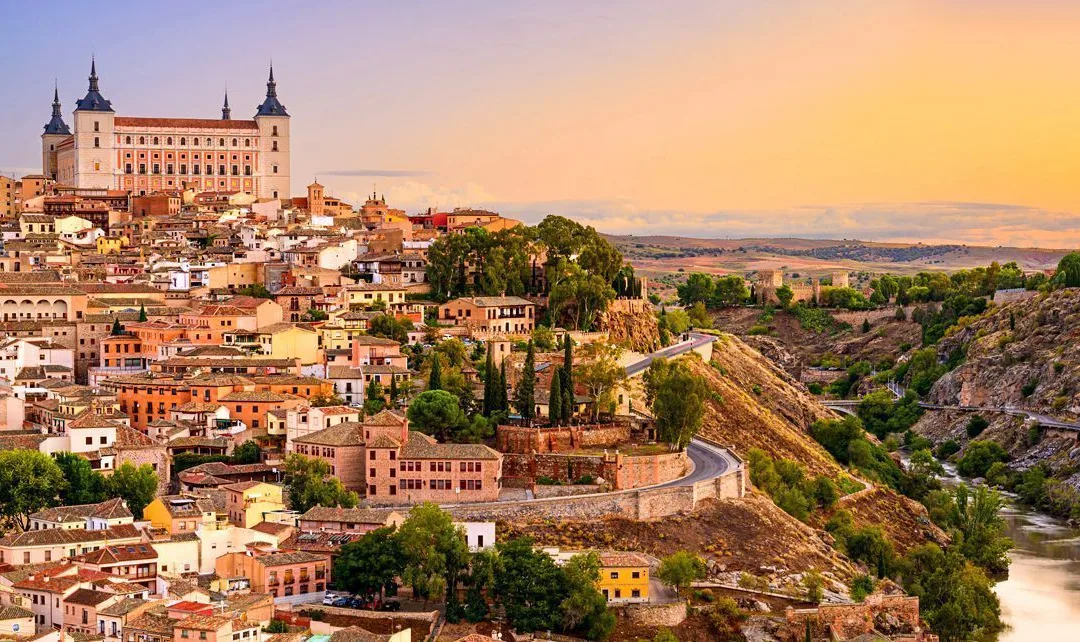
Toledo, the “City of Three Cultures,” is a testament to the rich Islamic heritage that flourished during the Al-Andalus era. This enchanting city, once a prominent center of Islamic culture and learning, offers a wealth of historical sites that showcase the grandeur of Muslim Spain. This day tour guide will help you explore the essential Islamic heritage sites in Toledo, providing an immersive and enriching experience for Muslim travelers.

1. Puerta de Bisagra

Start your journey at the Puerta de Bisagra, an impressive city gate originally built by Muslims. The gate’s design reflects Islamic architectural influences, with its grand arches and fortified towers. This historic entryway sets the tone for your exploration of Toledo’s rich Islamic past.

2. Mezquita del Cristo de la Luz

Your next stop is the Mezquita del Cristo de la Luz, one of the best-preserved examples of Islamic architecture in Toledo. Built in the late 10th century, this mosque features beautiful horseshoe arches and intricate brickwork. The interior, with its serene and contemplative atmosphere, offers a glimpse into the spiritual life of the Muslim community in Al-Andalus. The site also includes a Christian chapel, highlighting Toledo’s unique cultural fusion.

3. Alcázar of Toledo

Visit the Alcázar of Toledo, a grand fortress with roots dating back to the Islamic era. While the current structure has undergone various changes, its origins as a Muslim fortress remain evident. The Alcázar’s imposing presence and strategic location underscore its historical significance during the time of Al-Andalus.

4. Puente de Alcántara

Cross the historic Puente de Alcántara, a stone bridge that spans the Tagus River. Originally built by the Romans and later enhanced by Muslims, this bridge features fortified towers and arches that reflect the Islamic architectural style. The bridge offers stunning views of Toledo and its picturesque surroundings.

5. Palacio de Galiana

Explore the Palacio de Galiana, a beautiful palace with Islamic architectural elements located just outside the city center. This serene retreat, surrounded by lush gardens, reflects the Muslim emphasis on creating paradisiacal spaces. The palace provides a peaceful escape and a glimpse into the luxurious lifestyle of the Islamic elite.

6. Toledo Cathedral

While predominantly a Gothic structure, Toledo Cathedral was built on the site of a former mosque, symbolizing the city’s Islamic heritage. Inside, you can find Mudéjar influences in some of the design elements, blending Islamic and Christian artistic styles. The cathedral’s bell tower, originally part of the mosque’s minaret, stands as a testament to Toledo’s layered history.

7. Museum of Santa Cruz

This museum houses a diverse collection of artifacts, including pieces from the Islamic period. The museum building itself features Mudéjar architecture, which blends Islamic and Christian artistic styles, providing a fitting end to your journey through Toledo’s Islamic heritage.

8. Mosque of Tornerías

Conclude your day with a visit to the Mosque of Tornerías (Mezquita de las Tornerías). This 11th-century mosque is a prime example of Islamic architecture in Toledo. It has been beautifully preserved and now serves as a cultural center. The mosque’s interior showcases typical Islamic decorative elements, such as horseshoe arches and intricate geometric designs. It offers a serene atmosphere for reflection and a deeper understanding of Toledo’s Islamic past.
Unveiling Cordoba’s Islamic Heritage: A One-Day Tour Guide

Unveiling Cordoba’s Islamic Heritage: A One-Day Tour Guide

Exploring Islamic Heritage Sites in Cordoba: A Day Tour Guide

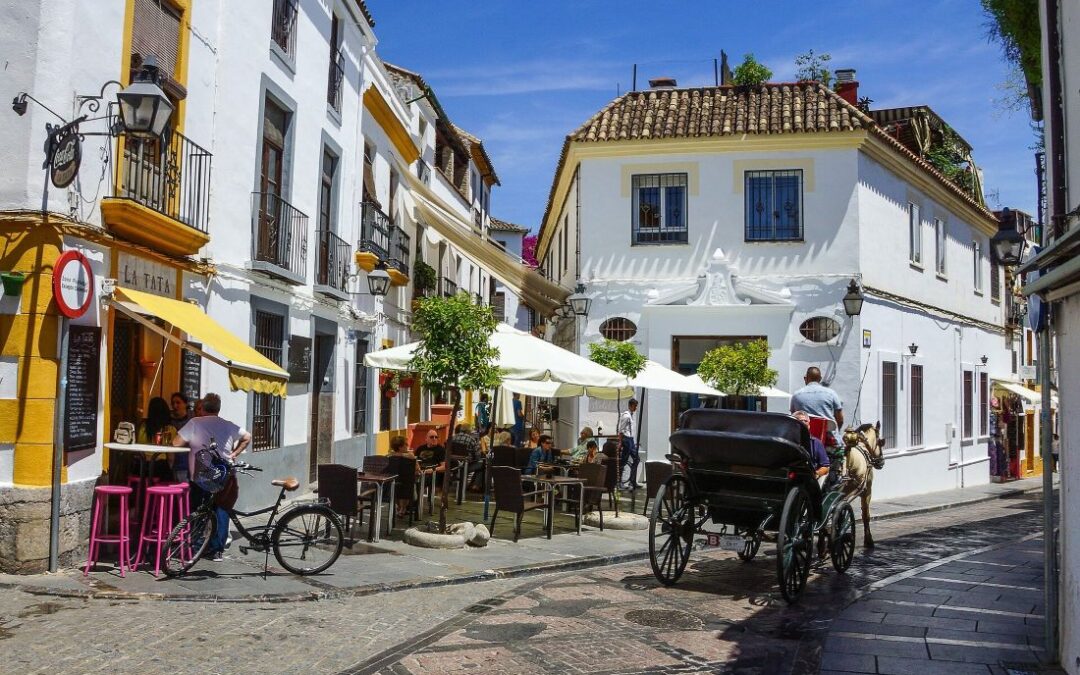
Cordoba, a jewel of Al-Andalus, is renowned for its rich Islamic heritage. Once the capital of the Umayyad Caliphate in Spain, Cordoba boasts a plethora of historical sites that reflect the grandeur of Islamic art, architecture, and culture. This day tour guide will help you explore the essential Islamic heritage sites in Cordoba, ensuring a memorable and enlightening experience.

1. The Great Mosque of Cordoba (La Mezquita)

Start your day at the iconic Great Mosque of Cordoba, also known as La Mezquita. This UNESCO World Heritage site is a masterpiece of Islamic architecture. Its vast prayer hall, with its striking red and white horseshoe arches, intricate mosaics, and richly decorated mihrab, offers a glimpse into the splendor of Islamic Spain. The mosque’s impressive minaret, now a bell tower, provides a panoramic view of the city.

2. Alcázar of the Christian Monarchs (Alcázar de los Reyes Cristianos)

Next, head to the Alcázar of the Christian Monarchs. While the current structure is primarily from the Christian period, the site was originally a Muslim fortress. Explore the beautiful gardens, reflecting pools, and fountains that evoke the Islamic garden tradition. The Alcázar also offers insights into the city’s transformation through different historical periods.

3. Medina Azahara

A short drive from the city center, visit Medina Azahara, the ruins of a vast, ornate palace-city built by the Umayyad Caliphate. This archaeological site provides a fascinating look at the opulence and sophistication of Islamic Cordoba. Wander through the remains of palaces, mosques, and gardens while imagining the splendor of this once-thriving city.

4. Calahorra Tower (Torre de la Calahorra)

Return to the city and visit the Calahorra Tower, an Islamic fortress that now houses the Museum of Al-Andalus Life. The museum offers interactive exhibits that explore the cultural and scientific achievements of Islamic Spain. Climb to the top for stunning views of the Roman Bridge and the cityscape of Cordoba.

5. Municipal Souk of the Crafts (Zoco Municipal de la Artesanía)

This traditional craft market, located in the heart of the Jewish Quarter, offers a variety of handmade goods, from ceramics to leather products. The market’s architecture and ambiance are reminiscent of the bustling souks of the Islamic world.

6. Caliphal Baths (Baños del Alcázar Califal)

End your day with a visit to the Baños del Alcázar Califal, the Caliphal Baths. These well-preserved Arab baths date back to the 10th century and offer a glimpse into the social and cultural life of Islamic Cordoba. The baths feature beautiful arches, columns, and mosaics, creating a serene and reflective atmosphere.

Exploring Islamic Heritage Sites in Granada: A Day Tour Guide

Exploring Islamic Heritage Sites in Granada: A Day Tour Guide

Granada, a city steeped in history, offers a unique glimpse into its rich Islamic heritage. Once the heart of the Nasrid dynasty, Granada is home to some of the most breathtaking Islamic architecture in the world. This day tour guide will help you explore the essential Islamic heritage sites in Granada, ensuring an enriching and unforgettable experience.

1. The Alhambra Palace and Generalife Gardens

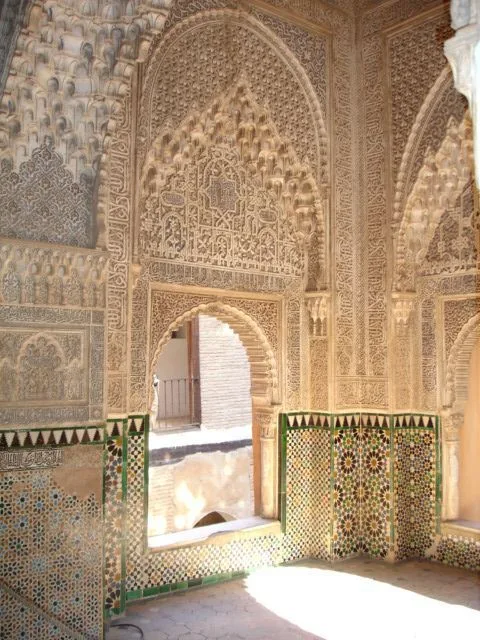
Begin your day at the iconic Alhambra Palace, a UNESCO World Heritage site and a symbol of Granada’s Islamic past. Arrive early to avoid the crowds and take in the intricate Islamic architecture, stunning courtyards, and serene fountains. The Nasrid Palaces, with their detailed stucco work and beautiful tile mosaics, showcase the pinnacle of Islamic art. Don’t miss the Generalife Gardens, a tranquil retreat with lush greenery and exquisite water features that highlight the Islamic emphasis on paradise gardens.

2. Albaicín Neighborhood

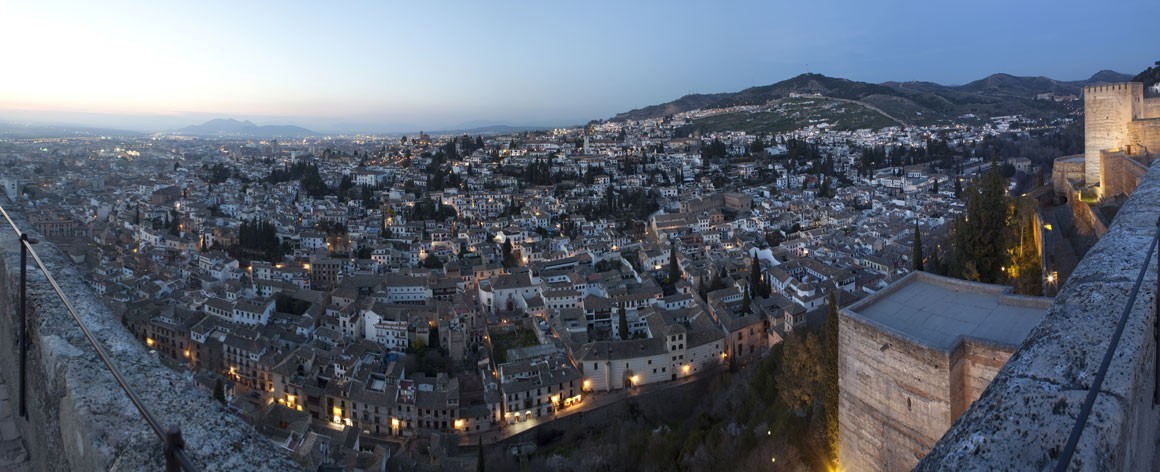
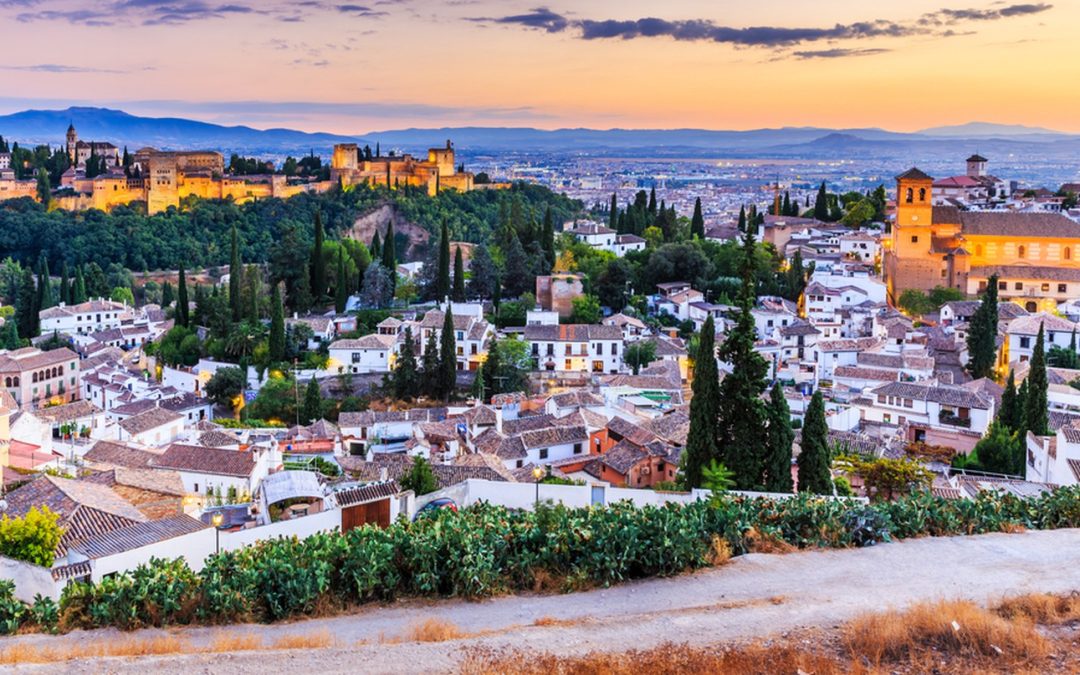
After exploring the Alhambra, head to the historic Albaicín neighborhood. This ancient Muslim quarter, with its narrow, winding streets and whitewashed houses, offers a glimpse into the everyday life of the Muslim inhabitants of Granada. Wander through the cobblestone alleys, visit the Mirador de San Nicolás for stunning views of the Alhambra, and explore the many tea houses and artisan shops that preserve the traditional Andalusian culture.

3. The Mosque of Granada (Mezquita Mayor de Granada)

Next, visit the Mosque of Granada, located in the heart of the Albaicín. This contemporary mosque, built in 2003, serves as a spiritual center for the local Muslim community and is a testament to the enduring Islamic presence in the city. The mosque’s serene gardens and panoramic views of the Alhambra make it a peaceful stop on your tour.

4. Corral del Carbón

From the Albaicín, make your way to the Corral del Carbón, a former caravanserai dating back to the 14th century. This historic building once provided lodging for merchants and storage for goods, reflecting Granada’s importance as a trade hub during the Nasrid period. Today, it serves as a cultural center, hosting various events and exhibitions that celebrate Granada’s Islamic heritage.

5. Alcaicería Market

For a taste of Granada’s marketplace, visit the Alcaicería, located near the Granada Cathedral. This labyrinth of narrow passages and stalls was once a bustling silk market during the Nasrid era. Today, it offers a variety of souvenirs, crafts, and local products, allowing you to take a piece of Granada’s Islamic history home with you.

6. El Bañuelo (Arab Baths)

End your day with a visit to El Bañuelo, one of the best-preserved Arab baths in Spain. Dating back to the 11th century, these baths offer a fascinating insight into the social and cultural practices of the Muslims. The beautifully restored rooms, with their classic arches and domed ceilings, provide a serene and contemplative atmosphere.

By visiting these remarkable sites, you can immerse yourself in the legacy of Al-Andalus and appreciate the lasting influence of Islamic art, architecture, and culture. Plan your day carefully to make the most of your time in Granada, and take home memories of an unforgettable journey through the heart of Islamic Spain.

7. Madraza of Granada (Madraza Yusufiyya)

This historic madrasa, founded in 1349 by Yusuf I, was an important center for Islamic education and scholarship. Located near the Royal Chapel and the Cathedral, the building features an impressive entrance adorned with intricate carvings and calligraphy. Inside, the beautifully decorated prayer hall and the stunning mihrab (prayer niche) are highlights that reflect the rich intellectual and cultural legacy of Al-Andalus.

8. House of Zafra (Casa de Zafra)

End your day with a visit to the House of Zafra, located in the Albaicín neighborhood. This 14th-century Nasrid house has been converted into a museum that showcases the history and architecture of the Islamic period in Granada. The museum provides valuable insights into the domestic life of the Nasrid elite, with its beautiful courtyards, intricate tile work, and informative exhibits. The House of Zafra offers a unique perspective on Granada’s Islamic heritage, making it a must-visit site.

The Alhambra Palaces location and buildings

The Alhambra Palaces location and buildings

THE ENCLAVE

The Alhambra is the main enclave of a complex territorial structure, demonstrating its importance through its dominion over the city of Granada.

Granada corresponds with the historic hilltop city model, surrounded by mountains and irrigated by the rivers Darro and Genil, the first dividing the land into two opposite fronts which determined the construction of the medieval city. The hills around the Darro are those of San Cristóbal (760m) on the right bank of the river and Sabika (790m), on the left bank. The Alhambra stands on the latter.

It was no accident that Muhammad I (1237-1273) selected a place with such privileged geographic conditions, also taking into account the existence of previous large fortified constructions. The high locations of cities have special characteristics and are due to geopolitical decisions consistent with the medieval mentality.

Dominance of the location and control of territory were everything in the organization of a kingdom in the 13th century, in which both military power and administrative organization required an enclave which safeguarded the physical presence of power over the city, while keeping it separated from it.

LOCATION

The Alhambra stands on the hill of Sabika, which penetrates inland to a fertile plain, as the last bastion of the Sierra Nevada, facing Albaicín and Sacromonte, between the Darro and Genil river basins.

Surrounded by mountains, Arabic writers compared Granada to a crown, with the jewel of the Alhambra protruding from it.

The history of the Alhambra’s constructions is closely related with the city of Granada, of which there is archaeological documentation of overlapping walls from the Iberian, Roman and Islamic period, successively.

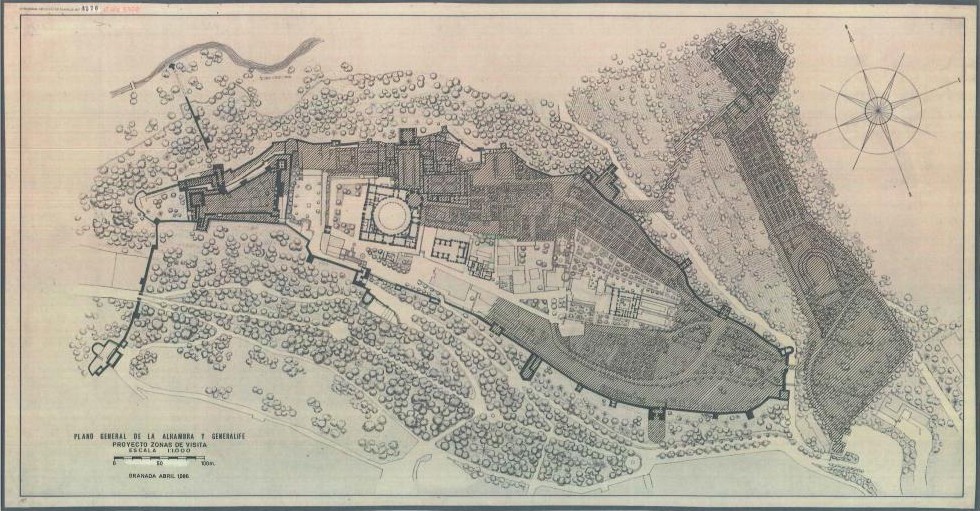
The Alhambra that we see today was not built at one specific time. It was formed gradually, adding new constructions, grouped as cells, enriching its architectural and urban development.

STRUCTURE

This enormous “stranded vessel” on the hill, as classical historians called it, was formed gradually, adding new constructions.

The Alhambra is the result of development over almost two and a half centuries under the Nasrids, as well as the previous constructions, along with the important contributions and modifications made in the Christian period, and which continued practically until the present day.

In this way, the Alhambra that we know today was structured, with the most important milestones detailed below:

La Alcazaba
Icono ojo

LA ALCAZABA

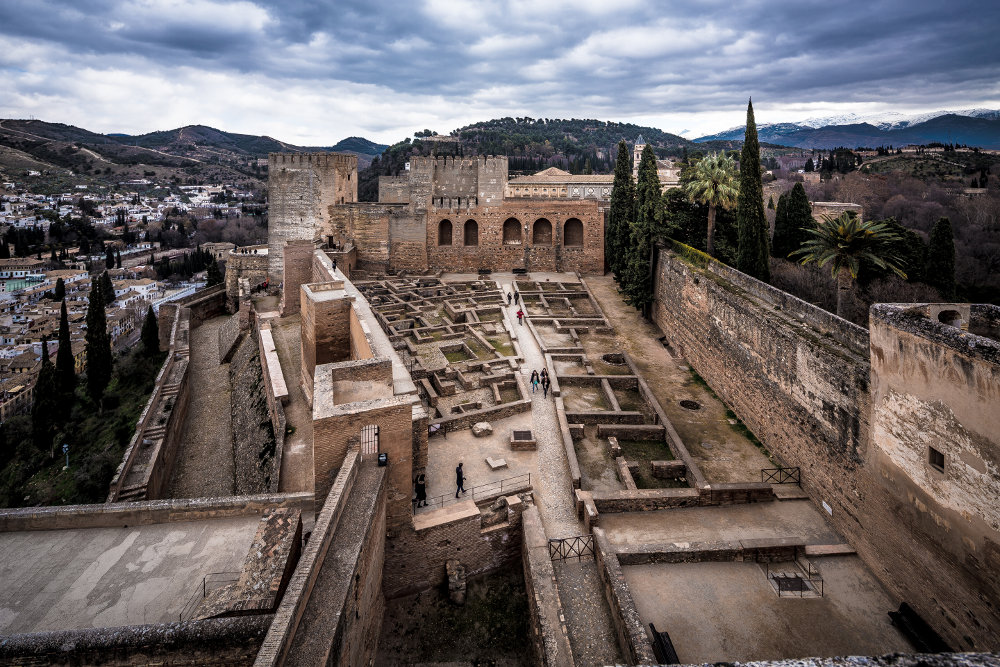
Possibly the oldest occupied place in the whole of the Alhambra, or at least the part from which the oldest information comes. Its location, on the highest area of the hill, makes it a privileged place for observation and monitoring of the surroundings, of the city, the plain and its points of access.

The triangle marked on the ground survives from the 11th century constructions, although the only certainty of this period is the section of the interior wall to the north, and the door of its upper enclosure. In the 12th century, the Almoravids carried out some work and adaptations on the Alcazaba.

La Alhambra Fortificada
Icono ojo

THR FORTIFIED ALHAMBRA

In the 13th century, the Nasrids gave the Alcazaba its current appearance, adding large towers to it: the Vela tower to the west and the Homenaje, Quebrada and Adarguero towers to the east. The whole enclosure was surrounded on the exterior with a patrol road and the important access through the Puerta de las Armas.

From then, the walling and fortification of the whole perimeter of the Alhambra began with its walls, adding some towers and doors at intervals along its perimeter.

Primeras Construcciones
Icono ojo

FIRST CONSTRUCTIONS

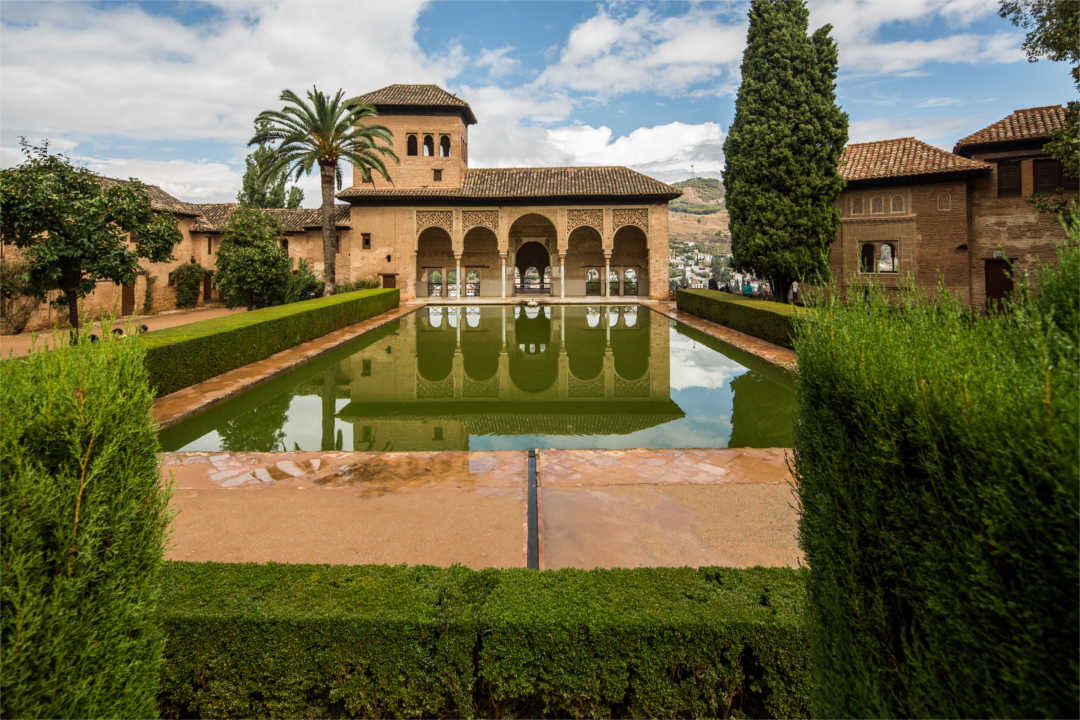
With the structure of the inner walls defined, the first palaces were built. A large Mexuar preceded by patios lay before the Palacio de Isma’il, which no longer stands. The Generalife and the essential core of the Palacio del Partal, the oldest surviving Nasrid constructions, shape a palatial space open toward the city, designed as a palatial area of buildings, enclosures and gardens.

Palacio de Comares
Icono ojo

PALACIO DE COMARES

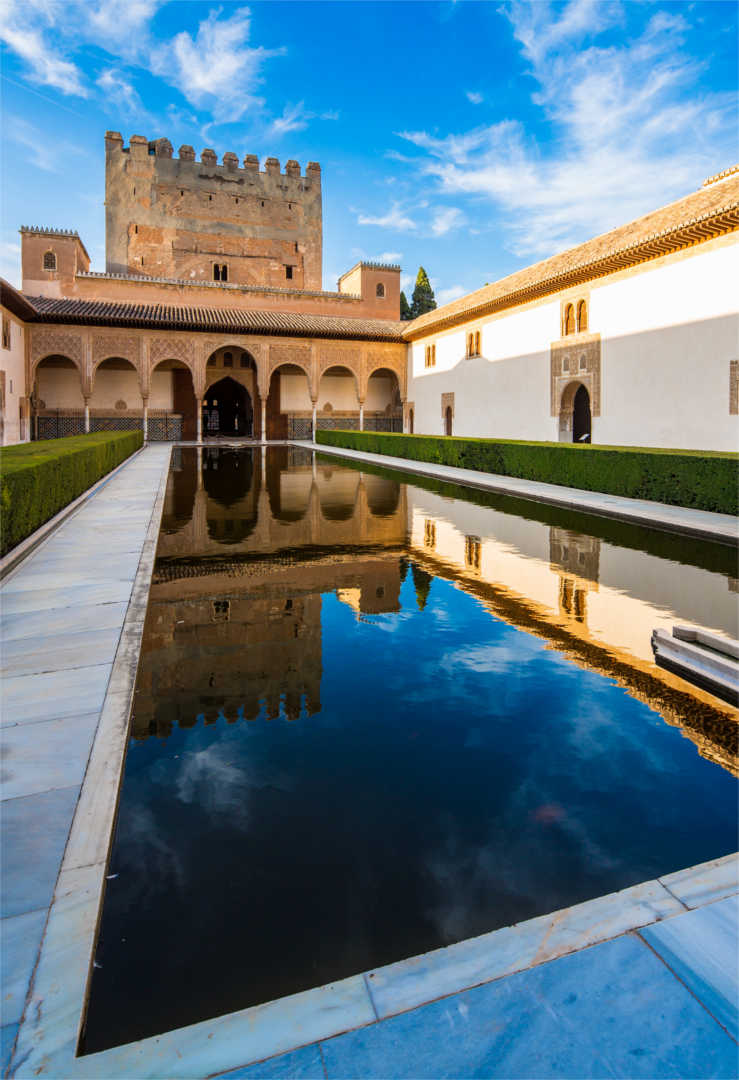
On some of the previous constructions, adding and modifying structures, Yusuf I became the first great builder of the Alhambra. Although he would not see it completed, he built the Palacio de Comares, as well as the large Puertas de la Justicia and Siete Suelos, along with many other constructions and decorations of the Alhambra.

In the first half of the 14th century, the Mosque, the Rauda, the Madraza and the Palacios de San Francisco and Abencerrajes were added.

Palacio de los Leones
Icono ojo

PALACIO DE LOS LEONES

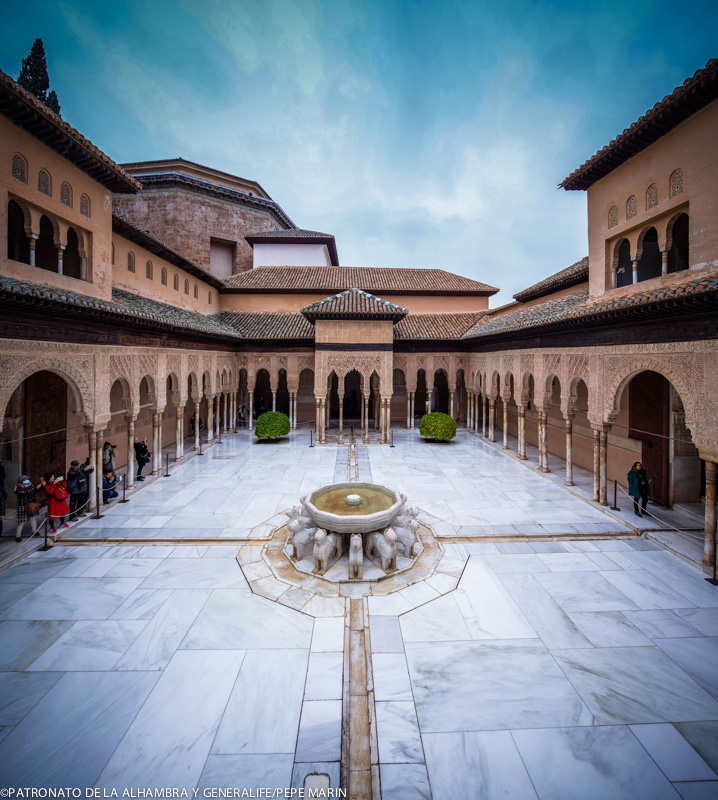
In the second half of the 14th century, a great modification was made to the internal structure of the Alhambra. Coinciding with the second mandate of Muhamnad V, in the most prolific period for the Nasrids, he decorated and redecorated the majority of the spaces that we see today.

His great construction, the Palacio de los Leones, breaks away from the usual architectural layout, bringing new aesthetic and formal concepts which were also reflected in the administration of the State and the matters of the Court.

La Alhambra cristiana
Icono ojo

THE CHRISTIAN ALHAMBRA

The final and most radical transformation of the Alhambra occurred after the conquest. New concepts imposed new uses with significant modifications to buildings and urban elements.

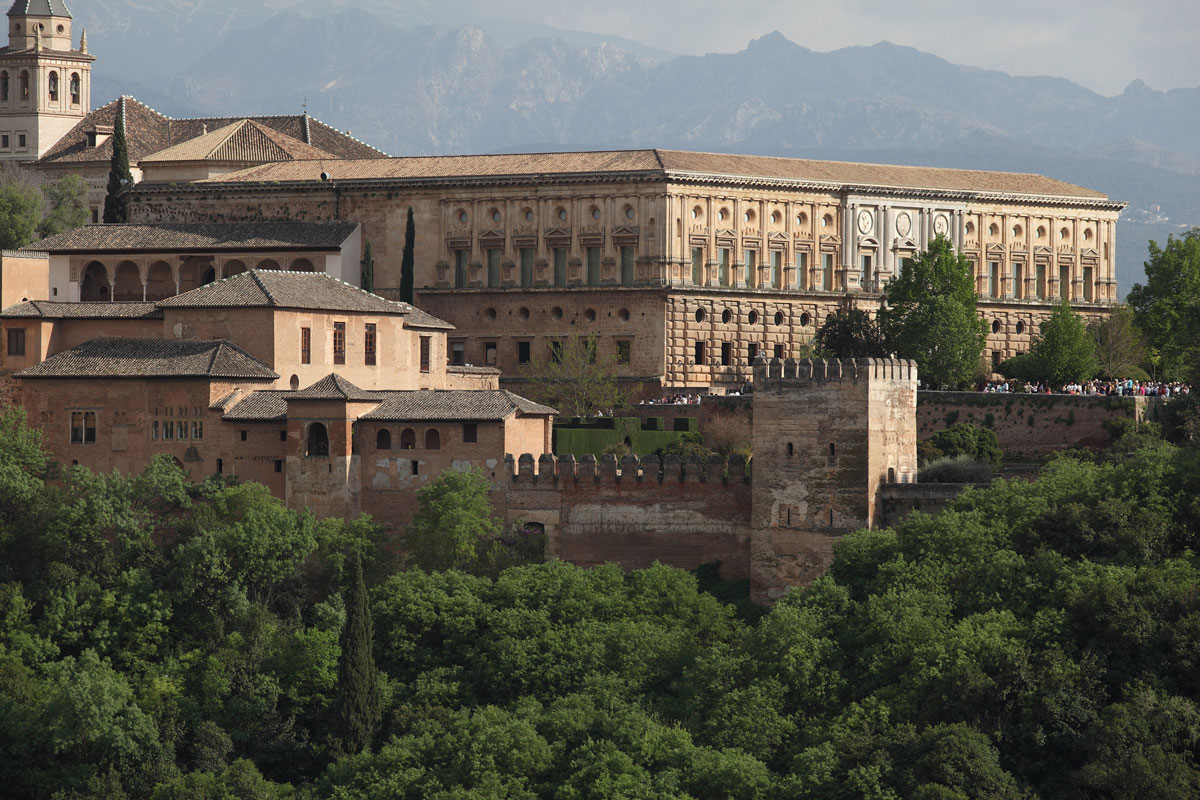
The main modification is certainly the Palacio de Carlos V which, although never having been finished, added a new volume to the buildings of the Alhambra, inserting itself, like its predecessors, as another space.

In the 16th century, the outer wall was added to the east of the Alcazaba with the circular Cubo tower, and the large Tendilla cistern at its base. In the 17th century, the Jardín de los Adarves was created between the southern walls.

The Patios of Lindaraja and La Reja, the Church of Santa María, the Convent of San Francisco, and the Pillar of Carlos V, are some of the contributions to the Alhambra, contributing to creating its rich cultural stratification.

LANDSCAPE

The Alhambra stands on the hill of la Sabika, between the Darro and Genil river basins. Surrounded by mountains, Arabic writers compared Granada to a crown, with the jewel of the Alhambra protruding from it.

Without doubt, the Alhambra occupies a privileged location, where its architectural values are combined and perfectly integrated with the urban surroundings and the landscape in which it is immersed.

To appreciate the architectural and scenic values of the Alhambra, it is recommended to visit the Albaicín quarter (Mirador de San Nicolás) or Sacromonte. From these points, the spectacular relationship of the Alhambra with the territory and the city of Granada can be observed.