14th century synagogue of Cordoba, unique in Spain

Of all the monuments preserved in our city, it is probably the Synagogue of Córdoba the one with the lowest dissemination. However, in this section we will try to prove that it is a very important building, from an artistic, historical, social and political point of view. It is the only example of these characteristics preserved in Andalusia up to our days, with outstanding inscriptions which place the building at the vanguard of this type of constructions in our country.

There are numerous historical moments of which the Synagogue of Córdoba has been a distinguished witness, such as the expulsion of the Jews, which had a great influence in the building becoming a hospital, more specifically a Rabies Hospital. It later became a chapel, where the shoemakers of the city had their guild. It was finally used as a preschool until a series of inscriptions were found in 1884, which led to a thorough process of restoration.
These inscriptions were studied by the academic Rafael Romero Barros, father of the famous painter from Córdoba Julio Romero de Torres. A year later, in 1885, the Synagogue of Córdoba was declared National Monument. At that time the building belonged to the Church, and the Bishop donated it to the State, although it was not until 1981 when it was registered as such by Manuel Nieto Cumplido, current archivist of the Mosque-Cathedral, and at the time, Cultural Representative of the Province, who registered the building as property of the State in 1981.

Nowadays, probably due to its location in the Jewish quarter, and therefore, next to the most important monuments in the city, the Synagogue of Córdoba is one of the most visited places by tourists. Besides, this building, along with the Mosque or the Alcázar of the Christian Monarchs, shows the cultural diversity of our city, a clear example of the coexistence among the different civilizations that have lived in Córdoba.

Next, we have prepared a brief analysis about the stay of the Jews in our city, dedicating another special chapter to the Synagogue, their temple. Later, we will carry out a small research of the building paying special attention to its stylistic features. Next, we will comment the different inscriptions found in the complex and, finally, we will show a photo gallery with the aim of completing the information as best as possible.

If you wish to know the Synagogue of Córdoba do not hesitate to hire one of our guided tours. We are experts in the interpretation of the historical heritage from Córdoba. If you have chosen to do sightseeing in Córdoba, choose a high quality option, choose ArtenCórdoba

Roman Temple of Cordoba

Roman Temple is a must-see sight in Cordoba

The Roman Temple is located in the junction between Claudio Marcelo and Capitulares Streets, and its back limit is María Cristina Street. The ownership of the space where the site is belongs to the Council of Córdoba and the old town hall was also located there.

Popularly known as Roman Temple of Claudio Marcelo, this area of Córdoba could have been created between the 1st and 2nd century AD, like the provincial forum of the Colonia Patricia, a title the city was granted during the Roman domination. This is what can be suggested both by the appearance and the parallels of the best known building, the great hexastyle temple (six columns at the front of the portico), as well as its eastern location, and in its axis, the oriental circus. Both buildings were arranged in different heights, making the most of the natural slope of the land in this point, partially outside the wall. In order to do that, a great terrace was built over which the temple was erected. The great volume of land was held by a system consisting of buttresses in a zip or fan shape known as anterides. The difference in height between the temple and the circus contributed to the hypothesis, still believed, that there was an intermediate terrace that could have been used as an urban connection between both buildings.
The building of the Roman Temple started with the levelling of all the structures belonging to previous phases. This project contemplated the building of the square and the temple in its centre, as well as the modification of the urban planning around and the obvious works of infrastructure, among them, the construction of an aqueduct, the Aqua Nova Domitiana Augusta, which supplied this magistrates’ complex with water.

The complex started to be built in times of Emperor Claudio (41-54 AD), although it was not finished until Domiciano’s mandate (81-96 AD), when water supply started. It experienced some modifications in the 2nd century AD, which seems to coincide with the change in location of the colonial forum, which was transferred to the area of the current Convent of Santa Ana.

The materials used in the building of the Roman Temple were varied. Over a base of opus caementicium countless blocks of local calcarenite were arranged; the most outstanding elements, like columns and capitals, were carved in white marble, whereas the higher space was paved with violet nodulose limestone, also from the area. This higher space is the best known and the one we can visit, whereas we have little information about the configuration of the other two platforms or terraces, mainly due to the fact that nowadays they are under modern and contemporary buildings. The scarce epigraphy preserved up to now in the vicinity contrasts with the varied sculptural pieces which have been documented so far, which are very incomplete but they provide with important information about the decoration the complex could have had. The magnificent temple, whose columns of the portico can be seen today restored by Félix Hernández, had six of them at its front and ten on the sides, and it was one of the biggest in the city.

If you are wondering what to visit in Córdoba, a good option would be Roman Córdoba, choosing one of our guided tours.

Roman Mausoleums Puerta Gallegos 2,000 years old

Funerary Monuments of Puerta Gallegos
Studied during several excavation campaigns in the 1990s, the Funerary Monuments of Puerta Gallegos are two of the most significant examples of monumental funerary architecture in Roman Córdoba, both for its size, 13 m. diameter, as for the architectonic type in which they can be classified. They are located on both sides of the Roman road connecting the city since Republican times, the so-called Corduba-Hispalis, on the right bank of the river Guadalquivir. This road forked in two; one of them was Camino Viejo de Almodóvar (Old Road to Almodóvar), which was one of the most important burial areas in the city.

It was in Augustus’s times when the first Funerary Monument was built, consisting of anustrinum (where the cremation of the corpse was made) and an area of funerary placement separated from the former by a low wall, thus forming a complex that has interesting similarities to those of other cities in Bética, such as Baelo Claudia. We should probably date in this time the paving of the road with puddingstone, now a clear extension of the main street in the city with an orientation east-west, the Decumanus Maximus. This must be understood taking into account the urban planning of the area, together with the building of a bridge and the embellishment of the gates of the city.
In times of Emperor Tiberio, this process of building monuments got to its peak with the construction of two cylindrical funerary monuments with identical size but different function. The northern one, which has a better conservation state, was erected respecting the previous burial, which suggests a familiar relationship between the users of both complexes. It also maintains its individual character, whereas the southern one seems to have been conceived as a collective burial probably for the remains of the relatives of that buried in the first building.

As for its type, we can highlight its direct Italian tradition, although there are exact parallels in the funerary architecture in Hispania. Their shape resemble other monuments located in Carmona, Alcalá de Guadaira, Mérida and maybe Les Gunyoles (Tarragona). The spreading of this kind of cylindrical monument can be explained through the importance of the mausoleum of Emperor Augustus himself. Thus, the existence of these magnificent buildings is just another proof of the fact that Roman Córdoba was a clear reflection of the capital itself, Rome, in the middle of a process of ideological and iconographic transmission, which was unique in the rest of Hispania.

This type of building seems to be related to the ordo equester, one of the most important sectors of Roman society. We must also remember the privileged location of the funerary monuments, very close to the road, thus being part of the “image of the city”, which emphasizes the special importance they had in the society of Roman Córdoba.

The constructive techniques show the continuous use of traditional techniques in the Patrician architecture, such as the use of the opus quadratum or the “mine stone”, but at the same time, new trends in Roman architecture were imported, such as the opus caementicium and the massive use of marble.

Although it may be difficult to understand, the funerary monuments did not last long, as at the end of the 2nd century AD, the funerary area was literally invaded by domestic and commercial buildings that belonged to one of the neighbourhoods that had appeared outside the walls of the city while the road mentioned was removed and elevated.

If you are wondering what to visit in Córdoba, a good option would be Roman Córdoba, choosing one of our guided tours.

Top things to see and do in Menorca Island

Top things to see and do in Menorca Island

Menorca is one of Spain‘s Balearic islands set in the turquoise Mediterranean sea. Renowned for endless beaches, sandy crescents, and a tree-fringed coast, the place was officially named a Biosphere Reserve in 1993 in an effort to protect the natural beauty of its surroundings, a scheme which also aimed to engender a positive relationship between humans and the array of wildlife that have made Menorca their home. Today, the idyllic landscapes and warm waters of Menorca draw thousands of tourists every year who visit to marvel at the natural beauty of the area.
The beautifully decorated winery of Bodegas Binifadet opened in 1979 as one of Menorca’s only high-quality winery and restaurant establishments. The rustic brick interior sets a romantic and tasteful mood and includes barrels lining the walls and wooden low-hanging lights. This lovely interior design by Lluís Vives was meant to promote a warm and enjoyable atmosphere, and to this end, it succeeds wonderfully. Free guided tours of the winery are held daily at noon or by appointment, and each one is followed by a delicious lunch. Included in the tour is the tasting of two delightful wines, as well as a sample of Binifadet’s homemade goat’s cheese marinated in red wine. This tour is unique and welcoming and is a great chance to explore the workings of a charming winery. All of the products here are naturally grown, an example of a sustainable production method which is in keeping with Menorca’s status as a Biosphere Reserve.

Mahon Port

Awarded a ‘Certificate of Excellence’ by Trip Advisor, Mahon Port is the world’s second deepest natural port. The views here are remarkable as the spot overlooks the town from a great distance, allowing for panoramic vistas to be enjoyed of the entire landscape. Taking a long set of stairs down to the harbor-front brings guests into a calming, stress-free atmosphere right by the sea. As well as the restaurants, bars and boutique shops set around the harbor-front, a famous gin distillery is also located here and is definitely worth a visit. Whether docking a boat or just driving in for a day trip, tourists should go on a one-hour boat tour around the harbor here, a trip which provides insight into Menorca’s history whilst also educating about the modern aspects of the island. On certain days spectators may watch cruise ships docking or will be able to see some brightly-colored, beautiful fish. Mahon Port offers a lot to do, but simply being here and strolling along the walkway is an enjoyable experience within itself.

Watch out for: restaurant Rainbow Spice, which can be found directly on Mahon Port.

Mahon, Menorca, Spain +1 639 676 351

Isla del Rey

Although a tiny island, the Isla del Rey boasts a ginormous amount of historical significance. It began as simply a hospital for sick and injured British soldiers in 1711 but was later used by the French, Spanish, American, Dutch and Italians too as a site for medical aid. When a new military hospital in Mahon was built in 1964, the Isla del Rey was left abandoned and now remains as a desolate, protected natural site. Important local plants and vegetation grow here, and recently the ancient stones of building remains have been discovered, presumably from a Paleochristian Basilica. Nowadays a non-profit organization named The Foundation protects and studies the island. Their main focus is safety, development, and promoting the island by holding different events. Every Sunday morning they hold volunteer maintenance gatherings which are open to the general public, and they also accept monetary donations as well as physical donations, such as construction materials.

Watch out for: unique and colorful fish and other small yet lovable aquatic creatures.

Illes Balears Menorca, Spain

Isla Del Rey I © jose luis gil/Flickr

Isla Del Rey I © Jose Luis Gil/Flickr

Cova d’En Xoroi

Whether your heart aches for luscious views of dawn, a Menorca sunset or a glimpse of the moon over the ocean, Cova d’En Xoroi offers stunning landscape vistas which never seem to fade in beauty. A combination of cliffs and rocks strategically located off the southern coast, Cova d’En Xoroi is a stunning place which invites guests to delve into Menorca’s colorful past. Local legends tell the romantic story of Cova d’En Xoroi’s beginnings, tales which are entwined with mythology and deep, passionate love. During the high season the place is open every day until sunset, and sometimes in the evening there are disco nights, live music and themed parties held here.

Watch out for: Different patterns and images carved into the rock walls.

07730 Alaior Menorca, Spain +34 971 37 72 36

Naveta d’es Tudons

The 3,000-year-old Naveta d’es Tudons serves as a magnificent monument and a brilliant, physical reminder of history to those in Menorca. When first built this “naveta,” meaning vessel, was used as a collective funeral chamber. It was constructed by connected stones, shockingly with nothing besides the stones themselves holding the vessel together. Menorca legend believes that giants had been fighting over the love of a young girl, and this is the cause for the single missing stone at the front of the figure. When the chamber was later excavated, human bodies were found inside along with bronze jewelry, ancient weapons, ceramic bowls and other precious ornaments. Boldly set on the western side of the island, the exterior of the Naveta d’es Tudons is open to the public daily as a wondrous sight. Archaeologists are astonished by how well this megalithic structure has been preserved over time, as it is still in essentially perfect condition today.

Watch out for: the surrounding landscape, it is truly breathtaking.

07769 Ciutadella de Menorca, Spain

Naveta d’es Tudons I © patrimoni.gencat/Flickr

Naveta d’es Tudons I © patrimoni.gencat/Flickr

Aero Club and Hippodrome

The fun-filled, multipurpose Aero Club and Hippodrome have special offers and events that will excite locals and first-time visitors to Menorca. This hotspot is located in the small village of Sant Lluis and was recently converted into an amusement location. It served as the only airport in Menorca until 1969 when a larger, modernized airport was built. The place still houses planes, though, and guests here can take leisurely flights around the island, can participate in a guided tour of the island from the sky, or can enjoy private lessons to become a certified pilot. Besides flying opportunities, Aero Club and Hippodrome is also home to a full bar and restaurant as well as a go-karting course for the whole family. Throughout the winter season, the hippodrome hosts horse races every Saturday evening and Sunday morning. Entrance for all guests is free.

Watch out for: Aero Club and Hippodrome also hosts private events.

Avda JA Clave, 396, Menorca, Spain +34 971 36 16 72

Jeep Safari Menorca

Recipient of Trip Advisor‘s 2014 ‘Certificate of Excellence’, Jeep Safari Menorca ensures that tourists get a fully authentic, worthwhile and amazing natural experience of the island. Jeep Safari offers three unique yet equally spectacular excursion offers for visitors to choose from: The Explorer, The Archaeological Expedition, and The Sunset Experience. Traveling in original 4×4 Nissan Patrols, an experienced professional guides guests through back roads and wooded areas to sites that are off-limits to the public, while providing compelling knowledge about Menorca. What separates each excursion from the next is that The Explorer is more of a guided tour, with a stop for lunch by the sea and time to relax and swim. Food is offered, but not included in the original prices. The Archaeological Expedition focuses primarily on seeing the plant and animal life of the island, whilst The Sunset Experience focuses on traveling the coast and taking in magnificent landscapes. Also recently added to Jeep Safari Menorca are bicycle and hiking excursions. Each trip lasts for two hours and many provide special bonuses for on-board guests.

Watch out for: guests above the age of 23 with 5 years of driving experience and a valid driver’s license presented may be able to test drive the Patrol vehicle onboard.

Carrer s’hort de jurats Menorca, Spain +34 687 773 248

Menorca I © Daniel Lobo/Flickr

Menorca I © Daniel Lobo/Flickr

Planoram Paragliding

One of Menorca’s most exhilarating and inspiring adventures, Planoram Paragliding gives tourists the experience of a lifetime. This tandem paragliding jump is a carefree and safe choice, as all guests are accompanied by a professionally certified pilot. Furthermore, an electronic parachute is included. To ensure that gliders are not preoccupied with safety concerns, pilots are in charge of all flying manoeuvres, including take-off, controls and landing. Each paragliding flight can last anywhere between 15-30 minutes depending on wind levels and weather conditions. Planoram is open in Menorca year-round, and some seasons of the year are more difficult to fly than others. Guests can choose to fly in either Monte Toro, Son Bou Rock or S’Enclusal, all of which are highly spectacular sights.

Watch out for: choose to paraglide at specific times for better views. For example, sunset.

Carrer de San Fernando, 20 Menorca, Spain +34 971 35 00 43

Cala Pregonda

A truly unique beach experience can be enjoyed when visiting the Cala Pregonda. It is located on the northern coast of Menorca, and although it has a gorgeous sister beach nearby, this is the spot that should not be missed. Visitors get the best of both worlds here. Warm, golden rocky landscapes form one side of the water, and earthy green trees and lush forests make up the other. These two contrasting sites come together in the center with a sandy beach, the perfect spot in which to relax and enjoy the surroundings. Cala Pregonda is accessible by car, but once parked, visitors have to walk for 30 minutes or so before reaching the beach. Another option is to travel to the beach by sea, either on a boat, kayak or jet ski. Lastly, the beach’s mission is to maintain the natural beauty of Menorca, keeping it alive and well for as long as possible. For this reason, it is frowned upon to leave any trash on the beach after your visit.

Watch out for: the rocky island in the middle of the bay; it is perfect for climbing and exploring.

Diseminado Poligono 03, 14 Menorca, Spain

Cala Pregonda I © Marc Puig i Perez/Flickr

Cala Pregonda I © Marc Puig i Perez/Flickr

Cami de Cavalls

Arguably one of the greatest open-air museums in the world, the Cami de Cavalls is an ancient path around the island of Menorca that showcases a multitude of ecosystems filled with hundreds of species of animals, including various endangered species. The footpaths take visitors to sites and scenes that they can marvel at, and the 185 kilometer walkway can be traversed on foot, by bike or via a trek. This serene path is not only beautiful but extremely historical. Ancient history is kept alive through this path and those who trek it.

Watch out for: ancient watchtowers and lighthouses as well as the hidden coves of the island.

07740 Illes Balears Menorca, Spain +34 622 055 025

By Emily Langan

Halal Holidays in Morocco

Halal Holidays in Morocco


The Top five reasons to visit Morocco


Morocco is the up-and-coming destination for halal tourism. It offers a wide choice of halal-friendly accommodation in beach resorts, historic cities and mountain villages, great halal food and lots to see and do. 


  1. Fascinating culture & history
  2. Breath-taking scenery
  3. Moroccan souks & medinas
  4. Great climate
  5. Morocco traditional food
1. Morocco’s Fascinating Culture and History


The History of Islam in Morocco

Islam was first brought to Morocco by Arab traders in the 7th and 8th centuries. In 788 Idris ibn Abdallah, or Moulay Idris I, as he is known in Morocco, who was the great-grandson of the Prophet Muhammed, decided to settle in Morocco. He founded the Moroccan Umayyad state, but his work was cut short when he was assassinated. It was left to his son, Idris II, born after the death of his father to unify Morocco and firmly establish its allegiance to Islam.

Top 3 Mosques to Visit in Morocco

Koutoubia or Kutubiyya Mosque, Marrakesh
Completed in 1199, this mosque is one of Morocco’s great historic buildings. It takes its name from the booksellers which originally surrounded it. Its minaret is one of the most impressive in the Islamic world, built to an unusual square design from enormous blocks of local red sandstone, reaching a height of 77 metres.


Hassan II Mosque, Casablanca
Built-in 1993 to commemorate the 60th birthday of King Hassan II, this spectacular mosque showcases the best of modern architecture and Moroccan craftsmanship. Its interior displays colorful ceramic tiles, known as zellij, hand-carved stone and wood and elaborate marble floors. Its minaret is an astonishing 210 meters tall and the mosque is in a breathtakingly beautiful location, jutting out over the waves of the Atlantic sea. It is one of the largest mosques in the world – there is space for 25,000 people to worship here.


Kairouine Mosque (Al Quaraouiyine), Fes
Founded in 859 by Fatima El Fihria, a female Tunisian refuge, this mosque is one of the largest in Africa, where over 20,000 people can worship at one time. Its green pyramid-shaped roof and minaret are at the heart of the University, which is one of the oldest in the world. It was built in a plain and simple style which has been embellished over the ages, with Andalusian touches, elegant arches and grand pavilions.

Breath-taking Scenery in Morocco

Morocco boasts a diverse landscape, from snow-capped mountains to the sands of the western Sahara desert. It benefits from a the Mediterranean and an Atlantic coastline, with some of its finest sandy beaches in the resort of Agadir on the Atlantic coast. It has two dramatic mountain ranges: the Atlas mountains in the center of the country, providing a stunning backdrop to the Imperial city of Marrakesh, and the Rif mountains which run along Morocco’s northern edge.


Enchanting Medinas in Morocco

The names of Morocco’s magnificent cities even sound enticing as they roll off the tongue – Casablanca, Rabat, Fes, Marrakesh, Tangier. They each have their own fascinating history, and at the center of each is the historic medina or ‘old town’. This is usually the cultural heart of the city, surrounded by city walls, inside which can be found a maze of narrow streets, where its most interesting and most ancient buildings and monuments can be found. You will usually find historic mosques, a street market or souk, and lots of the traditional riads - mansions built around a central courtyard - many of which have now been turned into intimate, family-run hotels. Food served in Moroccan cities will always be halal, and if you are looking for an alcohol-free restaurant then the medina is a good place to start, as this is often the most conservative and traditional part of the city.


Great Climate All Year Round

Morocco is a fantastic choice for a halal-friendly holiday, all year round. Summers are hot and dry – perfect for beach-lovers – with the hot, sunny weather lasting right through September and October. The climate in winter remains mild, making it a popular choice throughout the year. Spring is a beautiful time to visit when the mountains are green, and flowers in bloom.


5. Traditional Moroccan food


Make sure you try the following halal food during your stay in Morocco:

  • Couscous This fine wheat pasta, with the consistency of rice, is found throughout Morocco, served with fish meat and delicious tagines.
  • Tagines These traditional Moroccan stews take their name from the clay pots in which they are cooked. They are made with chicken, lamb or fish and flavored with herbs and spices, enhanced with such delicacies as green olives, preserved lemons, apricots and raisins.
  • Pastilla or B’stilla Traditional chicken or pigeon pies covered with layers of delicate flaky pastry, flavored with cinnamon and dusted with icing sugar.
  • Harira Soup This delicious soup is traditionally served at the start of the iftar meal during Ramadan and is made with tomatoes, chickpeas, lentils and lamb.
  • Mint Tea
  • Fragrant fresh mint tea is the most common beverage in Morocco, served with meals and at every time in-between. It is extremely refreshing!


Is it easy to find halal food in Morocco?


Yes, as a Muslim country, all of the food served in restaurants in Morocco is halal, with the exception of a few tourist establishments in resorts. It is also easy to find ‘dry’ hotels and restaurants which don’t serve alcohol.


Top places to stay in Morocco

The enchanting city of Marrakech needs no introduction. Stay in the heart of the ancient medina for an atmospheric halal city break experience. Find out more about halal-friendly holidays in Marrakesh.

Fes is another of Morocco’s imperial cities and also a great choice for a city break.

Set on the Straits of Gibraltar, the port city of Tangier is characterized by its whitewashed hillside medina. Further south, overlooking the Atlantic coast, Essaouira is a charming fortified town, set on beautiful sandy beaches. Essaouira is home to artists and craftsmen and famous for its marquetry, or inlaid woodwork.

Those seeking golden sand and a laid-back resort atmosphere should head to Agadir. For mountain scenery head to the distinctive mountain village of Chefchaouen, with its unusual blue-washed buildings high in the Rif Mountains, or to Errachidia, which is the ideal base from which to explore the dramatic Ziz Valley.


What kind of accommodation is available for Muslim families in Morocco?

Morocco offers a wide variety of choice for Muslim families. Choose from resort style halal-friendly hotels, exclusive villas or riad style hotels.

There are many alcohol-free or ‘dry’ hotels available, which only serve halal food. There are also a number of hotels such as Le Vizir Center Park and Resort, Villa Koutoubia and the Grand Mogador Tanger Sea View & Spa which offer dedicated swimming pools for women.


What is a riad?

A riad, which literally means ‘garden’, is a traditional Moroccan house built around a central courtyard, which often has its own small swimming pool. Many riads have been converted to small, authentic hotels.


Why are riads good for Muslim families?
Staying in a riad is a great choice for a halal-friendly holiday. Riads are small and family-run. Typically they have around five rooms. All of the food served is halal and the vast majority do not serve alcohol. Some riads are available for private hire by your family group, which allows your family to use the swimming pool in complete privacy. HalalBooking offers the opportunity to stay in a riad hotel in the medina of Marrakesh, in Fes, Errachidia and Essaouira.


Halal Villas in Morocco

HalalBooking offers a good choice of stylish villas and riads which are available to rent exclusively by your family group. Swimming pools in HalalBooking’s villas all offer complete privacy and are not overlooked in any way. Self-catering offers more freedom for Muslim families. It is easy to shop for halal food in Morocco and two of the supermarket chains, Marjane and Acima do not sell alcohol.


What is the currency in Morocco?

The local currency is the Dirham – it’s a closed currency so you can’t usually obtain it outside Morocco. Take cash in major currencies to exchange or withdraw it from a cashpoint machine with your credit or debit card.


Tips for Shopping in Morocco

The renowned Moroccan souks offer an authentic shopping experience, which is as much about the experience as what you choose to buy.

Don’t forget to barter – haggling is an accepted part of shopping in the traditional markets, so you need to negotiate for the best price.
Make sure you have cash ready to pay – either the local currency, Dirham, or a major international currency that will be accepted in some places.
Don’t be surprised if you’re offered a glass of mint tea to seal the deal!


What should I buy as a souvenir of my halal holiday in Morocco?

These are some unique gifts that you can bring back to remind you of Morocco:


  • Leather goods – Morocco, and especially the city of Fes, is famous for its traditional tanneries. Buy a pair of brightly-colored authentic slippers known as ‘babouche’ or ‘belgha’ – great for wearing around the house when you get home.
  • Woodwork – Essaouira is famous for its beautiful marquetry, or inlaid woodwork, made from the local Thuya tree, a mahogany-like hardwood. You can buy beautiful furniture bowls and ornaments.
  • Lanterns – the intricate lanterns with brightly-colored glass are available in the souks of Marrakesh or Fes and look beautiful inside or out. Great for reminding you of your holiday when you’re back home!
  • Hand-painted ceramics – lovely pottery is painted in bright colors with traditional patterns and is perfect for gifts or to spice up your home.
  • Djellabas – the traditional Moroccan dress worn by both men and women is a great cover-up. Women have a fantastic choice of colors, materials and patterns.

Qanats, Acequias and Waterwheels: How Water Engineering Shaped Al-Andalus

Qanats, Acequias and Waterwheels: How Water Engineering Shaped Al-Andalus Travel through parts of southern and eastern Spain today and you may encounter seemingly modest traces in the landscape: an old irrigation channel crossing an orchard, the remains of a...
Generalife Palace Al Andalus Alhambra Granada

Granada: Discover the last kingdom of Al-Andalus

Granada: Discover the last kingdom of Al-Andalus Nestled at the foot of the Sierra Nevada mountains, Granada is one of Spain's most enchanting destinations. Few cities in Europe combine such a rich blend of history, culture, architecture, and breathtaking scenery....

Córdoba Travel Guide: Discover the Historic Heart of Al-Andalus

Córdoba Travel Guide: Best Things to Do & See in Córdoba, Spain Córdoba is one of the most fascinating historic cities in Spain. Once the capital of Roman Baetica and later the heart of the Umayyad Caliphate of Córdoba, the city brings together Roman, Islamic,...

The Route of the Nasrids and the Route of the Almoravids: Two Historic Road Trips Through Andalusia

If you have driven through Andalusia, you may have seen brown tourist road signs pointing to the Route of the Nasrids or the Route of the Almoravids and Almohads. These are not single roads, but cultural driving itineraries that connect towns, landscapes, castles and...
Doctors of Al-Andalus Muslim Spain

Doctors of Al-Andalus: The Great Healers

 The Great Healers of Their Time The physicians of Islamic lands enjoyed broad—and well-deserved—recognition throughout the Middle Ages, and were even sought after in the courts of Christian kings. In the year 958, Sancho I of León was deposed by rebellious nobles,...
Albaicin River Granada Al Andalus Heritage Spain

Walking Granada: The Best Way to Experience the City’s Soul

If there’s one place in Spain where walking isn’t just a way to get around—but the best way to truly understand the city—it’s Granada. This Andalusian gem feels like it was designed for wanderers: medieval neighborhoods, star-shaped street patterns, hidden viewpoints,...
Al-Andalus Muslim Spain Civilization

What Was Al-Andalus? Understanding Andalusian Muslim Spain

Al-Andalus Civilization  When traveling through southern Spain or reading about its past, the name Al-Andalus often appears. For many visitors, it sounds intriguing yet unfamiliar. Was it a country, a culture, or simply a historical period? Al-Andalus refers to the...

Granada Card: a smart way to explore Granada

Granada Card: The Ultimate Tourist Pass for Visiting Granada Visiting Granada? A Granada Card can be your best travel companion — it saves money, simplifies your visit, and gives you access to the city’s most iconic monuments and public transport all in one.  ...
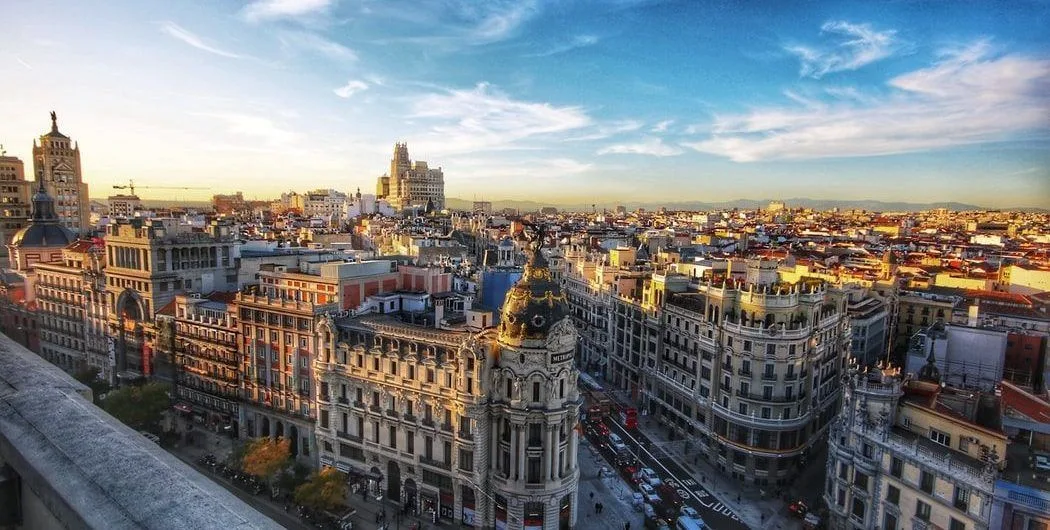
Gran-Via-street-Madrid-shopping-tour-Muslim

A stylish guide for shopping in Madrid including Muslim-Friendly Tips

Madrid, Spain’s bustling capital, offers more than just vibrant culture and world-class landmarks—it’s a city full of unique shopping experiences for Muslim travelers. From luxury boutiques to hidden local gems, Madrid has something for everyone. What makes the...

Is Spain safe for muslim travelers?

Muslims travel throughout Spain every day, including women wearing hijab and families traveling with children. In major cities and tourist areas, this is completely normal. Spain is considered one of the safest countries in Europe, and incidents related to religion...
Alhambra de Granada Private Tour Muslim friendly travel

Guide to the Alhambra: Exploring Its Palaces, Gardens and Fortress

The Alhambra in Granada is not just a single building—it is a vast and breathtaking complex that combines royal palaces, defensive walls, lush gardens, and serene courtyards. As one of Spain’s most visited UNESCO World Heritage Sites, the Alhambra offers travelers a...
Local Crafts Cordoba Al Andalus Legacy in Andalucia

Discover Córdoba’s Artisan Workshops

A Journey Into Córdoba's Craftsmen In the heart of Córdoba’s historic Jewish Quarter lies a vibrant world of craftsmanship, tradition, and artistry. “Tallereando: A Journey Through Córdoba’s Handicrafts” invites visitors to explore 13 artisan workshops that represent...
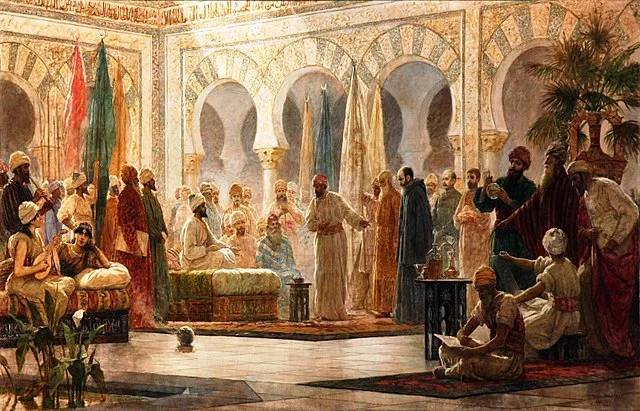
The Caliphate of Cordoba Al Andalus

Cordoba: Al-Andalus Capital

Founded in 711, Córdoba rose to prominence under the Umayyads as the capital of Al-Andalus.
Nerja Caves Andalucia Malaga

Exploring the Hidden Wonders of the Nerja Caves

Discover the Nerja Caves on Spain’s Costa del Sol — an underground wonder with prehistoric art, vast chambers, and nature’s cathedral of stalactites.

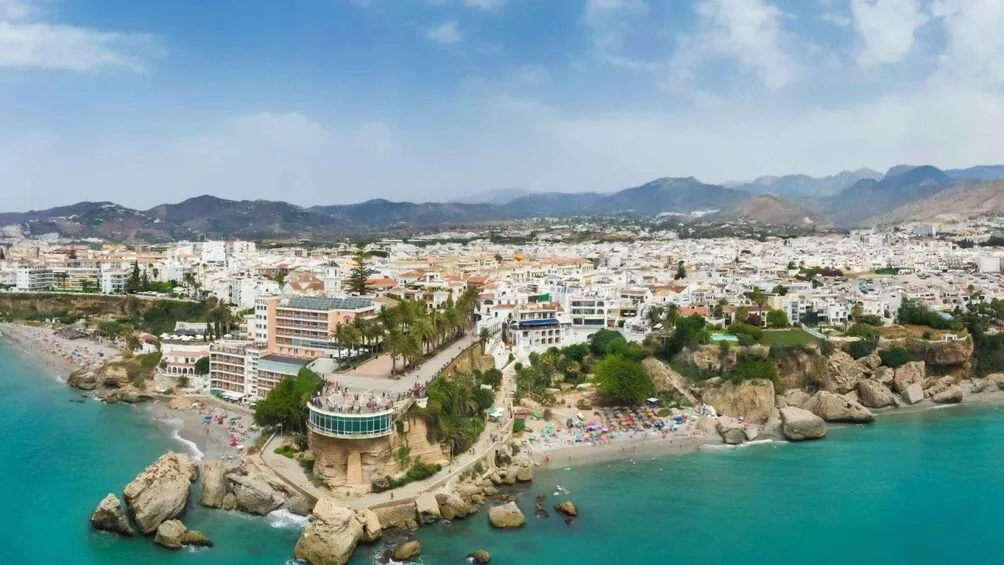
Nerja Town Malaga Andalucia Spain

Nerja

Located in the historic region of La Axarquía, Nerja is bright town on the Málaga coast which has a beautiful sea front formed by beaches, coves and cliffs. Its historic quarter has fine examples of popular architecture, with lovely walks and emblematic spots such as...

Halal Restaurants in Cordoba

Here is a list of halal restaurants in Córdoba (2025) in English, without map references: Pasillo Oriental Cuisine: Mediterranean and Middle Eastern Description: Known for its authentic flavors and welcoming atmosphere. Damasquino Halal Address: Calle Lucano, 19,...