
Blog, Granada, Halal Restaurants, Malaga
The Castle of Gibralfaro in Malaga
An impressive well-preserved 10th-century Islamic fortress
The magnificent Castillo de Gibralfaro sits on a high hill overlooking Malaga city and port and dates back to the 10th century. The hill where the Gibralfaro is situated forms part of the Montes de Malaga mountain range, located to the east and north of Malaga city - this land is protected by the Montes' natural park status.
The castle was built in 929 A.D. by Abd-al-Rahman III, Caliph of Cordoba, on a former Phoenician enclosure and lighthouse, from which its name was derived - Gebel-faro (Arabic and Greek, meaning rock of the lighthouse). Yusef 1, Sultan of Granada, enlarged it at the beginning of the 14th century, also adding the double wall down to the Alcazaba.
The castle is famous for its three-month siege in 1494 by the Catholic monarchs Ferdinand and Isabella, which ended only when hunger forced the Malagueños to surrender. Afterward, Ferdinand occupied the site, while his queen took up residence in the town. Interesting historic fact: this was the first conflict in which gunpowder was used by both sides.
The most visible remains of this historic monument are the solid ramparts which rise majestically from dense woods of pine and eucalyptus; inside the fortress itself, you will find some buildings and courtyards, reminiscent of those in the Alhambra. The ramparts have been well restored and you can walk all the way around them. At one point, you can get a good view down into the La Malagueta bullring - some visitors linger for a free view of the bullfight. These walls make a fun, interesting and scenic walk, and usually, you will have it to yourself.
Near the entrance, you can find the Interpretation Centre (formerly known as the Museo Militar), a small military museum.
VISIT
Winter (from November to March):
9 am to 6 pm.
Summer (from April to October):
9 am to 8 pm.
PRICE
Standard admission: €3.50
Combined visit Alcazaba - Gibralfaro Castle: €5.50
Sundays: Free from 14:00 h.
Andalucia, Blog, Seville, Spain
This exuberant and magnificent place is located in María Luisa Park. It was one of the main constructions and symbols of the Ibero-American Exposition World’s Fair that took place in Seville in 1929.
Nowadays, it remains a magical place with a style that recreates de Arab constructions of 10 centuries ago and that emphasizes the regions of Spain and its union with America.
Although it is quite easy to find it because of its huge size, the Plaza de Espana is located near the entrance of the Park that is just in front of the University of Seville. From the Puerta de Jerez, walk along the University until you reach a big square with a statue of the Cid Campeador on his horse. Cross the square and enter the Park following the Avenida de Isabel la Católica. The Plaza de Espana is 5 minutes walking ahead on your left hand side (map location).
You can get there after a nice stroll across the city center. Or you can do something unique – a ride in a horse-drawn carriage from the Plaza de San Francisco and the Cathedral to the Plaza de Espana and the Parque de María Luisa. The carriage travels at a slow trot while you sit back and relax. Nobody will believe you did this!
Discover Seville On A Horse-Drawn Carriage Tour »
Origins Of The Plaza De España
The Plaza de Espana was originally designed and built as the ultimate symbol and the most ambitious project of the 1929 Ibero-American Exposition World’s Fair. The initial idea of holding a World Fair in Seville was promoted in 1909 with the aim of opening the city and, especially, to modernize it. It would be the perfect occasion to achieve civil works, thus improve employment, promote the tourism, enhance the image of Seville and strengthen relationships with American countries.
The Fair was initially going to be inaugurated on April 1st, 1911. It was then delayed to 1914 but World War I (1914-1918) and political issues between Morocco and Spain delayed it further on. It was finally held from May 9th, 1929 to June 21st, 1930.
The works of the Plaza de Espana began in 1914 and where supervised by its creator, the Sevillian architect Aníbal González. He was also the architect chief of the event and designed other buildings such as the Mudejar Pavilion (better known today as the Museo de Artes y Costumbres), the Fine Arts Pavilion (transformed later in the Archaeological Museum) and the Royal Pavilion. All of them can be found in the María Luisa Park, at the America Square (Plaza de América).
It was the most expensive and hard construction of the fair, employing at some point more than 1,000 workers. Obviously, the project went through aesthetical critics and financial difficulties, especially because Seville was in very bad economic shape.
In 1926 Aníbal González resigned from his position and the Plaza de Espana was finished in 1928 by Vicente Taverner, who added the central fountain. It was also the place where Alfonso XIII inaugurated the Fair.
Post written by Seville-traveller
Blog
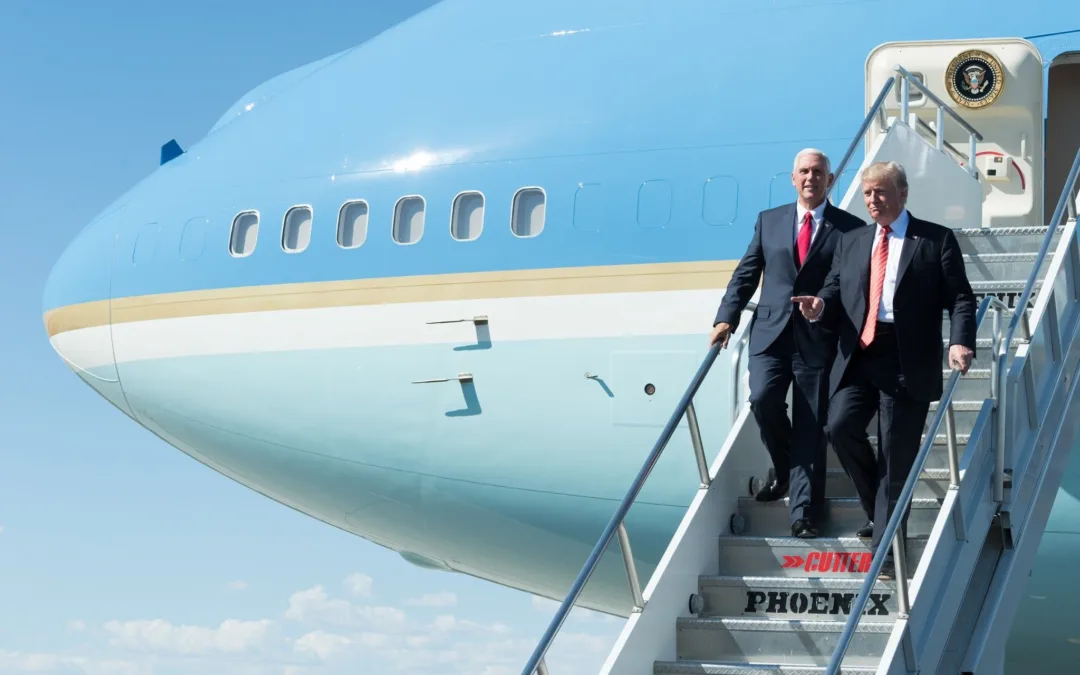
Everything You Need to Know About Trump’s Latest Travel Ban
Immigration has been a long standing point of contention since President Donald J. Trump was sworn into office in January 2017. Trump’s controversial “Muslim Ban“—a travel ban primarily targeting immigrants from seven specified Muslim-majority nations—was signed Trump’s first week in office and greeted with immense controversy. Now, the administration has released details of a newly revised travel ban that went into affect in October 2017.
The White House released details of a newly drafted travel ban that will place restrictions on travelers entering the United States from Chad, Iran, Libya, North Korea, Somalia, Syria, Venezuela, and Yemen. In an official statement, the White House called the ban a
“critical step toward establishing an immigration system that protects Americans’ safety and security in an era of dangerous terrorism and transnational crime.”
According to CNN, the new travel restrictions vary by country and include details of a “phased-in” approach, setted to begin last october. For North Korea and Syria, US entry for immigrants and non-immigrants will be suspended, while the same restrictions apply to Chad, Yemen, and Libya with the exception of being extended to case-by-case tourist and business visa holders.
For Somalia, US entry for immigrants is suspended while non-immigrants will face stricter security screening upon arrival. For Iran, entry is restricted for immigrants and non-immigrants with the exception of student visa holders; meanwhile, Venezuela also faces restrictions for unspecified government officials and their family members.
While the initial draft of Trump’s travel ban blatantly targeted Muslims, the third revision of the ban notably includes countries that are not Muslim-majority nations, such as Venezuela and North Korea. The inclusion of North Korea and Venezuela is due to their inherent “lack of cooperation,” explained the White House in a statement. The ban on North Korea is unsurprising due to rising tensions between the United States and North Korea; on the other hand, the ban on Venezuela is unique as it primarily targets government officials.
“The new order argues that while it’s possible to obtain information on Venezuelan citizens through means outside its government, Venezuelan officials themselves have been uncooperative. Therefore, only the government has been banned,” reports Fortune.
For the better half of 2017, Trump has been focusing his efforts on successfully passing a travel ban that he deems necessary to protect the country. His initial “Muslim Ban” was blocked by federal courts and escalated to the level of the Supreme Court.
Following the revised restrictions, “The Supreme Court has taken two cases involving President Trump’s controversial travel ban off its calendar, after the White House issued a revised and expanded ban,” writes NPR. “The justices ordered both sides to file new briefs over whether parts of the issue are now moot.” Opposition of the third revision of Trump’s travel ban argues it is still a thinly veiled attempt to fulfill the President’s anti-Muslim rhetoric he spewed along the campaign trail.
Meanwhile, Trump’s base continues to push for the implementation of the travel ban. “We cannot afford to continue the failed policies of the past, which present an unacceptable danger to our country,” Trump said in a White House statement:
“My highest obligation is to ensure the safety and security of the American people, and in issuing this new travel order, I am fulfilling that sacred obligation.”
Thanks for sharing article Culturetrip
NIKKI VARGAS
Andalucia, Blog, Seville, Spain
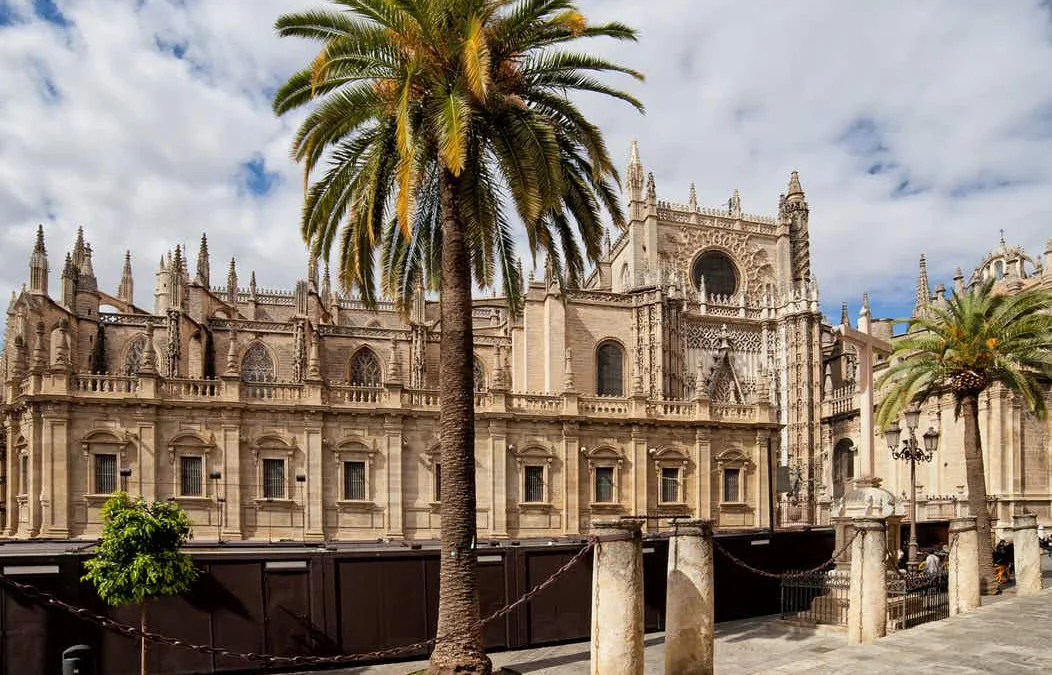
The Seville Cathedral is the biggest Gothic cathedral in the world and also the 3rd biggest one in terms of size, after Saint Peter (the Vatican) and Saint Paul (London, UK). Its construction started in 1401, after the Christians reconquered Seville, and it ended in 1506.
Initially, the Moors built a mosque exactly at the same location and the works lasted 26 years (1172-1198). The main part of the Giralda tower and the Courtyard of the Orange Trees (Patio de los Naranjos) are the only remaining parts of the original mosque. The bell tower was the minaret and the courtyard was the ablutions patio, where the faithful washed themselves as part of the Islamic rite.
The Seville Cathedral was built for two main reasons. The first one is that the old mosque was in very poor conditions after the 1356 earthquake. And the second one is because the rulers of Seville decided to build a new temple in 1401 to demonstrate the city wealth and the Christian’s domination over the Muslims.
Unfortunately, five years after its completion, one of the main pillars collapsed and the dome was almost completely destroyed. The recovery works ended in 1519. Over the centuries, chapels and other additions related to the Cathedral were built, resulting in the complex you can see today.
Where
Plaza Virgen de los Reyes
Entrance
It allows you to enter both the Cathedral and the Giralda
General ticket: 8 €
Reduced ticket (Seniors and Students under 26): 3 €
Free (Born or residing in Sevilla, Children under 16 accompanied by an adult, Disabled and an escort, Unemployed)
Opening hours
Winter (September to June)
Mondays 11:00 to 15:30
Tuesdays to Saturdays 11:00 to 17:00
Sundays 14:30 to 18:30
Summer (July & August)
Mondays 9:30 to 14:30
Tuesdays to Saturdays 9:30 to 16:30
Sundays 14:30 to 18:30pm
Blog
The Torre del Oro is one of Seville’s most recognisable landmarks, means the gold tower. It dominates the Guadalquivir river banks and it’s probably one of the most photographed sights of the city. You can enjoy some spectacular views from the top so bring your camera with you.
The Torre del Oro was built in the 13th century (1220-1221) during the reign of the Taifa Kings, a time when Spain was invaded by the Moors. The main body has a 12-side floor, whereas the upper part has a 6-side floor and was an addition of Pedro I of Castile (the same that ordered the construction of the Mudejar Palace). The circular top end was added during the 18th century (around 1760).
Being part of the city walls, its purpose was to protect Seville and prevent the Christians to attack it from the river. Actually, there was a twin tower on the opposite bank of the river -Triana quarter- in order to draw a large chain to block the River Guadalquivir. Unfortunately, nothing remains of the Gold Tower’s twin sister, probably because it was destroyed by the 1755 Lisbon earthquake.
The origin of the name, Torre del Oro, is still uncertain. Some claim it is because the tower was used as a storage depot for precious metals (mainly gold and silver) and other riches brought to Spain from the Indies (i.e. the Americas). However, after its restoration in 2005, experts discovered that the building was covered with a lime and straw mortar, giving it this golden reflection.
Currently, it is one of the symbols of Seville although it has been traditionally underestimated compared to the Giralda tower. However, Sevillians have always proved its love and have saved it from demolition in many occasions.
After Fernando III of Castile conquered the city in 1248, the tower was completely abandoned. In the 16th century it almost collapsed and some works kept it standing. The earthquake of 1755 caused serious damages to the structure and in 1760 an architect planned to level it down. The inhabitants of the city protested against and wrote a letter to the King, who finally decided to save it.
During the 1868 Revolution, part of the city walls were put up for sale and the tower was again threatened with demolition. Once more Sevillians intervened and saved the Torre del Oro, resulting in a symbol of fight and survival.
The tower has been used as a fortress, a chapel, a warehouse, a prison and even as the Guadalquivir River Company main office. Today it is the Naval Museum.
Address: Paseo de Cristobal Colon
General admission: 3 €
Reduced ticket (Seniors and Students with proof of status): 1.50 €
Free on Mondays and for children under 6 years
Opening hours: Mondays to Fridays 9:30 to 19:00;
Saturdays & Sundays 10:30 to 19:00.
Closed in August.
Naval Museum
It is currently a Naval Museum. Among the things that you can see are prints, nautical charts, models, navigational instruments and ancient and historical documents. It showcases the naval history of Seville, the importance of the Guadalquivir river and the footprint of the illustrious Spanish marine history.
Post by Seville-traveller.com
Andalucia, Blog, Seville, Spain
The Giralda Tower, located in Seville, is a brick tower on the northeastern side of the Seville Cathedral and was originally the minaret of a mosque constructed by the moors between 1184 and 1198, at the height of Almohad power.
Today, standing 104 metres tall, the magnificent tower dominates the Seville skyline. One of the most recognized landmarks of the city of Seville, the Giralda offers visitors panoramic views of the town from the top. The towers inner construction has no stairs; it has a series of ramps, so that in the past, the guards could reach the top on horseback. The top part of the tower, including the bell, was added in the 16th century, by the Christians. The tower and the courtyard are the only remaining parts of the original structure; the rest of the 12th century mosque was replaced by the gothic cathedral.
Ticket Price
Entrance into the tower is through the cathedral
Adults 7.50 Euros
Children under 11 and all visitors on Sunday: Free
Opening Hour
Monday to Saturday: 11am-5pm
Sunday 2.30-6pm
July to August
Monday to Saturday: 9.30am-3.30pm
Sunday: 2.30pm-6pm
Post by Halaltrip.com
