Historic destinations you must see when visiting in Portugal

Historic destinations you must see when visiting in Portugal

Do you want to see the best historic destinations in Portugal?

Keep reading for a few ideas to explore one of the oldest countries in Europe and its many beautiful historic towns.

Tomar, Portugal

Who has a penchant for following the history of the Knights Templar? Anyone who thinks “me” should make a trip to Tomar, Portugal, a town that was once a sort of headquarters for this mysterious Catholic group. Visit the 12th-century Convento de Cristo (Convent of Christ), a medieval fortress and church where the local branch of the Templars met for religious mass and gatherings. Tomar is also the location of one of the best-preserved synagogues in Portugal in addition to many other Catholic churches dating between the 12th and 15th centuries, the 17th-century Pegões aqueduct, and the stunning park and gardens called National Forest of Seven Hills (a perfect spot for a stroll).

Coimbra

Coimbra is one of the oldest cities in Portugal. It also happens to be the home of the oldest university in the country, The University of Coimbra, also one of the oldest universities in all of Europe. Then there is the Biblioteca Joanina, a major attraction that has been listed among the most beautiful libraries in the world. Intersected with medieval, cobbled streets and filled with souvenir shops, Coimbra is a lovely spot to walk through and it is near many sightseeing opportunities that are considered “off the beaten path” like Conimbriga, excavated ruins that date back to the Roman occupation, as early as 139 BC.

Angra do Heroísmo

Angra do Heroismo - Portugal Muslim friendly TravelAngra do Heroismo early in the morning | © Roman Sulla / Shutterstock

The center of Angra do Heroísmo is listed as a UNESCO World Heritage Site for the role it played as a port of call and trading center during and after the Age of Discoveries. It is also the oldest continuously settled town in the Azores, located on the third largest island, Terceira (after São Miguel and Pico). Be sure to visit the 18th-century Praça Velha, the central town square surrounded by lovely churches, museums, hotels, and restaurants, and don’t forget to snap photos of the 16th-century town cathedral rimmed in peach-hued borders and the baby blue and white Igreja da Misericórdia (Misericordia Church).

Évora

Évora's Temple and ChapelÉvora's Temple and Chapel | © Pixbay

Évora’s portfolio is an expansive one. It is the regional capital of Alentejo, Portugal‘s large, sleepy wine region and farmland where locals tend to move to the beat of their own drum. In the 15th century, Évora was the residence of many of Portugal’s royalty. It is a town that doubles as a UNESCO World Heritage Site and triples as an open-air museum. Major landmarks include the Roman Temple of Diana, the medieval 16th-century Chapel of Bones, the 13th-century Cathedral, and the ancient Royal Palace of Évora, the latter reflecting Portugal’s very own Manueline architectural style.

Guimarães

Toural Square in the center of Guimaraes
Toural Square in the center of Guimaraes | © Saiko3p/Shutterstock

The town square in the center of Guimarães is so historic, you may feel like you’ve been transported through time while just standing there. Its 11th-century castle is where Portugal’s first king, Afonso Henriques, was born and for this reason, Guimarães has adopted a reputation as “the birthplace of Portugal”. In 2012, Guimarães was named the European Capital of Culture and is on the UNESCO World Heritage list. Medieval streets and palaces, religious museums, and Gothic monuments are just a few of the visual treats that are waiting.

Sintra

Sintra Da Pena Royal Palace Tour

Anyone who has heard of Sintra knows that it’s a lovely town filled with amazing buildings like the romantic, 19th-century Pena Palace. What they may not know is that it was once where many of Portugal’s royal family members and aristocrats lived or vacationed, attracted by the forested landscape and mild climate (hence the abundance of fascinating architecture and gardens). Most of the attractions are house-museums inside romantic and eclectic mansions, chalets, and palaces. Of course, there is also the medieval fortress, the Castelo dos Mouros, built in the 10th century by the Moors who once had control in Portugal.

Chaves

8581346008_981fb2e356_b
Chaves, Portugal | © Gabriel González / Flickr

In the 1st century AD, Roman settlers lived in what is now called Chaves, Portugal, a town close to the border with Spain in the Tras-os-Montes region. Left behind as a memento is an amazingly well preserved Roman bridge, connecting the two sides of town across the Tâmega River and which is still used. Early settlers are believed to have been attracted to Chaves for the local hot springs, providing some of the hottest, natural mineral water between Portugal and Spain. Today it is a town oozing in tradition and local culture, the landmarks include the medieval town square and castle and a 14th-century fortification that has been converted into a hotel.

Braga

Braga is a city that meets many superlatives. It is home to the third largest metropolitan area after Lisbon and Porto and the oldest archdiocese in Portugal (originating in the 3rd century). Braga is one of the oldest cities in the country. Conversely, it has one of the youngest spirits in Portugal and is home to 2 universities and multiple other educational centers. Visit Braga to tour the Sé Cathedral, dating back as early as the 11th century making it the oldest cathedral in the country and one that showcases Renaissance, Baroque, Moorish, Manueline, and Gothic architecture. Then there is the stunning Bom Jesus do Monte, a hilltop sanctuary that attracts many visitors every year with its views and religious significance. Downtown, you’ll find no shortage of cafés, shops, restaurants, and bars, so there is plenty of socializing to enjoy in between sightseeing.

Cascais

Cascais - Portugal Muslim friendly tour Fishing boats at anchor Lisbon Cascais historical harbour | © PJCC / Alamy Stock Photo[/caption]

Cascais is a beautiful resort town just an hour from Lisbon along the coast. It is also a Portuguese town with a unique heritage that blends the country’s maritime history with its role as a vacation destination for many of Europe’s wealthy families. Visit Cascais for the beach but also tour the local museums showcasing the wealth acquired by Portuguese aristocrats, like the seaside Museu dos Condes de Castro Guimarães. Highlighting the area’s modest fishing past is the Museu do Mar. Then stay to walk along the stunning coast and enjoy fresh seafood from one of the many seaside restaurants.

Ponte de Lima

23899941936_c44b67b0f1_b

Downtown Ponte de Lima | © Travelholic Path / Flickr

This list would not be complete without mentioning the absolute oldest settlement in the entire country. Ponte de Lima, named after the bridge that crosses the Lima River, is a charming village in the Minho region of Portugal, located north of Porto in northwest Portugal. The downtown is decorated with eye-catching manor homes, ancient yet well-preserved buildings, and stunning gardens. It is also a town with one of the most interesting stories steeped in superstition, stemming from early Romans in Portugal. It was believed that the river would cause total amnesia to anyone who touched it, leading to the Roman bridge that still stands today. Ponte de Lima is also in the center of the Vinho Verde wine region, and visiting the local vineyards is a popular activity for visitors.
Must-Visit Attractions in Granada

Must-Visit Attractions in Granada

Discover Granada in 2 Days

Must-See Attractions & Insider Tips


Alhambra Palaces

Alhambra Muslim Tour - Spain - Muslim Travel

Granada’s star attraction and one of Andalusia’s most iconic sights is the Alhambra fortress. The greatest surviving relic of southern Spain’s 800 years under Muslim rule, between the 8th and 15th centuries, this sprawling complex sits forbiddingly atop the Darro Valley, with the crisp peaks of the Sierra Nevada in the background.

Originally dating from the 9th century, the fort and walls were extensively rebuilt in the 1200s by the muslim ruler of what was then the Emirate of Granada, Mohammed ben Al-Ahmar. Particularly beautiful are the Nasrid palaces; built by the Nasrid Kings – the last muslimi rulers of Granada – during the 13th and 14th centuries, which feature some of the Alhambra’s most intricate interiors.

The Generalife: A Sultan’s Retreat and Verdant Oasis


Generalife Palace Al Andalus Alhambra Granada

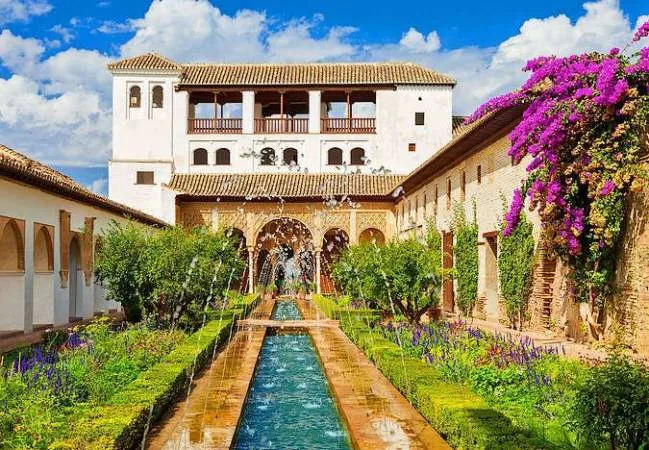
The Generalife served as the Alhambra’s recreational estate, a serene escape for the sultans during the scorching Andalusian summers. This magnificent almunia (a rural retreat with orchards and gardens) was designed as a haven of tranquility, with its lush gardens offering shade and refreshment. Narrow pathways meander alongside vibrant flowerbeds and reflective ponds, where the elegant archways and whitewashed walls of the estate are perfectly mirrored in the water.

An open-air walkway connects the northern and southern parts of the Generalife, offering breathtaking views of the Albaicín, Granada’s historic Arabic quarter. From the Alhambra and Generalife, the Albaicín’s whitewashed houses and cobbled streets create a stunning panorama that captures the essence of the city.

Before leaving the Alhambra hill, take a detour to the Carmen de los Mártires gardens. This lesser-known gem is a peaceful retreat of colorful flowerbeds, small ponds, and shaded paths that are refreshingly quiet compared to the bustling Alhambra. In spring and summer, it offers an idyllic escape from the intense sun, with panoramic views over the city and the countryside beyond. A charming fairytale tower sits in the heart of the gardens—climb its spiral staircase for a romantic vantage point over Granada.

Explore the Enchanting Albaicín: Granada’s Historic Muslim Quarter

Wander through the narrow, cobblestone streets of the Albaicín, Granada’s oldest and most captivating neighborhood. A UNESCO World Heritage Site, this historic Muslim quarter offers a glimpse into the city’s muslim past, with its whitewashed houses, intricate architecture, and stunning views of the Alhambra.

A Journey Through Time
Dating back to the 11th century, the Albaicín was the heart of Granada’s Islamic culture. As you stroll through its winding lanes, you’ll encounter beautiful Nasrid-style homes, ancient cármenes (traditional Andalusian houses with gardens), and remnants of the city’s medieval walls. The area’s charm lies in its blend of history and modern life, where traditional tea houses sit alongside vibrant local shops.

Don’t Miss the Iconic San Nicolás Viewpoint
No visit to the Albaicín is complete without a stop at the Mirador de San Nicolás, one of the most famous viewpoints in Spain. From this hilltop plaza, you’ll enjoy an unparalleled panoramic view of the Alhambra, framed by the majestic Sierra Nevada mountains. Whether you visit at sunrise, sunset, or any time in between, the view is nothing short of magical.

Street musicians and artists often add to the lively atmosphere, creating the perfect setting to soak in the beauty of Granada. Many visitors consider this view one of the most unforgettable highlights of their trip.

Other Hidden Gems in the Albaicín

  • Explore the charming Placeta de San Miguel Bajo, a quiet square lined with cafés and local restaurants.
  • Admire the Puerta de Elvira, one of the old city gates that once marked the entrance to Granada.

A Stroll Through Culture and Tradition
The Albaicín’s unique character, steeped in history and culture, makes it a must-see on any trip to Granada. Get lost in its labyrinth of streets, savor traditional Andalusian cuisine, and discover why this neighborhood continues to captivate travelers from around the world.


Must-Visit Attractions in Granada Spain Al Andalus heritage

Sacromonte: Granada's Enchanting Gypsy Quarter

Time seems to stand still in the rustic quarter of Sacromonte, one of Granada’s most unique and captivating neighborhoods. This historic area is known for its whitewashed caves carved into the hillside, where many locals continue to live. These caves come alive at night with impromptu flamenco gatherings, echoing with the soulful melodies and rhythms of this quintessential Andalusian art form.

As you wander through Sacromonte, you’ll find an authentic charm that reflects a mix of traditional and unconventional lifestyles. The area’s improvised dwellings—built from recycled materials like scrap metal, wood, and cloth—add a raw, unpolished character. Visitors are reminded to respect the privacy of residents, especially when signs kindly request refraining from photographs.

Sacromonte is also the beating heart of Granada’s flamenco scene. For a formal flamenco experience, head to Venta El Gallo, where you can enjoy a mesmerizing performance and take in breathtaking views from its fabulous rooftop terrace.

Would you like recommendations for exploring the caves or other flamenco venues in the area?

The Palace of Dar al-Horra: A Hidden Gem in Albaicin 

Dar al Horra Palace Nasrid Albaicin Quarter

Tucked away in Granada’s historic Albaicín district, the Palace of Dar al-Horra is a stunning example of Andalusian architecture. This elegant palace, whose name translates to "House of the Honest," was once the home of Aixa, mother of Muhammad XII (known as Boabdil), the last ruler of Granada.

Step into a serene oasis where history comes alive. Designed in traditional Andalusian style, the palace features three levels of rooms and quarters surrounding a tranquil central courtyard with a reflective pool—offering shade and respite from the summer heat. You can also explore remnants of the lush gardens and orchards that once graced the grounds. 

The historic Baths Hammam Al-Yawaz (El Bañuelo)

El Bañuelo arab hammam Granada

Nestled along the picturesque Carrera del Darro, El Bañuelo is one of Granada’s oldest and best-preserved Arab baths, dating back to the 11th century. This historic site invites visitors to step into the past and discover the traditions of relaxation and purification in Al-Andalus.

While many hammams were destroyed during the Christian Reconquest, El Bañuelo was spared—a rarity that makes it a must-see landmark. Its survival was likely due to its transformation into a private residence, preserving its architectural beauty and cultural significance.

The baths feature a traditional layout, including cold, warm, and hot rooms designed to promote health and well-being. Inside, you’ll marvel at the stunning star-shaped skylights in the vaulted ceilings, which once filtered sunlight to create a peaceful, meditative ambiance. The elegant horseshoe arches and stone columns further highlight the craftsmanship of the Nasrid period.

Located along Granada’s prettiest street, El Bañuelo is the perfect addition to your stroll through the Carrera del Darro. Its proximity to other landmarks like the Alhambra and Albaicín makes it an easy stop for anyone exploring the historic heart of the city.

Discover the Historical Treasures of Realejo Quarter

The Realejo Quarter, nestled at the foot of the majestic Alhambra, is a living testament to Granada’s rich and layered history. Once the city’s vibrant Jewish neighborhood during the Nasrid dynasty of Al-Andalus, this district flourished as a cultural and intellectual hub. Following the Reconquista in 1492, its identity evolved, leaving behind a fascinating tapestry of medieval buildings, palaces, and remnants of ancient walls that tell the story of centuries gone by.

The Realejo’s historical roots are deeply intertwined with Al-Andalus, the period of Muslim rule in Spain. The neighborhood was originally known as "Garnata al-Yahud," or "Granada of the Jews," due to its significant Jewish population during the Nasrid era. Walking its streets today, you’ll find traces of this coexistence, reflected in the layout of the narrow, winding alleys and the elegant architecture that bears the hallmarks of islamic design.

Among the architectural highlights of Realejo are several palatial homes that once belonged to Granada’s elite. These include Casa de los Girones, a beautiful example of Mudéjar architecture, with its intricately carved wooden ceilings and decorative tiles. Another gem is the Palacio de los Condes de Gabia, which now serves as a cultural center hosting exhibitions and events. These buildings showcase the blending of Islamic and Christian influences that define the city’s post-Reconquista era.

The Zirí Wall, an ancient fortification dating back to the 11th century, winds its way through parts of Realejo. Built by the Zirí dynasty, the first Muslim rulers of Granada, this defensive structure protected the city during its early medieval period. Portions of the wall remain remarkably well-preserved, offering a glimpse into the strategic importance of Granada as a fortress city. Strolling along these remnants is like stepping back in time.

The Realejo is more than just a historical treasure trove; it’s a vibrant neighborhood that retains its timeless charm. From its bustling squares, like Plaza del Realejo, to the artistic energy reflected in its murals and street art, the area bridges the past and present. Small artisan shops and traditional taverns add to the authentic experience of exploring this quarter.

As the neighborhood adapted to its Christian rulers, many mosques were replaced or transformed into churches. The Iglesia Santo Domingo, with its ornate Baroque façade and richly decorated interior, is a standout example built in the 16th century.


A Muslim-friendly Travel to Lisbon (Portugal)

A Muslim-friendly Travel to Lisbon (Portugal)

Halal Travel Guide to Lisbon, Portugal


Despite being on the World’s Leading City Destination in 2018, Lisbon is surprisingly still overlooked by most travellers coming to Europe. This Portuguese capital easily trumps other European cities in three things; sun, old-school charm and value.

As compared to popular European capital cities such as London, Rome and Paris, Lisbon receives the most hours of sunshine, predates the other cities by hundreds of years, and is the least expensive!

To top it all off, Lisbon is a Muslim-friendly city. Nestled on the western edge of Europe, this coastal city’s food of choice is, you guessed it, fresh seafood! Lisbon even has roots in Islamic history. Portugal, once known as Al-Garb Al-Andalus (the west of Spain), was under Islamic rule for over 500 years! Before you book the next flight to Lisbon, here are some of my suggestions on where to eat, explore and stay:


WHERE TO EAT

Seafood Abundance

As mentioned before, Lisbon is a coastal city and a large part of the locals’ diet consists of seafood. This makes it easy for Muslim travellers as almost every restaurant will have seafood options on the menu.

The Portuguese take their seafood seriously. Lisbon has some of the freshest seafood I’ve had in my life. All the seafood dishes I ordered, such as salmon, cod, tuna steak and octopus, were top-notch. The seafood dishes are usually grilled and served with a side of potatoes and veggies. This makes the seafood the star of the plate and boy, it sure was!


Lisbon Grilled Sardines

Out of all the different types of fish, the Portuguese favourite is the plump, silver sardine. There’s even a Lisbon Sardine Festival, also known as the Feast of St. Anthony, every year on 12 June!

When hearing the word sardine, most people would think about the canned sardines and usually in tomato sauce. Here in Portugal, they eat it fresh. Sardines are served grilled with a side of potatoes and salad; or served on slices of sourdough bread with roasted bell peppers. The sardines were so flavourful, even without any sauces. You definitely have to give Lisbon’s beloved dish a try.


Lisbon Canned Sardines

If you’re looking for souvenirs, how about bringing home some sardines? Along the streets of Lisbon, you can easily find vintage-style cans of sardines. They’re a really popular souvenir in Lisbon. With different designs to choose from, you will definitely be spoilt for choice.

Please do note that most restaurants sell alcohol and non-halal meat, but you could ask for your seafood to be cooked separately.

Since it is not halal-certified, please dine at your own discretion.


Time Out Market

Mercado da Ribeira is the oldest food market in Lisbon. In 2014, part of the market was turned in to Time Out’s – yes, the famous media company – first food court. Unlike regular food courts, the food that is offered at Time Out Market is on a gourmet level with food kiosks run by famous Portuguese chefs. Although it sounds atas (high class), these fine dining meets street food are priced affordably. There is also a wide array of cuisines here; from Portuguese food to Asian cuisines!


After making a few rounds around the food court, I decided to go for O Prego da Peixaria’s Salmon Burger with a side of fries. The salmon patty was juicy and packed with so much flavour. The charcoal English muffin brought an earthy flavour to the plate, which nicely complemented the fish. Please do note that since most food kiosks sell alcohol and non-halal meat, do dine at your own discretion.

Address: Mercado da Ribeira, Avenida 24 de Julho, 1200-479 Lisboa, Portugal

Opening hours: Sundays to Wednesdays 10 am to 12 am, Thursdays to Saturdays 10 am to 2 am


Pastéis de Belém

A trip to Lisbon won’t be complete without trying Lisbon’s Portuguese egg tart, locally known as Pastéis de Nata! Walking down the streets of Lisbon, you’ll notice that there’s a bakery selling Pastéis de Nata on almost every corner. I’ve tried almost a dozen Portuguese egg tarts in Lisbon, but my favourite, hands down, is the tarts from the Pastéis de Belém bakery.

The origin of Portuguese egg tarts can be traced to this very bakery! It is said that only three people in the world know the century-old recipe to this world-famous egg tarts. Despite long queues, their egg tarts, named Pasteis de Belém, are always served fresh and warm. Pasteis de Belém has everything I want in an egg tart; flaky crust and a gooey egg custard centre. The friendly staff also suggested putting cinnamon or castor sugar on top if you want an extra kick of sweetness. Oh, what I would give for a bite of Pasteis de Belém right now.

All the Portuguese egg tarts that I tried did not contain alcohol or animal-derived ingredients such as gelatine or lard. Don’t be afraid to double-check with the friendly local bakers! Since Pastéis de Belém bakery is not halal-certified, please dine at your own discretion.

Address: Rua de Belém 84-92, 1300-085 Lisboa, Portugal

Opening hours: 8 am to 11 pm daily

Pastéis de Belém


WHAT TO SEE

Torre de Belém

Torre de Belém

Just a 30-minute tram ride away from central Lisbon is the Torre de Belém (Belem Tower). This UNESCO World Heritage Site was built between 1514 and 1520 – that’s about 500 years ago! Within five centuries, Torre de Belém has been used for many purposes; from a defence tower to a lighthouse, to a customs checkpoint, and finally to a museum.

For an entrance fee of €6 (~S$9.15), you get to explore the tower’s five floors and roof terrace. It is also a short walk from Pastéis de Belém bakery, so bring your delicious Portuguese egg tarts over and marvel at one of Lisbon’s architectural jewels.

Address: Av. Brasília, 1400-038 Lisboa, Portugal

Opening hours: October to April 10 am to 5.30 pm daily, May to September 10 am to 6.30 pm daily

Entrance fee: Adults: €6, Children under age 14: Free


Pena Palace, Sintra

Pena Palace

Perched on a rocky ridge and surrounded by the lush environment of Parque da Pena(Pena Park) is the Palacio Nacional da Pena (Pena Palace). The stunning Pena Palace is another one of Lisbon’s UNESCO World Heritage Site.

With a mix of Manueline and Islamic architectural style, the palace was built from 1842 to 1854. Painted in a riot of bright colours and decorated with intricate tile patterns, this whimsical palace seems like it belongs in a fairytale!

It’s easy to get to Pena Palace. First, hop on the Linha de Sintra suburban train, which will bring you to Sintra in about 40 minutes. From there, you can hike or take a bus to Pena Park entrance. Pena Palace is located not too far from the ticketing office.

The entrance fee which provides access to Pena Park and the palace terraces costs €7.50 (~S$11.50). If you want to go view the staterooms in Pena Palace, the ticket costs €14 (~S$21.35).

Address: Estrada da Pena, 2710-609 Sintra, Portugal

Opening hours: 10 am to 6 pm daily

Entrance fee: Adult: €7.50, Child & Seniors: €6.50, Tickets for access inside Pena Palace: €14.00


Praça do Comércio

Praça do Comércio


Although it might not look like much in pictures, you have to physically stand in Praça do Comércio, one of the largest squares in Europe, to truly appreciate its beauty. Three sides of the square are surrounded by traditional yellow buildings, and the last side opens up to the serene Tagus River. Right in the middle of the square is a statue of King José I and his horse Gentil, a symbol of royal power and nobility.

Praça do Comércio (Commercial Square) was once Lisbon’s busiest hubs, where trading took place and expedition ships sailed out. Even today, Praça do Comércio can still be considered a hub; providing easy access to a myriad of attractions, such as Pátio da Galé, Cais das Colunas and the Lisbon Story Centre.

To get a bird’s eye view of the square, climb up the arch, also known as Arco da Rua Augusta. For an entrance fee of €3 (~S$4.60), you also get to savour views of Lisbon’s symmetrical streets on one side, and the beautiful Tagus River on the other.

Address: Praça do Comércio, 1100-148 Lisboa, Portugal

Opening hours: Arco da Rua Augusta is opened from 9 am to 8 pm daily

Entrance fee: Adults: €3, Children under 5: Free


Pink Street

Lisbon Pink Street


With many things to see in history-rich Lisbon, Rua Nova do Carvalho is usually neglected by travellers. More commonly known as Pink Street, this underrated spot should be on your must-visit list. Like most places in Lisbon, this quaint street also has its fair share of history.

Rua Nova do Carvalho was once a red-light district, teeming with brothels and run-down bars. In 2011, the streets were washed in a millennial pink hue and a new kind of nightlife was breathed into the area. Today, Pink Street is lined with cosy hip cafés, where you can take a break after getting shots for your Instagram feed.

Address: Rua Nova do Carvalho, 1200-370 Lisboa, Portugal


WHERE TO STAY

Avenida da Liberdade, Baixa District or Chiado District

Avenida da Liberdade Lisbon 


If you’re all about convenience, the Avenida da Liberdade, Baixa district and Chiado district is where you should stay. There is an extensive range of accommodations available in these areas that cater to any budget and traveller; from hostels to high-end hotels. Numerous restaurants, retail shops and main tourist attractions are also within easy reach in these areas.


Alfama District 


If you’re looking for an area with some character, try staying at Alfama district. Being one of the oldest districts of Lisbon, you will find yourself transported to the past in Alfama as you stroll along her steep hills and narrow streets.

The popular choices for accommodation in this district are rental rooms and apartments. Want a taste of the high life? Treat yourself and book a room in a castle! Solar Do Castelo is the only hotel within São Jorge Castle walls, located at the top of Alfama.

Lisbon trams

Although Lisbon’s metro is one of the cleanest in Europe and gives you easy access from the airport to the city, its network is still pretty limited. Trams will definitely be your best choice of transport in Lisbon, bringing you to popular areas such as Belem and Alfama with ease.

Not only are they practical, but Lisbon’s iconic trams are also pieces of history, with some being a century old! There is just something undeniably joyful about travelling on a bright yellow tram.

We hope this brief guide, highlighting Lisbon’s creme de la creme, has made you add this underrated city to your travel bucket list. With a story and centuries of history behind her food, architecture and even her transport system, Lisbon is definitely one of my favourite cities in Europe. I’m sure it will be yours too!


Post by Tripzilla

Get prayer times and qibla direction while traveling

Get prayer times and qibla direction while traveling

Get In-flight prayer times and Qibla direction for your next flight

In-Flight FAQs

How to perform prayers on an airplane?

Performing your prayers (Salah/Namaz) while on an Airplane is not that easy as most Airlines do not provide such facilities.


The following tips will help you perform as best as possible:

1. Ensure you know all the rules and dispensations pertaining to wudhu and Salah as a traveler. You can find here a list of areas that one should ensure they have the knowledge of. www.halaltrip.com/other/blog/121-tips-to-safeguard-your-salaat-while-traveling.

2. Since it is not easy to perform wudhu and salah on an Airplane, if there is a choice, it is better to choose flight timings which allow one to perform all salah before departure or after arrival.

3. If you are on a long flight and need to transit through an Airport, if there is a choice, it is better to choose to transit through an Airport which has comfortable prayer and wudhu facilities as well as Halal food. You can find brief overviews of Airport facilities under the Airport guides section. www.halaltrip.com/airport-near-me/.

4. If after considering all of the above, your flight timing is such that have to perform Salah while on air, then it is about managing the four key elements for salat efficiently; time, wudhu, direction & space.

5. Time: First thing is to know the correct prayer times for the flight using the Air Travel Prayer Times calculator here or using the HalalTrip mobile app.

6. Wudhu: Taking wudhu on a plane is not easy as well. As such it is better as much as possible to take wudhu before boarding the plane. Especially if the next prayer time comes soon after take-off. If you have to take wudhu on a plane, it is very important to make sure that proper care is taken not to mess up the aircraft toilets, so as not to inconvenience other passengers or staff. Understanding the rules of Masah (wiping over socks) will help ease the performance of wudhu while traveling.

7. Space: If you are flying first or business class, finding a place to spread your prayer mat and pray properly is not generally an issue. However if you are flying economy class, due to space constraints, it a bit more challenging. In this case, the best is to approach the airline staff and see if they are able to provide some space. If that is not possible, then one can perform salah while seated. Consult your scholar to know the exact ruling regarding the performance of salah while seated in a plane.

8. Qiblah direction: If you are able to find space to pray properly, then you can find the approximate Qiblah direction by using HalalTrip mobile app. If you are praying seated, then facing the Qibla direction will not be always possible. Consult your scholar to know the exact ruling regarding facing qibla in such a situation.


The Airport that I am going to use is not in the drop-down list. How can I get that Airport listed?

You can let us know which Airport that you want us to add via email (info@crescentrating.com), Twitter (@crescentrating), facebook ..etc and Insha Allah we will add the Airport as soon as possible.

Do you take into account the ‘altitude’ so that the sun’s disappearance from line-of-sight at Maghrib time at higher altitudes is taken into account?
Yes. Please read the answer to question #4 as well.

Have any known scholars approved the methodology used by the calculator?
For calculating Salaath times for a given position, the calculator users only the well-established “Calculating Methods” (indicated in the drop-down list of the calculator). There are 7 accepted methods which have been there for some time now and are agreed by different scholars. These calculations methods also take into account the time adjustments needed for higher altitudes. Crescentrating’s Air Travel Prayer Time Calculator, simply uses these methods, based on the users choice, in plotting the prayer time along the flight path. It does not use any new Salaath calculation methods.


Why is that some prayer times are not calculated?

Currently, we are unable to calculate some prayer times during summer (around 15th June to 15th August) for direct flights between some parts of Asia and North America. These flight paths tend to fly at higher latitudes and on some flights one may not encounter sunset at all.

Post by Halal Trip


Get In-flight prayer times and Qibla direction for your next flight

[at_btn text=”CALCULATE HERE” url=”https://www.halaltrip.com/prayertimes/inflight/” type=”link” light=”off” transparent=”off” icon_align=”left”]

What to Visit in The Alpujarra of Granada

What to Visit in The Alpujarra of Granada

What to Visit in The Alpujarra of Granada
The Alpujarras is a region of mountain towns and villages that lie on the southern slopes of the Sierra Nevada, just one to two hour’s drive from the city of Granada in Andalusia. The area was made famous by Chris Stewart’s Driving Over Lemons series of novels about life in rural Spain, and manages to still retain much of its original and natural charm. The area is characterized by deep gorges, soaring peaks, gushing waterfalls and picturesque, white-washed villages. Here’s our roundup of where to go and what to see to make the best of your trip to this magnificent location.


The Spa Town of Lanjarón

The spa town of Lanjarón is celebrated for its natural spring water and was actually home to Spain’s first bottled water company, which is still active today, selling bottled Alpujarran water throughout the country. On June 23rd, like most places in Spain, the town celebrates the Fiesta de San Juan, but instead of celebrating with fireworks, they have a giant water fight – the biggest in Spain. Starting at midnight for exactly one hour, the town goes mad, spraying each other from bottles, hoses, water pistols and even fire engines. If you’re not here for the fiesta you can explore the ruins of the town’s Moorish castle and relax in the Balneario de Lanjarón spa, where you can enjoy everything from bubbling pools and massages to mud baths and steam rooms.


Go Skiing

The Alpujarras lie on the slopes for the Sierra Nevada, home to one of Spain’s most popular ski areas, so if you’re here from the end of November until April, then make sure to hit the slopes at the Pradollano ski resort. Pros can whizz their way down the pistes, while those who want to learn can take a lesson provided by one of the ski schools on site.


Buy an Alpujarran Rug

Driving through many of the Alpujarran villages, you’ll see swathes of colorfully hand-woven woolen rugs for sale, hanging outside shopfronts along the roadside. A traditional handicraft from the region, they make an original souvenir from your trip. Other typical handicrafts from the Alpujarras include woven baskets and ceramics.

Go Hiking

The Alpujarras are ideal for walking and hiking enthusiasts, with many trails and routes throughout the area, and higher into the Sierra Nevada National Park. Many of the best hikes leave from the villages of Trevélez and Bubión and can lead to beautiful waterfalls or lookout points. Those serious about hiking and mountain climbing can challenge themselves by scaling Mulhacén, the highest mountain in mainland Spain.


Visit the White Villages of the Poqueria Gorge

The three White Villages of the Poqueria Gorge – Pampaneira, Bubión and Capileira – are among the most picturesque in the Alpujarras, filled with white-washed houses, charming little churches, shops selling traditional handicrafts and outdoor cafés. Pampaneira is the lowest of the three and is home to many cute shops, including Abuela Ili, an artisanal chocolate shop, and factory. Bubión is the next village, an ideal starting place for hikes and also home to the Casa Alpujarreña folk museum. Capileira is the highest village of the three and has many vestiges of its Moorish past, as well as a church built on the site of an old mosque. To learn more about the village and the area, visit the Museo Etnológico Pedro Antonio Alarcón.

The Roman Theatre of Málaga

The Roman Theatre of Málaga

The theatre was built during the reign of Augustus in the late 1st century BC, when the city—then known as Malaca—was part of the Roman province of Hispania Baetica.

It remained in use until the 3rd century AD. Later:

  • In the 5th and 6th centuries, it was used as a cemetery.

  • During the Islamic period, many of its stones, capitals, and column shafts were reused in the construction of the Alcazaba.

  • It remained hidden for centuries until its rediscovery in 1951 during construction works.

Architecture

The theatre follows the classical model described by Vitruvius in De Architectura.

It is a mixed construction:

  • Part of the cavea (seating area) is carved directly into the natural hillside.

  • Another part rests on an artificial terrace supporting the stands.

The structure consists of three main parts:

Cavea – the semicircular seating area.

Orchestra – the semicircular space between the seating and the stage.

Proscaenium (Stage) – including a very well-preserved pulpitum, whose front is decorated with niches that still preserve traces of original Roman painting.

Opening Hours 

  • Tuesday to Saturday: 10:00 AM – 6:00 PM

  • Sunday & Public Holidays: 10:00 AM – 4:00 PM

  • Closed: Mondays

Last entry is typically 15 minutes before closing time.
(Opening hours may vary on special holidays.)

Admission is free.

📍 Google Maps Link

You can find it here: https://maps.app.goo.gl/qe6ELLQF5trTZzTs9